





I’m writing this in the morning, coffee in hand, and honestly, I’ve got that fresh “ready to think deeply” energy. Timelines have always fascinated me — maybe because my brain likes order, or maybe because I secretly enjoy connecting dots between events that seem unrelated at first.
When people ask me why a timeline is considered a cause and effect graphic organizer, I can’t help but geek out. It’s not just a pretty row of dates. It’s a visual story that lets you literally see how one thing leads to another. And that’s not just useful for history nerds (guilty)… it’s useful for anyone who wants to understand how events shape each other.
Timelines Are More Than Just a List of Dates
I remember back in school, timelines were just… homework. A piece of paper with a straight line, a few dates, maybe some small drawings if you were feeling artsy. Back then, I didn’t get it. I thought, Cool, I know what happened and when. So what?
But here’s the thing: a good timeline doesn’t just dump facts on you. It connects them. Instead of “this happened, then that happened,” it’s “this happened, which made that happen.” That’s why a timeline is considered a graphic organizer for cause and effect — it doesn’t just tell you the what, it shows you the why.
When you see events laid out visually, it’s hard not to notice the chain reaction. Like, the Treaty of Versailles in 1919 didn’t just end World War I — it caused economic strain in Germany, which fed political instability, which paved the way for World War II. That’s the magic of it: the cause-and-effect relationship is baked right in.
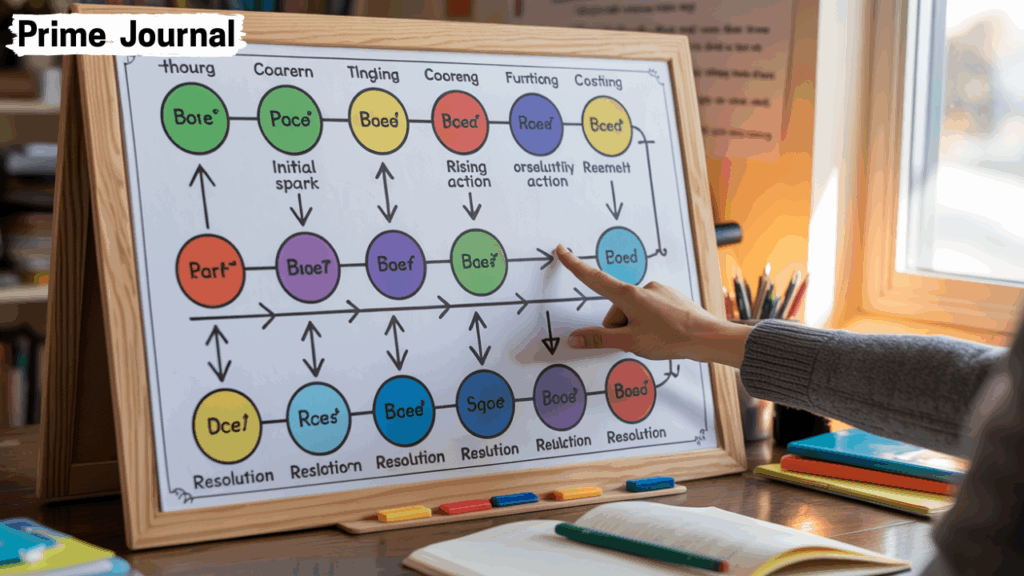
The Cause-and-Effect Flow You Can Actually See
This is where timelines really shine. One of the clearest reasons why a timeline is considered a cause and effect graphic organizer is its linear structure. Your eyes literally follow a path from left to right (or top to bottom, depending on the style), watching events unfold in sequence.
Let’s use a fun example. Say you’re making a timeline about the evolution of smartphones:
- 2007: The first iPhone launches.
- 2008: The App Store opens, leading to a flood of mobile apps.
- 2010: Front-facing cameras bring the selfie boom.
- 2016: Snapchat filters blow up, influencing social media culture.
When you see that progression, it’s obvious that each new development caused the next wave of trends or tech improvements. No one needs to write an essay explaining it — your brain just gets it.
And in history, this is even more powerful. Think of how a timeline of the American Revolution would flow: the Stamp Act (cause) → Boston Tea Party (effect, but also a cause for the next thing) → Intolerable Acts → War. You can see the dominoes falling without having to be told that they’re connected.
How Do Timelines Show Cause and Effect in History?
Afternoon brain here — slightly tired, but still running on that second cup of coffee.
If you’ve ever asked, How do timelines show cause and effect in history?, here’s the answer: they make the messy web of history look like a straight road. And sometimes, that’s exactly what we need.
History is full of overlapping stories. Wars break out because of dozens of reasons, revolutions simmer for decades before exploding, and scientific breakthroughs often build on centuries of smaller discoveries. Without a timeline, it’s easy to get lost.
But with a timeline:
- You see earlier events as triggers — like how the invention of the printing press led to faster spread of ideas, which fueled movements like the Reformation.
- You can trace later events backward — for example, if you’re studying the Great Depression, a timeline will show the stock market crash, the bank failures, the droughts, and you realize it’s all linked.
- Patterns emerge naturally — economic downturns often lead to political change; social unrest often follows certain types of laws or inequalities.
When you’re looking at history, a timeline takes something abstract and makes it tangible.

What Is the Cause and Effect of a Graphic Organizer Like This?
Okay, so “what is the cause and effect of a graphic organizer” sounds like textbook language, but let’s break it down like a human.
The cause of creating a timeline: you want to understand the order of events and how they connect.
The effect: you actually start seeing patterns and relationships you’d never noticed.
A personal example? A few years ago, I made a timeline to understand the history of social media. I started with Friendster in 2002, then MySpace in 2003, then Facebook’s big launch in 2004. At first, it was just dates. But as I filled it in, I noticed patterns: every time a new platform exploded in popularity, it was because the one before it failed to adapt. MySpace didn’t lose users because people got bored; it lost them because Facebook offered something cleaner and faster. Same with Facebook and Instagram, then TikTok. The cause-and-effect chain was obvious once I laid it out visually.
That’s exactly why a timeline is considered a cause and effect graphic organizer — it forces your brain to link events.
Is a Timeline Considered a Graphic Organizer in Every Context?
Pretty much, yes. Timelines aren’t just for history books. They’re for science, business, education, even personal life.
- In science, timelines track experiments, discoveries, or environmental changes.
- In business, they show project milestones and deadlines.
- In personal life, you might use one to plan a wedding, map out a fitness journey, or even track medical treatment progress.
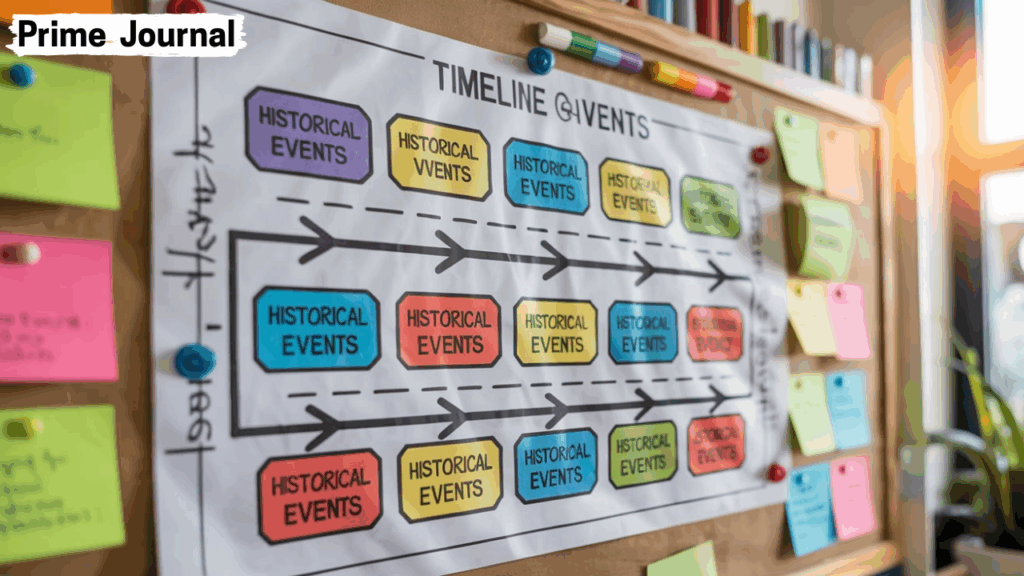
Because timelines combine visual structure with logical flow, they’re part of the graphic organizer family — just like mind maps or flowcharts. But unlike those, they’re inherently chronological, so they naturally lend themselves to cause-and-effect thinking. Even if you’re not trying to connect the dots, your brain will do it.
.
Why This Matters More Than People Think
Here’s the thing: understanding cause and effect changes the way you see the world. If you just know what happened, it’s trivia. But if you know why it happened and what it led to, it’s insight.
That’s why I love timelines. They don’t just tell you when something happened. They tell you the story of how we got here. And once you start thinking in cause-and-effect terms, you see it everywhere — in politics, in tech, in your own daily routines.
Ever been late to work because you missed your alarm, which made you skip breakfast, which made you cranky all morning? That’s a personal mini-timeline right there. Life is basically one giant chain of causes and effects.
So the next time you’re asked why a timeline is considered a cause and effect graphic organizer, you can say: because it’s the simplest, clearest way to see how one thing leads to another — whether it’s the rise of empires, the spread of inventions, or just your own Monday morning disaster.
FAQs
1. Why a timeline is considered a cause and effect?
Because it shows how earlier events lead to later ones, making the cause-and-effect relationship clear.
2. Is a timeline considered a graphic organizer?
Yes — it visually organizes events in order, helping to see connections between them.
3. What is the cause and effect of a graphic organizer?
The cause is the information you’re studying, and the effect is the understanding you gain by seeing how events connect.
4. How do timelines show cause and effect in history?
By arranging events chronologically so you can easily spot how one event triggers another.
5. What is a cause and effect timeline?
It’s a timeline that focuses on showing how specific events directly influence what happens next.