



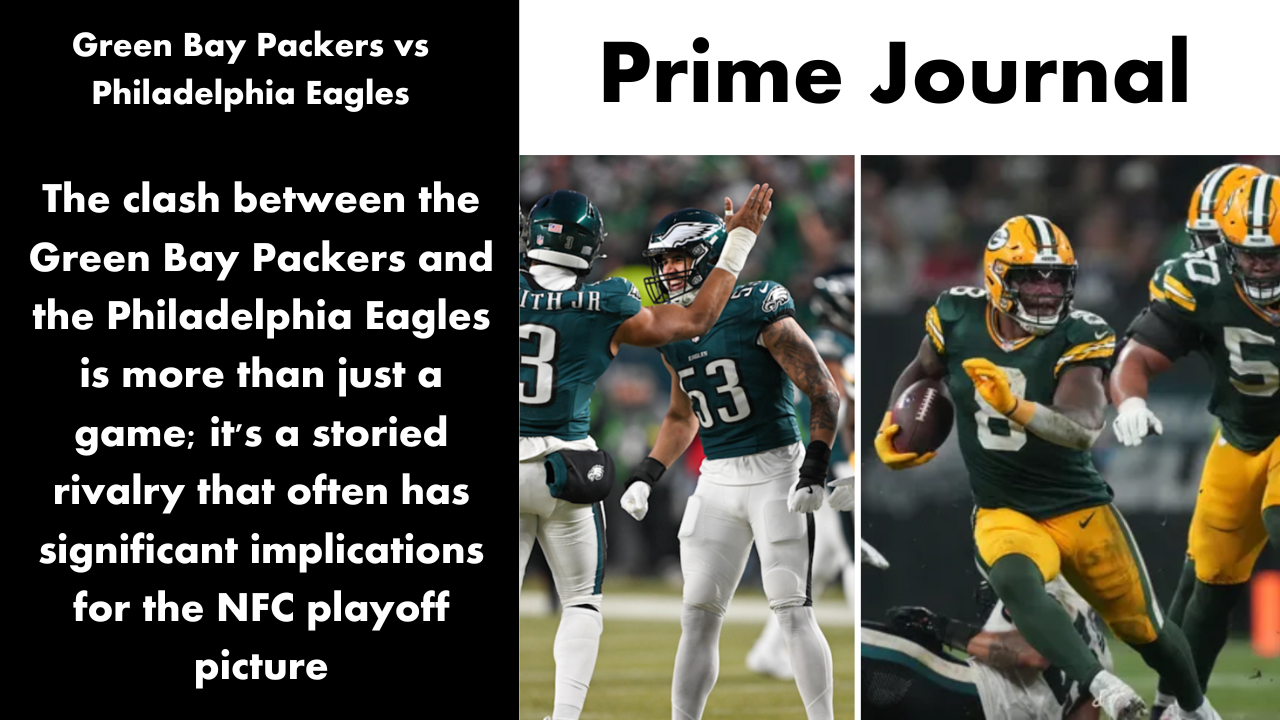
The clash between the Green Bay Packers and the Philadelphia Eagles is more than just a game; it’s a storied rivalry that often has significant implications for the NFC playoff picture. While the final score tells one story, the true narrative of any epic NFL battle is written in the individual performances—the player stats. Green Bay Packers vs Philadelphia Eagles These numbers reveal the strategic triumphs, the hard-fought battles in the trenches, and the moments of individual brilliance that decide the outcome.
Whether you’re a die-hard Cheesehead, a passionate Eagles fan, or a dedicated fantasy football manager, understanding the “how” behind the “what” is crucial. This comprehensive analysis goes beyond the box score to break down the key Green Bay Packers vs Philadelphia Eagles match player stats from their most recent encounters, giving you the expert insight you need.
Setting the Stage: The Rivalry and the Stakes
Before we dive into the numbers, it’s essential to understand the context. The Packers and Eagles have a history of thrilling matchups, from the “4th and 26” playoff game in 2004 to the more recent contests featuring a new era of stars. Each game is a chess match, often pitting the Eagles’ formidable defensive line against the precision of the Packers’ offensive scheme. The stakes are often high, with playoff seeding and NFC supremacy on the line, which makes every yard gained, every tackle made, and every pass completed that much more critical.
Key Player Stat Breakdown: The Offensive Showdown
The offense is where the most glamorous stats are born. Quarterback ratings, rushing yards, and receiving touchdowns are the headlines. Let’s break down how the key playmakers typically fare in this cross-conference duel.
Quarterback Duel: Precision vs. Power
The signal-callers are always under the microscope. This matchup often features a fascinating contrast in styles.
- Green Bay Packers QB (e.g., Jordan Love):
- Passing Yards: Often in the 250-300 range against the Eagles’ secondary, depending on the game script.
- Completion Percentage: Efficiency is key. Beating the Eagles’ blitz requires a high completion rate, often hovering around 65-68%.
- Touchdowns/Interceptions: The critical stat. The Eagles’ defense is designed to create turnovers, so a low INT number is a massive win for the Packers.
- Passer Rating: A composite score that needs to be above 95.0 for a strong chance at victory.
- Philadelphia Eagles QB (Jalen Hurts):
- Passing Yards: Hurts’ passing numbers can vary, but his dual-threat capability is what defines his game.
- Rushing Yards: This is the X-factor. Hurts’ ability to scramble for 40+ yards and critical first downs is a backbreaker for opposing defenses.
- Total Touchdowns: Accounting for both passing and rushing TDs is vital. A line like 2 Passing TD, 1 Rushing TD is a classic, productive day for Hurts.
- Turnovers: The Packers’ defense often schemes to contain Hurts and force mistakes. A fumble lost can be as impactful as an interception.
Ground Game: Establishing the Run
Controlling the clock and establishing the run is paramount in these physical contests.
- Packers’ Running Back (e.g., Josh Jacobs):
- Attempts: Usually sees 18-25 carries as the offense works to establish a balanced attack.
- Yards: A successful day would be eclipsing the 90-yard mark, keeping the Eagles’ pass rush honest.
- Yards After Contact (YAC): A telling stat. Gaining tough yards against a physical Eagles front seven is a sign of a great performance.
- Eagles’ Running Back (Saquon Barkley):
- Attempts: The Eagles love to use a powerful lead back to complement Hurts.
- Receptions: The running back is also a key check-down option. 4-5 receptions for 30+ yards adds a crucial dimension.
- Explosive Plays: A run of 20+ yards can swing momentum instantly.
Sample Running Back Comparison Table (Hypothetical Data)
| Player | Team | Carries | Rushing Yards | Avg. YPC | TDs | Receptions | Receiving Yards |
|---|---|---|---|---|---|---|---|
| Josh Jacobs | GB | 22 | 97 | 4.4 | 1 | 3 | 24 |
| Saquon Barkley | PHI | 19 | 87 | 4.6 | 0 | 5 | 42 |
Aerial Attack: The Wide Receivers and Tight Ends
The passing game is where big plays happen. Winning one-on-one matchups on the outside is crucial.
- Packers’ Wide Receivers (e.g., Christian Watson, Jayden Reed):
- Targets: The top receiver might see 8-12 targets, especially if the Packers are playing from behind.
- Receptions/Yards: A 100-yard game for a Packers WR is a significant achievement against the Eagles’ corners.
- Deep Ball Receptions: The Packers’ offense thrives on explosive plays. A catch of 40+ yards is a huge momentum shift.
- Eagles’ Wide Receivers (A.J. Brown, DeVonta Smith):
- The 1-2 Punch: Brown (physicality) and Smith (route precision) present a nightmare matchup.
- Contested Catches: Brown’s stats on 50/50 balls are a key indicator of his impact.
- YAC (Yards After Catch): Smith’s elusiveness makes him a threat to turn a short pass into a long gain.
The Defensive Battle: Unsung Heroes in the Trenches
Defense wins championships, and the stats here are all about disruption and prevention.
Front Seven Pressure: Sacks and Tackles for Loss
The battle at the line of scrimmage is often where the game is won.
- Eagles’ Defensive Line (e.g., Jalen Carter, Josh Sweat):
- Sacks: The Eagles’ defense is built to pressure the QB. Recording 3+ sacks as a team is a common goal.
- QB Hits: Even if they don’t get the sack, consistently hitting the QB affects his rhythm and accuracy.
- Tackles for Loss (TFL): Stopping the run behind the line of scrimmage creates long, difficult down-and-distance situations.
- Packers’ Linebackers (Quay Walker):
- Total Tackles: The Mike linebacker is often the tackling machine, aiming for 10+ total tackles.
- Run Stops: The ability to shed blocks and meet the running back at the line is invaluable.
Secondary Standouts: Coverage and Turnovers
The last line of defense is responsible for taking the ball away.
- Interceptions (INT): A single interception can completely change the game’s trajectory. Which safety or cornerback made the play?
- Passes Defended (PD): This stat indicates tight coverage and active hands in the passing lane. A cornerback with 3+ PDs had a lockdown day.
- Forced Fumbles: A well-timed punch on the ball from a pursuing defender can create a crucial turnover.
Key Defensive Stat to Watch: Third Down Conversion Percentage. The defense that gets off the field on third down controls the game’s tempo. Holding the opponent to under 35% on third downs is a hallmark of a winning performance.
Special Teams: The Third Phase
Often overlooked, special teams can provide game-winning points or catastrophic errors.
- Field Goal Kickers: In what is often a close game, the kicker’s accuracy from 40+ yards is paramount. A miss can be the difference.
- Punters: Net punting average and punts placed inside the 20-yard line flip field position and pin the opponent deep.
- Returners: A single kickoff or punt return of 30+ yards can provide a spark and set up the offense with a short field.
Beyond the Box Score: The Story the Stats Tell
Statistics are not just numbers; they are a language. A high number of rushing attempts for the Packers indicates they successfully controlled the clock and limited the Eagles’ possessions. A high passer rating for Jalen Hurts, combined with 50+ rushing yards, means the defense had no answer for his complete skill set. A high number of QB hits from the Eagles, even with low sacks, shows they were consistently pressuring the quarterback into mistakes.
Understanding the context of the Green Bay Packers vs Philadelphia Eagles match player stats is what separates a casual viewer from a true student of the game.
FAQ
Q: Who has the better all-time record, Packers or Eagles?
A: The Philadelphia Eagles hold the all-time series lead, which includes both regular season and playoff games.
Q: What was the “4th and 26” play?
A: It was a desperate, game-tying 28-yard completion from Donovan McNabb to Freddie Mitchell in the 2003 playoffs, leading to an Eagles overtime victory.
Q: Have they ever met in the Super Bowl?
A: No, the Packers and Eagles have never faced each other in the Super Bowl.
Q: Where do the Packers and Eagles play?
A: The Packers play at Lambeau Field in Green Bay, WI, and the Eagles play at Lincoln Financial Field in Philadelphia, PA.
Q: Is this considered a major NFL rivalry?
A: Yes, due to several iconic and high-stakes playoff meetings, it has developed into a significant and intense inter-conference rivalry.
Q: Who is the Eagles’ most famous player who also played for the Packers?
A: Hall of Fame defensive end Reggie White, who won a Super Bowl with Green Bay after legendary seasons in Philadelphia.
Conclusion
Dissecting the Green Bay Packers vs Philadelphia Eagles match player stats provides a fascinating lens through which to view one of the NFL’s compelling non-divisional rivalries. It’s a game of contrasting styles, strategic depth, and individual excellence. From the quarterback duel to the war in the trenches, every stat tells a piece of the story.
The next time these two NFC powerhouses face off, you’ll be equipped to look deeper than the scoreboard. You’ll understand the critical matchups, appreciate the key performances, and truly know what decided the game.
What was the most surprising stat from the last Packers-Eagles game you watched? Share your thoughts and join the conversation in the comments below!