



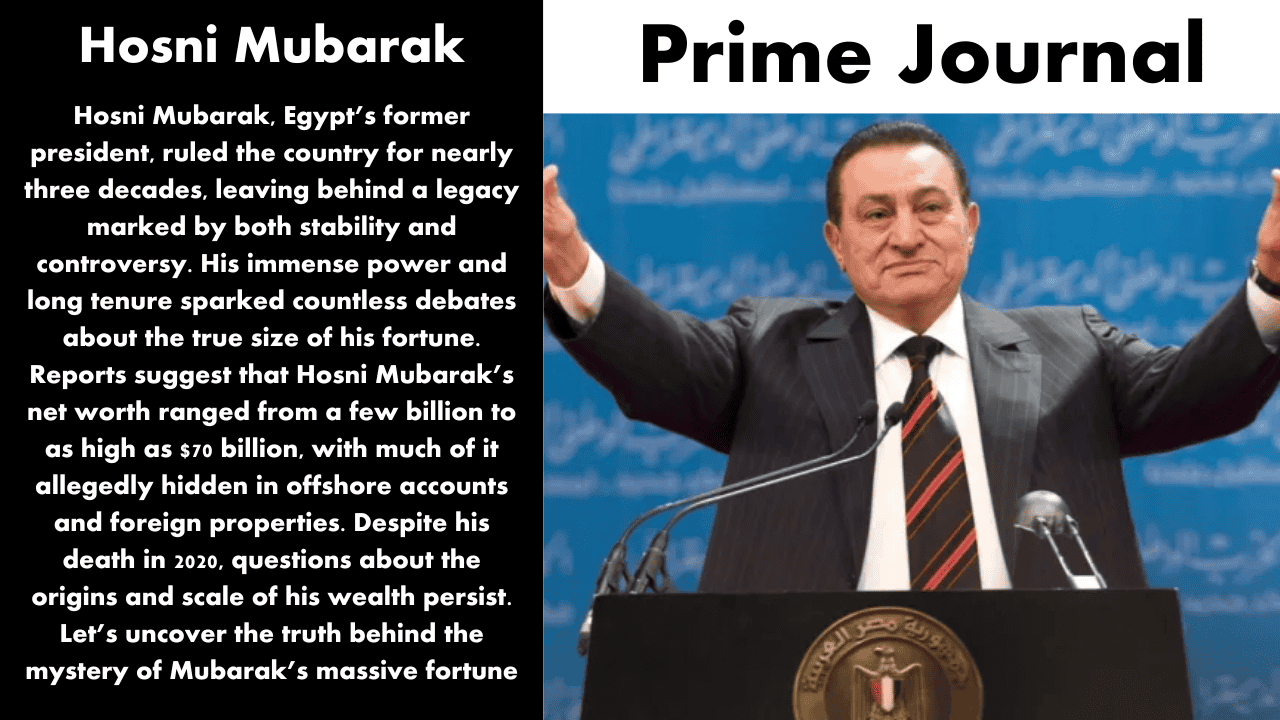
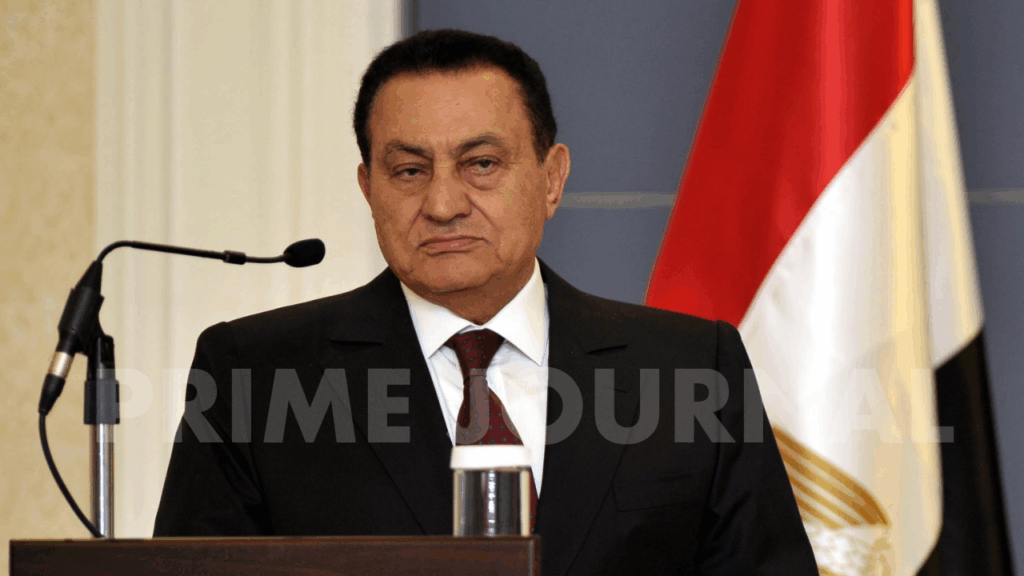
When discussing the wealth of world leaders, few carry as much mystery and controversy as Hosni Mubarak. The former president of Egypt ruled for nearly 30 years (1981–2011) and was accused of amassing vast personal fortune through a mixture of official salary, business interests, and alleged corruption. Even years after his ouster and death in 2020, the true size and nature of his wealth remain a subject of speculation, legal battles, and political debate.
In this article, we explore the estimates, sources, controversies, and revelations around Hosni Mubarak’s net worth. We also assess what can be reliably asserted today, and how his wealth continues to impact Egypt’s political memory.
Who Was Hosni Mubarak?
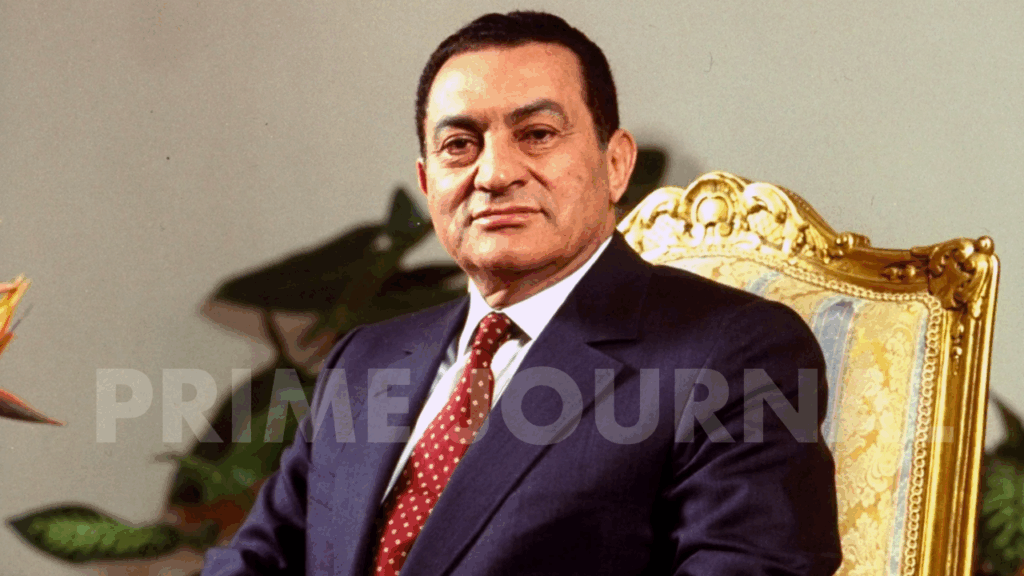
Hosni Mubarak was born on May 4, 1928, in Monufia Governorate, Egypt. He graduated from the Egyptian Military Academy and the Air Force Academy, rising through the ranks of the Egyptian Air Force to become its commander. In 1975, he was appointed vice president by President Anwar Sadat. After Sadat’s assassination in October 1981, Mubarak succeeded him as Egypt’s head of state.
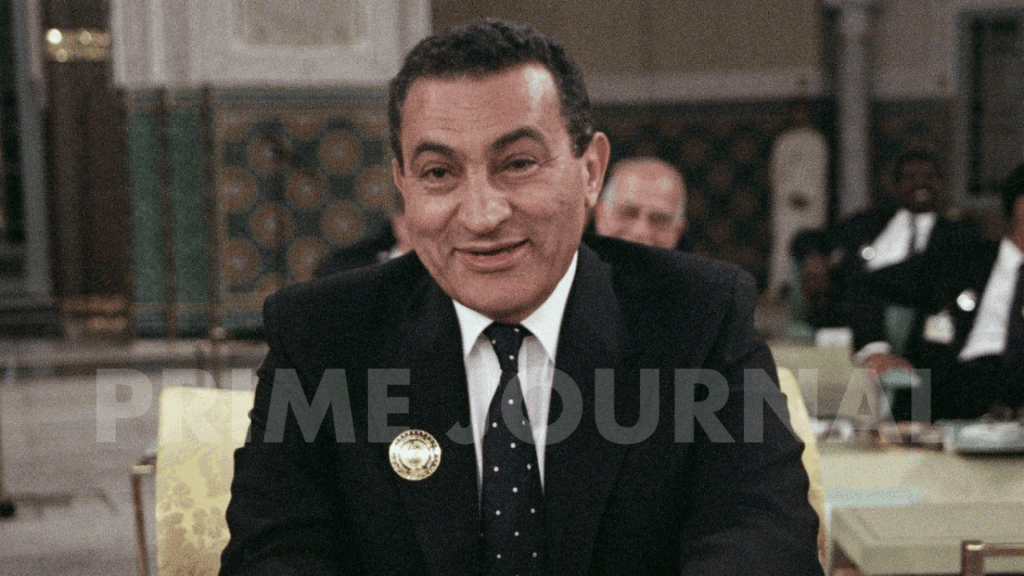
During his nearly three decades in power, Mubarak maintained strong relations with the United States, oversaw Egypt’s foreign policy, and presided over periods of relative stability but also crackdown on dissent. He was forced to resign on February 11, 2011, amidst mass protests as part of the Arab Spring.
After leaving office, Mubarak and his family faced multiple legal and corruption charges. He died on February 25, 2020, at age 91.
Because of his long tenure, access to state instruments, and the opaque political environment, estimates of his wealth are highly disputed.
Reported Estimates of Mubarak’s Wealth
Low-end vs High-end Figures
Over the years, various estimates have placed Mubarak’s (and his family’s) net worth in very wide ranges. Here are a few:
- U.S. Intelligence Estimate: ABC News reported that U.S. intelligence sources believed Mubarak and his family had “$1 billion to $5 billion” in foreign banks.
- Middle Estimate (~$40–70 billion): Many media outlets and experts place the range between $40 billion and $70 billion.
- High-End Claims ($70 billion or more): Some outlets, including CelebrityNetWorth, list a $70 billion figure as Mubarak’s fortune.
- Extreme Claims ($700 billion): In sensational reporting, Forbes once covered a claim that Egyptian sources estimated his wealth at as high as $700 billion — though that is widely seen as highly speculative.
Because of inconsistent reporting, intermingling of family vs individual wealth, and the lack of verifiable financial records, no estimate can be taken as definitive.
Source Credibility & Challenges
Estimating the wealth of powerful political figures is notoriously difficult. Some of the key challenges:
- Lack of public disclosure: Mubarak never fully disclosed all his foreign accounts, holdings, or business interests (if they existed).
- Hidden offshore accounts: Wealth may be held through shell companies, trusts, or in jurisdictions with bank secrecy.
- Attribution to family members: Some assets may be held in names of his wife, sons, in-laws, or associates — making direct attribution to Mubarak ambiguous.
- Confiscation, freezing, or dissolution: Post-2011 asset-freeze orders and legal sequestration muddle the picture.
- Propaganda & exaggeration: Media sometimes inflate or politicize numbers for dramatic effect.
- Time decay & losses: Over time, assets may be sold, seized, lost, or devalued.
Thus any figure you see is almost certainly speculative, but the various estimates do converge to the fact that Mubarak’s wealth likely reached multi-billion scale.
How He Allegedly Accumulated Wealth
Given the opaque nature of Mubarak’s finances, analysts rely on reported channels and transactions that could explain a massive accumulation of wealth.
Military Contracts & Corruption
One of the commonly cited routes is via military contracts and kickbacks. Before becoming president, Mubarak was an Air Force officer. Critics and investigative journalists allege:
- Awarding overpriced or opaque contracts to suppliers with close ties to Mubarak or his family.
- Using state procurement to conceal corrupt commissions or side payments.
- Using military privilege to steer deals away from competition.
These methods are often seen in authoritarian systems where checks and balances are weak.
Business Partnerships & Privatization
During Mubarak’s presidency, Egypt witnessed partial privatization of state-owned enterprises. Some critics argue that:
- Companies sold or leased under favorable terms were granted to cronies or close associates.
- Mubarak’s network of elites and intermediaries invested in key sectors (real estate, construction, import-export) with privileged access.
- Foreign companies wanting to operate in Egypt had to partner with local entities; those local entities allegedly paid “kickbacks” or shares to the Mubarak network.
Real Estate & Offshore Holdings
Real estate is a typical method of converting liquid money into harder-to-trace assets. Reports claim:
- Properties in London (e.g. Knightsbridge), Paris, New York, and Red Sea resort areas.
- Luxury homes, villas, vacation residences near Sharm al-Sheikh, Cairo, and along the Mediterranean.
- Off-shore holdings in Switzerland, the United Kingdom, and other jurisdictions. Again, Swiss bank accounts linked to the Mubaraks were frozen after 2011.
In sum, the strategy likely combined public office leverage, insider deals, money laundering, and asset concealment.
Legal Actions, Frozen Assets & Recovery Efforts
After Mubarak’s fall in 2011, the new Egyptian authorities and international counterparts sought to freeze, reclaim, or sequester Mubarak-linked assets.
- On February 12, 2011, the Swiss government announced freezing of Swiss bank accounts held by Mubarak, his family, and associates.
- On February 20, 2011, the Egyptian Prosecutor General ordered freezing of assets held by Mubarak, his wife Suzanne, sons Alaa and Gamal, and other related parties.
- In March 2020, reports said that the sequestration orders remained largely intact — the hours and documents around his estate were still under legal scrutiny.
- Legal cases were brought accusing Mubarak of embezzlement, misuse of public funds, illicit enrichment, and diversion of funds meant for presidential palaces. For example, he was convicted in 2014 of misusing funds allocated for palace restoration and sentenced to 3 years; his sons got 4 years each.
- In later years, some charges were overturned, retried, or dismissed. In 2017, Mubarak was acquitted definitively in the case over the killing of protesters.
- His lawyer has claimed publicly that Mubarak’s actual wealth never exceeded a modest level and that many published claims are false.
Because the litigation is complex and often politically intertwined, many claims remain unresolved or in limbo.
Mubarak vs Other Leaders’ Wealth
To contextualize Mubarak’s net worth claims, it helps to compare with other well-known cases:
| Leader / Figure | Estimated Wealth / Notable Claims | Notes / Controversies |
|---|---|---|
| Hosni Mubarak | ~$40–70 billion (some claims $700b) | Extremely disputed; no transparent proof |
| Suharto (Indonesia) | ~$15–35 billion (informal estimates) | After his fall, efforts to recover assets |
| Ferdinand Marcos (Philippines) | ~$5–10 billion (Ill-gotten wealth program) | Recovered some assets, many remain missing |
| Vladimir Putin (Russia) | Unofficial estimates $40–200 billion+ | Wealth claims often opaque and debated |
| Kim Jong-il / Kim Jong-un (N. Korea) | Tens of billions (hard to verify) | Mainly covert assets, shell companies |
These comparisons underscore that claims of hundreds of billions are not unheard of in authoritarian systems—but proving them is another matter.
Known Assets & Properties
While precise records are lacking, investigative reporting and legal documents suggest the following known or alleged assets:
- A six-story mansion or townhouse in London’s Knightsbridge area (registered in the name of a Mubarak family member).
- Villas and residences in Paris and France in the Bois de Boulogne area.
- Resort properties and coastal mansions along the Red Sea (Sharm al-Sheikh, Hurghada).
- Luxury cars and vehicles seized in Spain (some reports mention 28 million euros frozen across properties, 2 in Madrid, 7 in Marbella, etc.).
- Multiple bank accounts (frozen) in Switzerland and the UK under names of the Mubarak family or shell entities.
- Shares and stakes in Egyptian firms or deals with foreign investors (less publicly documented). Some privatized firms may have relationships to Mubarak-linked interests.
These assets form the core of the recovery efforts and litigation that followed his removal.
Conflicting Claims & Denials
Not everything reported is accepted uncritically. Here are some of the counterclaims and controversies:
- Mubarak’s lawyer has repeatedly denied that the wealth reached billions, stating that much of what has been published is incorrect or exaggerated.
- Some media and fact-checkers caution that sensational claims (e.g. $700 billion) stem from inflated or unverified sources.
- Some financial experts argue that attributing all these assets directly to Mubarak is incorrect: many might belong to associates, intermediaries, or shell companies.
- Some assets reportedly seized or frozen may have already been transferred or hidden before confiscation, making them untraceable.
- The overturning or dismissal of some legal cases raises questions about which parts of the portfolio are legally proven vs alleged.
Thus, a prudent conclusion is: Mubarak likely held multi-billion level wealth, though the exact figure is unknown and uncertain.
Summary of Wealth Estimates Over Time
| Source / Reporter | Estimate / Claim | Year / Context | Notes |
|---|---|---|---|
| U.S. Intelligence / ABC News | $1–5 billion | 2011 | Conservative, cautious estimate |
| “Experts” & VOA | $40–70 billion | Circa 2011 | Frequently cited in media |
| CelebrityNetWorth | $70 billion | Undated page | Possibly extrapolated |
| Forbes (reporting Egyptian claim) | Up to $700 billion | 2011 article | Likely exaggeration |
| Al-Ahram / Egyptian sources | Often < $10 billion or denials | Post-2011 | Legal sequestration context |
Given the wide variance, most credible analysts lean toward the mid-range tens of billions as the more plausible scale.
Why Mubarak’s Net Worth Matters Today
Understanding Mubarak’s net worth is not merely a curiosity — it has real implications:
- Accountability & justice: Recovering misappropriated funds is part of transitional justice in post-authoritarian states.
- Economic recovery: Repatriated wealth can fund public services, infrastructure, or debt relief.
- Political symbolism: The scale of his wealth is often invoked in Egyptian political discourse and memory.
- Deterrence & precedent: How seriously confiscation is pursued may influence future regimes.
- Institutional reforms: True transparency helps strengthen anti-corruption institutions, auditing, and public oversight.
In that sense, the net worth debate is tied to broader debates about corruption, governance, democracy, and reparations.
FAQs
Q1: What was Hosni Mubarak’s net worth at the time of his death?
There is no verified public record showing his exact net worth at death. Estimates vary widely, but many analysts believe the Mubarak family’s assets ranged between $40 billion and $70 billion before freezing and seizure efforts. Some lower estimates put it at a few billion, while sensational claims go much higher.
Q2: Did Mubarak accumulate his wealth legally?
It’s disputed. While some of his wealth may have come via private investments or property, much of the suspicion centers on illicit enrichment, misuse of state funds, opaque deals, and alleged corruption. Several legal cases tried to tie his wealth to illicit gains, though not all were successful.
Q3: Were Mubarak’s assets ever recovered?
Some assets were frozen or seized, especially in Swiss bank accounts and foreign properties. However, complete recovery is unlikely. Legal processes are complex, contested, and many assets remain hidden or contested under ownership claims.
Q4: How much of the reported wealth is attributed to his family?
A significant portion. Many reports conflate Mubarak’s personal wealth with what is held by his wife, children (especially sons Alaa and Gamal), in-laws, and affiliated entities. This complicates attribution.
Q5: Is there transparency in how these estimates are made?
No. Most estimates rely on leaks, investigative journalism, partial records, insider rumors, or legal complaint documents. Because the subject is politically sensitive, many details are withheld, redacted, or disputed.
Q6: Why do estimates vary so much (from $1B to $700B)?
This enormous variance stems from:
- Differences in methodology (what is counted, time frame, depreciation).
- Inclusion or exclusion of illiquid, hidden, or offshore assets.
- Inclusion of family or allied holdings.
- Exaggeration or political bias in media narratives.
- Legal sequestration, transfers, or losses over time.
Hence, extreme claims (e.g. $700B) are treated skeptically by most analysts.
Conclusion
The mystery of Hosni Mubarak’s net worth is unlikely to be fully resolved. What we can reasonably infer is:
- His wealth probably reached into the tens of billions of dollars at its peak (accounting for all family and allied holdings).
- Much of that wealth was held in opaque structures, offshore accounts, and real estate, making full accounting extremely difficult.
- Legal actions and asset-freezing have seized only a fraction of claims, and many cases remain unresolved or dismissed.
- Regardless of exact numbers, the scale of his wealth is a powerful symbol of the corruption, rent-seeking, and elite capture characteristic of authoritarian rule.
Have thoughts or insights on the Mubarak wealth case? If you enjoyed this deep dive, feel free to explore more of our articles on Egyptian political history, asset recovery, or anti-corruption efforts. You can also share this article or comment with your own perspectives.