


Few leaders in modern history have had as profound an impact on world politics as Mikhail Gorbachev. Revered by some as a visionary reformer and criticized by others for overseeing the collapse of a superpower, Gorbachev remains one of the most debated figures of the 20th century.
As the last leader of the Soviet Union, he introduced groundbreaking reforms like perestroika (restructuring) and glasnost (openness) that not only transformed the USSR’s political and economic landscape but also paved the way for the end of the Cold War. His leadership style, rooted in dialogue rather than confrontation, redefined global diplomacy and shifted the course of history.
Early Life and Education
Mikhail Sergeyevich Gorbachev was born on March 2, 1931, in the village of Privolnoye, located in Russia’s Stavropol region. He came from a humble farming background, helping his family work on collective farms during his youth.
- Family: Both his grandfathers were arrested during Joseph Stalin’s purges, which deeply influenced Gorbachev’s later political thinking.
- Education: He studied law at Moscow State University, where he joined the Communist Party of the Soviet Union (CPSU) in 1952.
- Early Interests: Even as a student, Gorbachev was known for his analytical mind and leadership skills. His early exposure to Stalinist repression would later shape his advocacy for openness and reform.
Political Rise in the Soviet Union
After completing his education, Gorbachev returned to his home region and began working in agricultural administration. His dedication and reform-minded approach quickly drew attention.
| Year | Position | Key Contribution |
|---|---|---|
| 1955 | Komsomol (Youth Wing) Leader | Promoted agricultural development |
| 1970 | First Secretary of the Stavropol Region | Implemented agricultural innovations |
| 1978 | Moved to Moscow | Began rising in the national Communist Party ranks |
| 1980 | Became the youngest member of the Politburo | Known for his pragmatic views |
During this period, he forged key relationships with influential leaders like Yuri Andropov, who later became one of his mentors.
Becoming the Leader: A New Era Begins
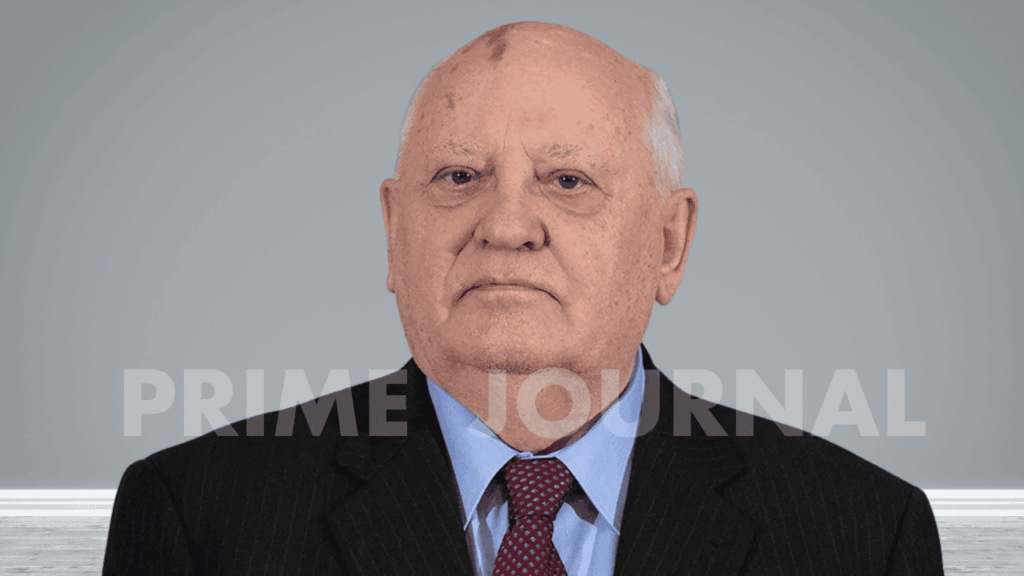
In March 1985, following the death of Konstantin Chernenko, Mikhail Gorbachev became the General Secretary of the Communist Party, making him the de facto leader of the Soviet Union at just 54 years old — the youngest in decades.
At the time, the Soviet Union faced:
- Economic stagnation
- Low productivity
- Heavy military spending due to the Cold War
- A crisis of public confidence
Gorbachev recognized the need for deep reforms to save the Soviet system from collapse.
Key Reforms: Perestroika and Glasnost
Gorbachev’s tenure introduced two defining policies that reshaped Soviet society:
Perestroika (Restructuring)
Introduced in 1986, Perestroika aimed to reform the Soviet economic system.
Key goals:
- Decentralize economic control
- Encourage limited private enterprise
- Reduce state bureaucracy
- Improve industrial efficiency
Impact:
While Perestroika aimed to modernize the economy, its implementation faced resistance from hardliners, leading to confusion and shortages.
Glasnost (Openness)
Launched alongside Perestroika, Glasnost encouraged transparency and freedom of speech.
Core principles:
- Freedom of the press
- Open criticism of government policies
- Public access to previously suppressed information
Results:
- Citizens began discussing corruption, war, and past atrocities openly.
- It led to an explosion of political debate and national movements in Eastern Europe.
Domestic Challenges and Economic Struggles
Despite his reformist vision, Gorbachev’s policies brought mixed results.
Economic Problems
- Factories struggled to adapt to new market-like reforms.
- Inflation and shortages increased.
- The ruble’s value fell dramatically.
Political Unrest
- Increased openness led to criticism of the Communist Party.
- Nationalist movements in Baltic States, Georgia, and Ukraine demanded independence.
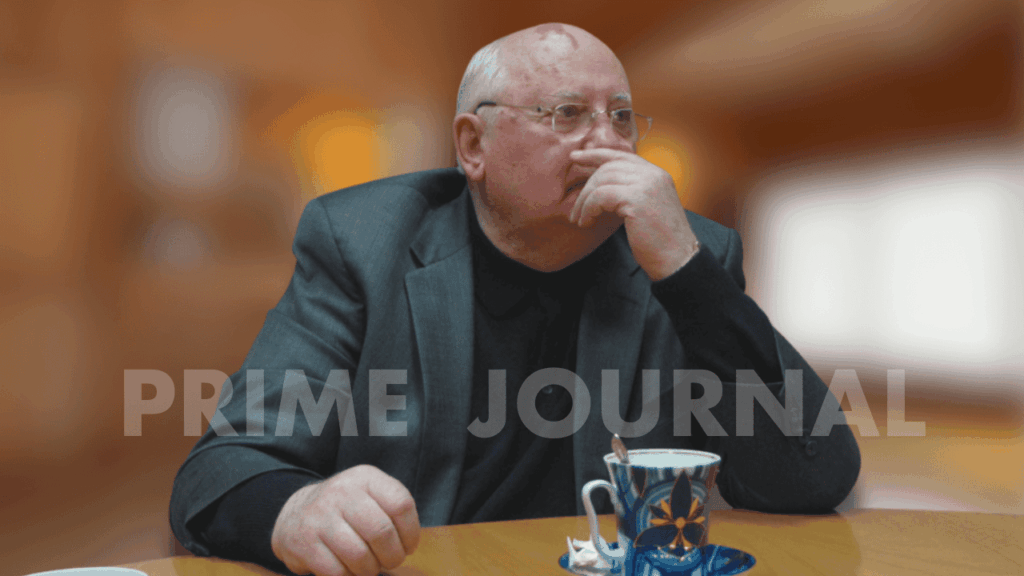
Quote from Gorbachev:
Foreign Policy and the End of the Cold War
One of Gorbachev’s greatest achievements was his role in ending the Cold War without violence.
Major Diplomatic Moves
- Signed the Intermediate-Range Nuclear Forces Treaty (INF) with U.S. President Ronald Reagan in 1987.
- Withdrew Soviet troops from Afghanistan in 1989.
- Promoted cooperation with the United States and Western Europe.
These policies led to a historic warming of East-West relations, earning him global recognition.
.
The Fall of the Soviet Union
By 1991, internal unrest and economic breakdown reached a peak.
Several Soviet republics declared independence, undermining central control.
Key Events:
- August 1991 Coup: Hardline communists attempted to overthrow Gorbachev.
- Boris Yeltsin emerged as a popular leader, defending democracy.
- The coup failed but weakened Gorbachev’s position irreversibly.
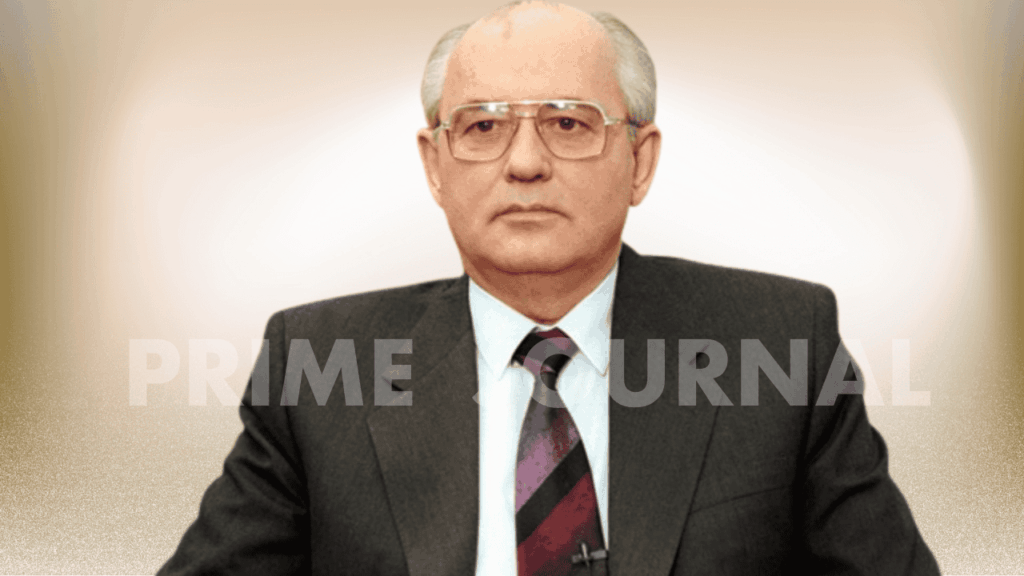
On December 25, 1991, Gorbachev resigned as President of the USSR, marking the official end of the Soviet Union.
“I am stepping down. The old system has collapsed before our eyes.” – Mikhail Gorbachev, 1991
Life After the Soviet Collapse
After his resignation, Gorbachev devoted his life to global peace and humanitarian work.
- Founded the Gorbachev Foundation to promote democracy and sustainable development.
- Supported environmental causes through Green Cross International.
- Authored books and delivered lectures worldwide on political reform and ethics.
He remained active in public life, often commenting on Russian and international affairs.
Gorbachev’s Legacy and Global Impact
Mikhail Gorbachev’s influence extends far beyond Russia. His policies reshaped global power structures and international relations.
| Legacy Aspect | Description |
|---|---|
| Political Reform | Encouraged democratization across Eastern Europe |
| Economic Transition | Initiated the move from centralized planning to mixed economies |
| Global Diplomacy | Paved the way for nuclear disarmament and peace |
| Cultural Openness | Promoted freedom of expression and information transparency |
Mixed Legacy
While many in the West view him as a hero of peace, some in Russia blame him for the chaos that followed the Soviet breakup.
Awards, Recognition, and Criticism
Major Awards
- Nobel Peace Prize (1990) – For his role in reducing global tensions.
- Ronald Reagan Freedom Award (1992).
- Otto Hahn Peace Medal (1989).
Criticism
- Russian conservatives accused him of betraying socialism.
- Some believed his reforms dismantled the USSR too quickly.
Still, Gorbachev’s vision of transparency and reform continues to inspire global leaders.
FAQs
1. Who was Mikhail Gorbachev?
Mikhail Gorbachev was the last leader of the Soviet Union, serving from 1985 to 1991. He introduced reforms that democratized the USSR and ended the Cold War.
2. What was Gorbachev’s most famous policy?
His two signature policies were Perestroika (economic restructuring) and Glasnost (political openness).
3. Why did the Soviet Union collapse under Gorbachev?
A combination of economic mismanagement, nationalist uprisings, and political liberalization weakened central control, leading to the USSR’s dissolution.
4. Did Gorbachev win a Nobel Peace Prize?
Yes. He received the Nobel Peace Prize in 1990 for his contribution to ending the Cold War and reducing nuclear tensions.
5. How did Mikhail Gorbachev die?
Gorbachev passed away on August 30, 2022, in Moscow after a long illness. He was 91 years old.
Conclusion
Mikhail Gorbachev remains one of history’s most complex and transformative leaders.
His commitment to openness, reform, and peace changed not only the Soviet Union but also the entire world order.
While opinions about his legacy may differ, there’s no denying that Gorbachev’s leadership symbolized a turning point between oppression and openness, and between war and peace.
If you’re interested in more in-depth biographies of world leaders who shaped modern history, explore our political insights section — a space where leadership, reform, and legacy meet the human story behind global change.