
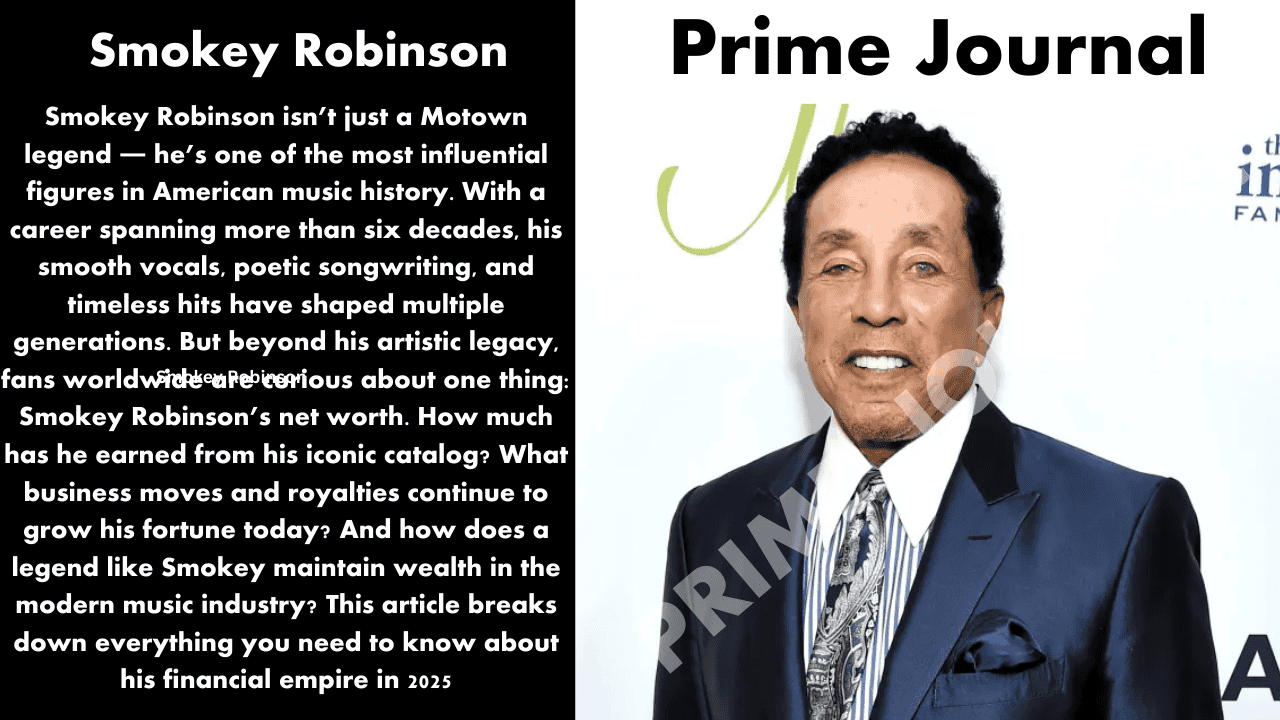
William “Smokey” Robinson Jr. is not just a voice of Motown — he’s a financial success story. With a career spanning more than six decades, his net worth today is a testament to his influence, talent, and business acumen. In this article, we’ll unpack Smokey Robinson net worth, explore how he earned his fortune, break down his assets, and understand why his legacy continues to generate wealth.
Table of Contents
- Who Is Smokey Robinson?
- Smokey Robinson Net Worth: Current Estimates
- How Smokey Built His Wealth
- Breakdown of Income Sources
- Major Assets & Expenditures
- Smokey Robinson’s Legacy and Its Financial Impact
- Risks and Controversies
- FAQs
- Conclusion
Who Is Smokey Robinson?
Smokey Robinson (born William Robinson Jr. on February 19, 1940, in Detroit, Michigan) is an American R&B and soul legend. He was a founding member and lead singer of The Miracles, one of Motown Records’ first successful acts. Smokey is also a prolific songwriter, record producer, and former Motown executive.
Over his career, he has written or co-written hundreds of songs, many of which have become timeless classics (“Shop Around,” “The Tracks of My Tears,” “You’ve Really Got a Hold on Me,” to name just a few).
His influence has been widely recognized: he was inducted into the Rock & Roll Hall of Fame in 1987 and later received the Library of Congress Gershwin Prize for Popular Song.
Smokey Robinson Net Worth: Current Estimates
As of 2025, most reputable sources estimate Smokey Robinson’s net worth to be around US$ 150 million.
- Celebrity Net Worth lists it at $150M.
- According to other sources, the figure ranges between $150M and $160M, factoring in royalties, real estate, and business investments.
- There are some less-cited estimates (e.g., Cine Net Worth) that suggest up to $180M, but the $150M figure is most broadly accepted.
How Smokey Built His Wealth
Smokey Robinson’s wealth wasn’t built overnight. Here’s a breakdown of the major streams that contributed to his fortune:
Music & Songwriting
- The Miracles Era: His early success came as lead singer of The Miracles (in the 1950s and ’60s), which had massive hits under the Motown label.
- Solo Career: In 1972, Smokey went solo. His solo hits like “Cruisin’” and “Being With You” were very successful.
- Songwriting for Others: He wrote and produced for other Motown artists, including The Temptations, Marvin Gaye, and Mary Wells.
- Music Production: His role as a producer also brought in significant income over decades.
Record Executive & Motown
- Smokey served as Vice President of Motown Records, which gave him both influence and compensation beyond his own performance income.
- His executive role also likely granted him equity, royalty participation, and other long-term financial benefits.
Live Performances & Touring
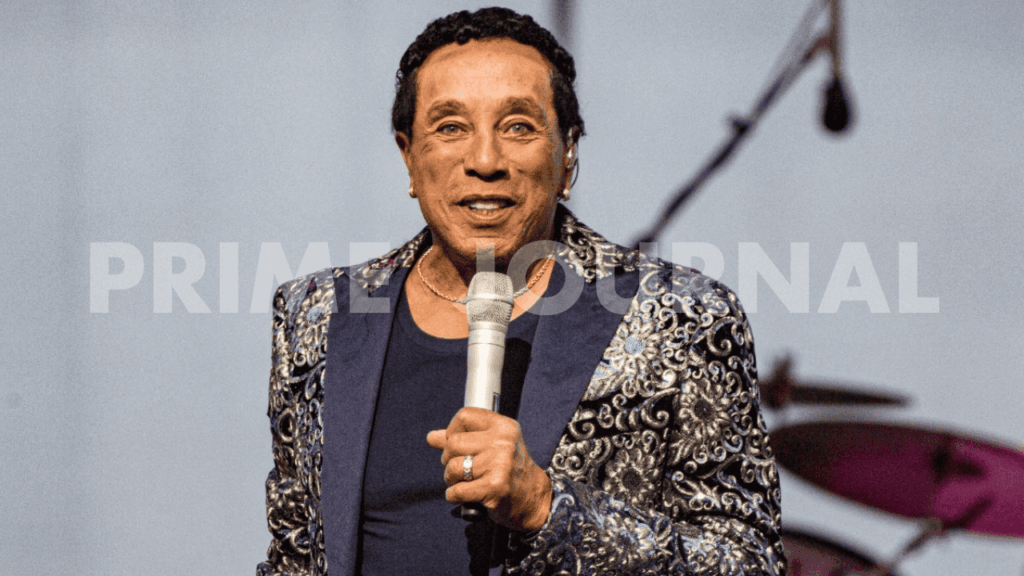
- Even into his later years, Smokey performs. Live concerts and touring remain a steady source of income, especially for legacy artists like him.
- Performance fees for such an iconic figure can be large, though specific per-show numbers are not always publicly disclosed.
Royalties, Publishing & Licensing
- Publishing Rights: His catalog of songs continues to generate royalties from radio plays, streaming, and covers.
- Licensing: Many of his songs are licensed for films, commercials, and TV usage, which brings in another stream of recurring income.
- Synchronization Income: Sync deals (when songs are used in media) can be very lucrative for classic songwriters like him.
Business Ventures & Investments
- Smokey has invested in real estate, which we’ll detail further below.
- He has business interests beyond music: according to his biography, he has been involved in ventures like wine (he launched a wine brand named after some of his hit songs).
- He likely has diversified investments (stocks, private equity, etc.), though public figures rarely disclose full wealth portfolios.
Real Estate
- Real estate is a big part of his net worth. He has owned multiple properties, especially in California.
- For example, his former Encino, California mansion was sold for $8.3 million in 2017.
- High-value real estate investments help with long-term capital appreciation and also provide passive income potential.
Breakdown of Income Sources
Estimated Annual Income Table
Here’s a rough, hypothetical breakdown of how Smokey Robinson’s annual income could be divided based on publicly available data and expert estimation:
| Income Source | Estimated Annual Income (USD) |
|---|---|
| Music Royalties & Publishing | $5M – $8M |
| Live Performances & Touring | $2M – $4M |
| Record Sales (Miracles + Solo) | $1M – $2M |
| Songwriting & Production Credits | $1.5M – $3M |
| Licensing & Sync (TV, Film, Ads) | $0.8M – $1.5M |
| Merchandise & Brand Endorsements | $0.5M – $1M |
| Investments & Business Ventures | $1M – $2M |
| Appearances, Interviews & Specials | $0.3M – $0.7M |
Note: These are estimations based on public-source reports and are not audited figures.
Major Assets & Expenditures
Real Estate Holdings
- Encino Mansion: Previously owned by Smokey, sold for $8.3M in 2017.
- Chatsworth Home: Another notable property in the Los Angeles area.
- Other properties may be part of his real estate portfolio, though not all are publicly disclosed.
Music Catalog Value
- His song catalog is extremely valuable. Classics never go out of style, and the licensing of his works helps maintain his income.
- The value of music catalogs for legacy artists can run into tens or even hundreds of millions depending on usage, but exact valuations are often private.
Personal Life & Legal Matters
- Smokey has had personal expenditures, including supporting a family, managing properties, and running his business ventures.
- In 2025, serious legal allegations have emerged: four former housekeepers sued him for sexual assault and other claims.
- He filed a counter-suit for defamation, seeking $500 million in damages.
- There is also a criminal investigation reported by law enforcement.
- These legal challenges could affect his reputation, but as of now, they are part of ongoing litigation.
Smokey Robinson’s Legacy and Its Financial Impact
Smokey Robinson’s legacy isn’t just musical — it’s financial. Here’s why:
- Timeless Music: His songs remain relevant, ensuring long-term royalty streams.
- Songwriting Influence: He wrote for Motown and beyond, amplifying his revenue potential.
- Brand & Recognition: As a Motown icon, his name alone holds value for endorsements, legacy tours, and media appearances.
- Institutional Honors: Inductions (e.g., Rock & Roll Hall of Fame) and awards bolster his prestige, helping maintain demand.
- Catalog Longevity: Music rights often appreciate over time, especially for classic artists, making his catalog a valuable asset even as he ages.
Risks and Controversies
While Smokey’s net worth is impressive, there are some risks and reputational issues that could affect his legacy and finances:
- Legal Allegations: As mentioned, he’s facing a high-profile lawsuit from former employees alleging sexual misconduct.
- Defamation Counter-Suit: Smokey countersued for $500M, calling the allegations “extortionate.”
- Public Reputation: Even unfounded allegations have reputational risk for legacy artists; this could impact future deals or licensing.
- Market Changes: The music business is evolving (streaming, changing licensing models), which could impact royalty income.
- Estate Planning: At his age, succession planning is vital. How his assets will be managed in the future could influence net worth projections.
FAQs
Here are some common questions people ask about Smokey Robinson net worth:
1. What is Smokey Robinson’s net worth in 2025?
Smokey Robinson’s net worth is estimated to be approximately US$ 150 million, according to multiple reputable sources.
2. How did he make his money?
His wealth comes from a diversified mix of:
- Decades of songwriting and music royalties
- Record sales and touring
- Licensing of his music for films, commercials, and TV
- Executive roles (like his time as Motown VP)
- Real estate investments
- Business projects (e.g., wine brand)
3. Does he still earn money from his old songs?
Yes — his classic catalog continues to generate royalties from radio, streaming platforms, and licensing deals.
4. What properties does he own or has owned?
He has owned several high-value properties. Notably, his Encino mansion was sold for $8.3 million, and he previously owned a large Chatsworth residence.
5. Are the legal allegations against him going to affect his net worth?
Potentially. He is currently under investigation and is being sued for $50 million by four former housekeepers. He has filed a $500 million counter-suit for defamation. How the legal outcome unfolds could have financial implications, but as of now, these are ongoing issues.
6. Will his music catalog be sold?
There’s no public confirmation of a full catalog sale. Many legacy artists prefer to keep their catalogs in family ownership or under direct management because of the long-term value.
Conclusion
Smokey Robinson’s journey from Detroit’s Motown streets to becoming a multi-millionaire legend is nothing short of extraordinary. His estimated $150 million net worth reflects not just his timeless talent but also his wisdom in managing assets, investing wisely, and leveraging multiple income streams. With a legacy rooted in classic songwriting and soulful performance, he continues to be a financial and cultural force.