



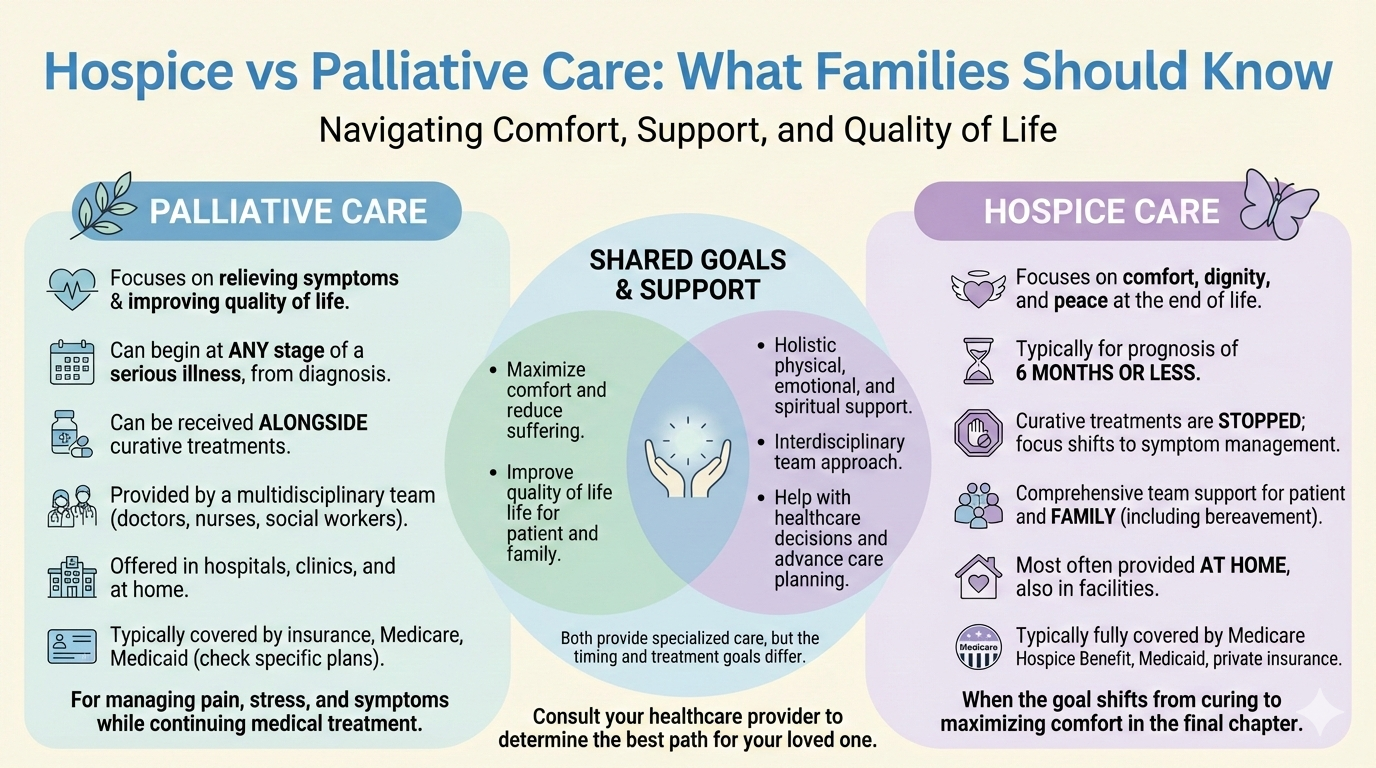
Hospice and palliative care both focus on comfort but work differently. Palliative care can start at any stage of a life-limiting illness and run alongside treatment. Hospice care, on the other hand, usually starts in the final stages of life after curative treatments have stopped
Because of these differences and confusion, many people tell us they’re too overwhelmed and stressed to decide.
Our team at www.palassist.org.au offers free support through registered nurses and health professionals for Queensland families affected by a life-limiting illness.
In this article, we walk you through the care differences between hospice vs palliative care. You’ll also find practical tips and emotional insights to ease some of the stress for your whole family.
We’ll start with palliative care.
What Is Palliative Care and Who Is It For?
Palliative care is specialised support for anyone living with a serious or life-limiting illness, and it can start at any stage of that illness. The goal of the care is to help you or your loved one live as comfortably as possible while also supporting the whole family.
Here’s what palliative care services look like in practice and how they can help.
Designed to Improve Quality of Life
Palliative care focuses on comfort and well-being rather than just treating the illness itself. In practice, this means managing symptoms like pain, tiredness, or nausea so your loved one feels more like themselves again. The care also extends to emotional and spiritual needs, which means supporting them as a complete individual during a difficult time.
Where You Can Receive Palliative Care
You can receive palliative care at home, in a hospital, in a hospice, or in an aged care home, depending on what works best for your situation. It can also be short-term support during particularly difficult periods, or ongoing care that adjusts as needs change over time. This flexibility is one of the notable benefits of palliative care, as it allows your family to choose and change the setting based on your loved one’s needs.
The Palliative Care Team
Because palliative care covers so many areas, it is delivered by a team of health professionals who each play a different role. Your palliative care team can include doctors, nurses, social workers, and grief counsellors to provide emotional support to your loved one, you and your family. Many services also offer cultural support, which will make sure the care feels respectful and personal for everyone involved.
Why It Doesn’t Mean Giving Up
A common misunderstanding is that accepting palliative care means giving up on treatment altogether, but that’s not the case. In fact, you can receive palliative care alongside curative treatments like chemotherapy or surgery. The goal of palliative care is to always help your loved one live comfortably for as long as possible.
Hospice vs. Palliative Care: Key Differences Families Need to Know
The main difference between hospice and palliative care comes down to the timing and treatment goals. As we mentioned, you can start palliative care anytime, but hospice care is usually reserved for the final weeks or months of life. Let’s take a closer look at these care differences so you can help your family feel more confident about the path ahead.
What Is Hospice Care?
Hospice care is a specialised form of end-of-life care for a dying person in the final stages of their illness. It usually begins after curative treatments stop, and a doctor will determine that the patient has limited time left. Because cure is no longer the goal, the focus will move entirely to comfort, pain management, and emotional support for both the patient and their family.
Where Hospice Care Is Delivered
Just like with palliative care, you can get hospice care at home, in a hospice, or occasionally in a hospital or aged care home.
But most families choose to receive hospice care at home. This is because it keeps your loved one in familiar surroundings and lets everyone stay close during this important time.
However, if you need more hands-on medical support, a dedicated hospice facility is a better option. These spaces are specifically designed to feel more like a homely environment than a hospital, which can bring comfort and reassurance during the final days.
Hospice and Palliative Care Compared
Here is a side-by-side comparison of the two options to make the care differences easier to understand:
| Feature | Palliative Care | Hospice Care |
| Timing | Any stage of illness | Final months or weeks |
| Treatment | Alongside curative treatments | No curative treatment |
| Focus | Symptom relief and quality of life | Comfort and dignity |
| Setting | Hospital, home, or aged care | Home or hospice facility |
When Should a Family Make the Switch?
A family may choose to switch to hospice care when treatments are no longer focused on curing the illness and comfort becomes the main priority.
But since the decision can be deeply personal for each family, we recommend that everyone involved consider the following first:
- Overall goals of care (like comfort, quality of life, or specific daily needs)
- The medical prognosis (including expected health changes and life expectancy)
- Most importantly, the wishes of the person receiving care.
Also, reach out for support services as early as you can. We often notice families feel less overwhelmed and more ready to handle changes in their loved one’s care when they get help early.
Get End-of-Life Care That Supports Everyone Involved
So, does the difference between hospice and palliative care feel a bit clearer now? We hope this article helped you understand your options. Remember to always start with your loved one’s needs, preferences, and medical situation.
This way, you can plan an end-of-life care that can ease suffering for the person receiving care, and provide comfort to family and friends. If you’re not sure where to begin, a good first step is to talk with your GP or ask your care team about a referral.
You can also reach out to Pal Assist for free support from health professionals who understand what your family is going through.
Disclaimer
This blog provides general health and product information for educational purposes only. It is not intended to diagnose, treat, or replace advice from your healthcare professional. Always seek guidance from your GP, nurse, continence advisor, or pharmacist regarding your individual needs. If symptoms persist or you’re unsure about product use, consult a qualified healthcare provider.