
What Is Olympus Scanlation?
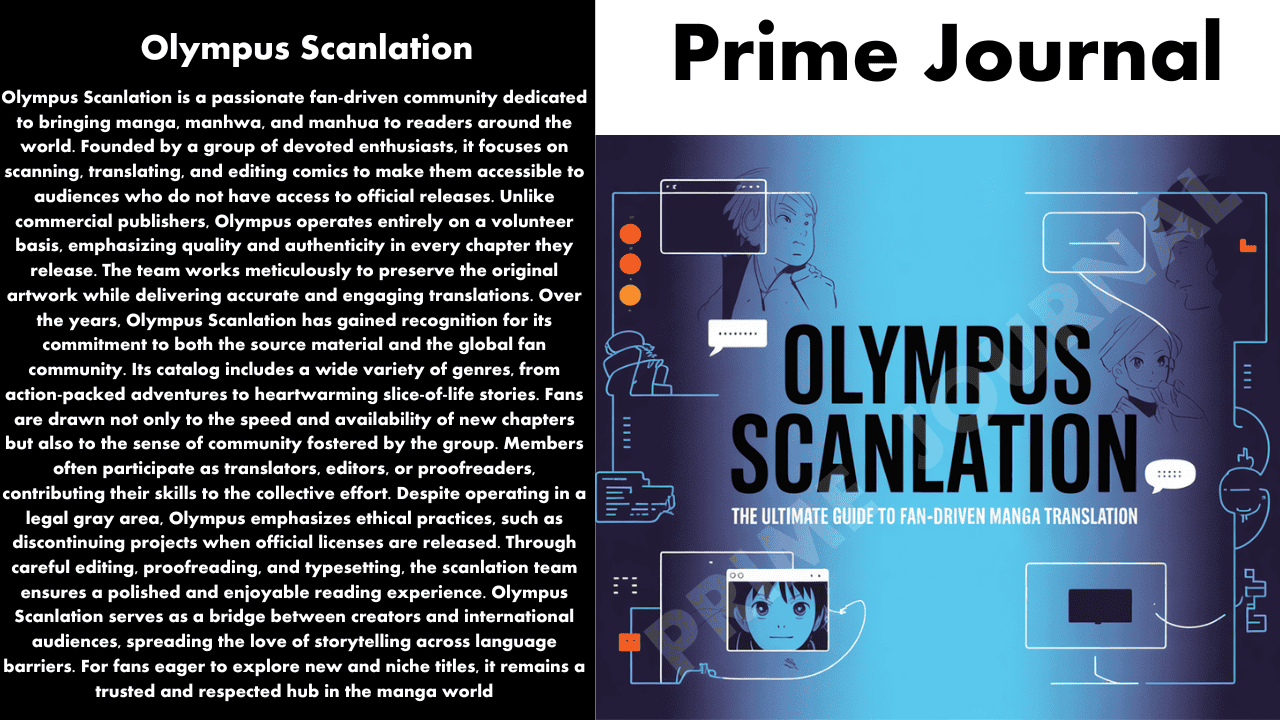
Olympus Scanlation is a fan‑driven scanlation group — a collective of volunteers who scan, translate, edit, and publish manga, manhwa, and manhua for readers in languages like English for free. The term scanlation comes from combining “scan” and “translation,” meaning the process of digitizing comic pages, translating the text, and typesetting the translated dialogue into the cleaned artwork.
Unlike official publishing companies, Olympus is entirely non‑commercial and powered by passionate fans who want to make stories accessible to a global audience. Their releases often arrive faster than official translations and cover titles that might never be licensed officially.
The Origin and History
Although exact founding details are sparse, Olympus Scanlation began in the early 2010s among dedicated manga fans. Their mission was simple: bring untranslated works to readers who don’t have access to official releases yet. Over the years, they’ve grown into a respected community with a reputation for quality and care in translations.
Their catalog now includes hundreds of titles — from action and fantasy to romance and slice‑of‑life — across Japanese manga, Korean manhwa, and Chinese manhua.
How Olympus Scanlation Works
The Scanlation Workflow
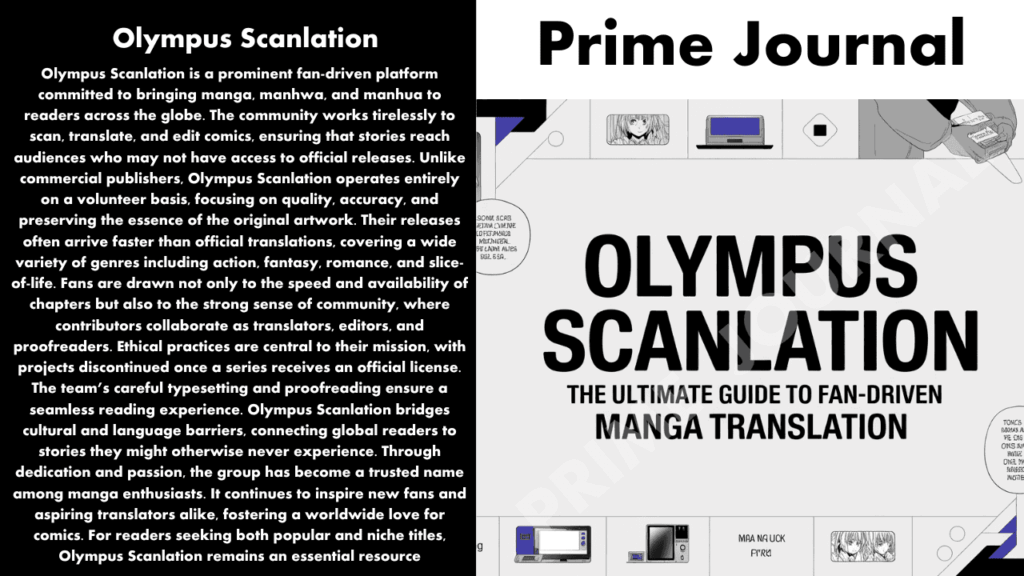
Olympus follows a multi‑stage process to ensure each release is polished and readable:
- Raw Acquisition
Volunteers obtain high‑resolution pages of the original comic. - Cleaning & Redrawing
Original text and imperfections are removed; artwork behind speech bubbles is restored. - Translation
Bilingual translators convert original text into the target language (often English), balancing literal accuracy with natural flow. - Typesetting
English dialogue is carefully placed to match the visual style of the original. - Proofreading & QC
Editors and proofreaders check grammar, tone, and cultural nuances. - Release
Final chapters are published online for free, usually on official sites or Discord channels.
Example Workflow Table
| Stage | Role | Example Tools |
|---|---|---|
| Scanning | Raw Collector | DSLR, scanner |
| Cleaning | Cleaner/Redrawer | Photoshop, Krita |
| Translation | Translator | CAT tools |
| Typesetting | Typesetter | FontForge, Aegisub |
| Proofreading | Editor/QC | Grammarly, proofreading tools |
Community & Culture
Olympus isn’t just about translation — it’s about community. Fans actively participate by:
- Voting on new series to scanlate
- Joining discussions on Discord and Reddit
- Sharing insights, fan art, and manga recommendations
Many contributors start as readers and gradually pick up roles like cleaner, translator, or proofreader. This collaborative environment fosters mentorship, skill development, and deeper appreciation of manga culture.
Legal and Ethical Considerations
Is Olympus Scanlation Legal?
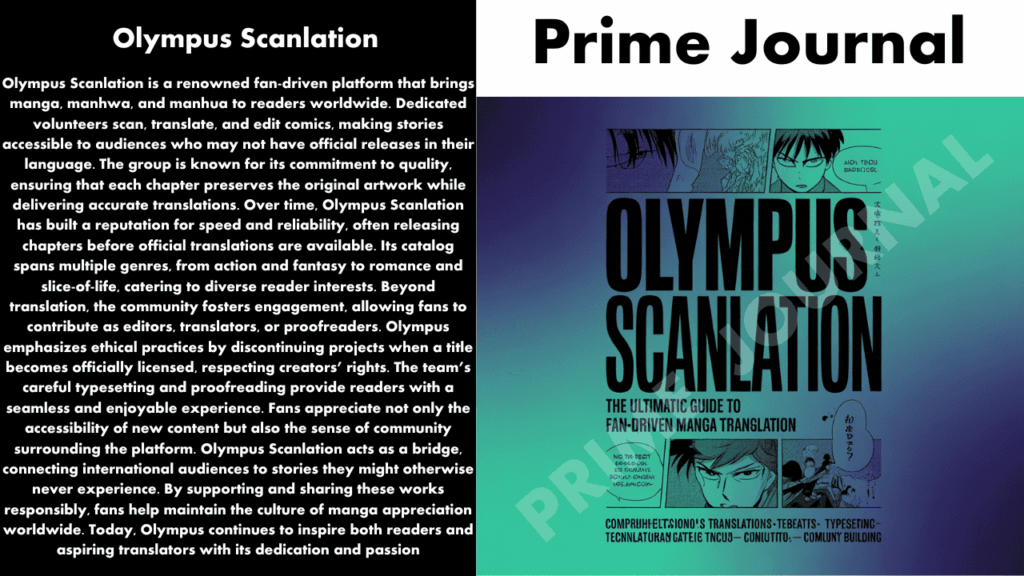
Technically, scanlation exists in a legal grey area because it involves translating and distributing copyrighted material without official permission. This means it can constitute copyright infringement in many jurisdictions.
However, Olympus Scanlation tries to operate ethically:
- Non‑commercial: No ads, subscriptions, or paywalls.
- Respect for Official Releases: They discontinue projects if a series gets licensed officially.
- Acknowledgment: Original authors and publishers are credited with each release.
Ethical Guidelines in Practice
- Encourage fans to purchase official editions when available.
- Avoid monetizing fan translations.
- Swap to licensed content once it’s released.
This approach positions Olympus as a bridge to official fandom, not a replacement for licensed content.
For more on how copyright and fan translations interact, see the Wikipedia article on scanlation: https://en.wikipedia.org/wiki/Scanlation
Why Fans Use Olympus Scanlation
Fans gravitate toward Olympus Scanlation for several reasons:
- Speed: Releases often arrive weeks or months before any official translation.
- High‑Quality Work: Multi‑stage editing helps maintain readability and tone.
Risks and Safety Tips
Because scanlation sites sometimes host user‑generated content, fans should be cautious:
- Avoid unofficial mirrors — they may contain malware.
- Use trusted links only, such as verified Discord announcements.
- Consider supporting creators legally by purchasing official versions when available.
FAQs
What exactly does “scanlation” mean?
Scanlation combines “scan” and “translation.” It refers to fan‑made scanning, translating, and editing of comics into another language.
Is Olympus Scanlation legal?
No — scanlation involves distributing copyrighted work without explicit permission, which usually violates copyright law. However, groups like Olympus operate non‑commercially and responsibly.
Can I join Olympus Scanlation as a volunteer?
Yes — many scanlation groups accept volunteers (translators, editors, and more). Check their Discord or official communication channels for recruitment details.
Are scanlations better than official translations?
Not always. Scanlations may be released sooner and cover titles that lack official versions — but official translations are legal, polished, and support creators.
Should I read scanlations?
You can read them responsibly — meaning as a temporary way to access content while supporting official editions once they are available.
Conclusion
Olympus Scanlation is a fascinating example of fandom passion meeting community action. By scanning, translating, and editing manga and other comics, volunteers make stories accessible across language barriers and regions. While operating in a legal grey area, the group’s ethical approach — non‑commercial, respect for creators, and discontinuation upon official licensing — positions them as a responsible part of manga fandom.