



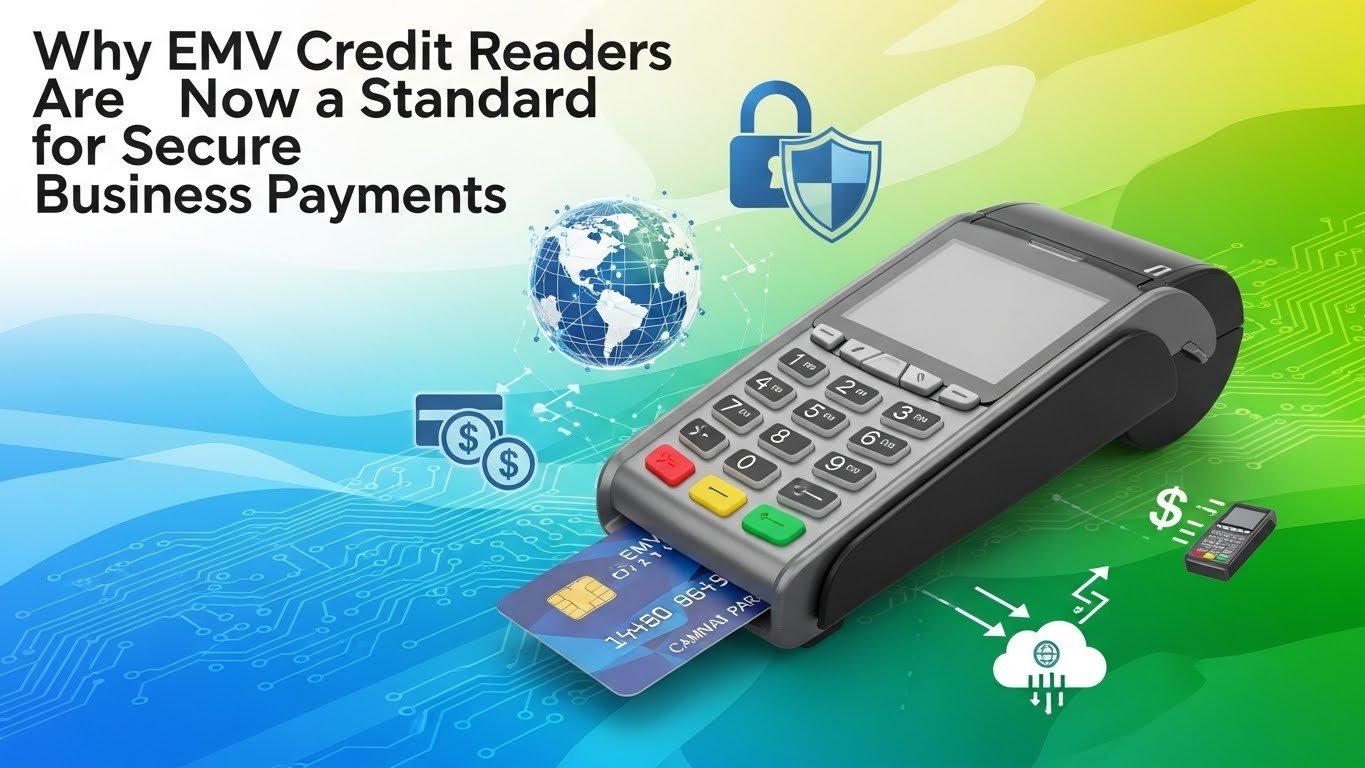
Payment security has become a top priority for businesses of all sizes. As card fraud methods have evolved, so have the technologies designed to prevent them. One of the most significant developments in this area is the adoption of EMV credit card readers, which have transformed how in-person transactions are processed.
For businesses that handle card payments daily, EMV technology is no longer optional. It plays a crucial role in reducing fraud, improving customer trust, and ensuring compliance with modern payment standards.
Understanding What EMV Technology Means
EMV stands for Europay, Mastercard, and Visa—the companies that originally developed the chip-based payment standard. Unlike traditional magnetic stripe cards, EMV cards use embedded microchips to generate unique transaction data for every purchase.
This dynamic authentication makes it significantly harder for fraudsters to reuse card information. As a result, EMV readers provide a higher level of security compared to older swipe-based systems.
Why Magnetic Stripe Payments Became Risky
Magnetic stripe cards store static data, which can be copied and reused if compromised. For years, this vulnerability made businesses targets for card-present fraud.
Common risks associated with magnetic stripe payments include:
- Card cloning
- Skimming attacks
- Higher chargeback rates
EMV readers address these issues by ensuring each transaction is authenticated uniquely, reducing the likelihood of successful fraud attempts.
The Shift in Liability and Business Responsibility
One of the driving forces behind EMV adoption was the shift in fraud liability. When businesses fail to use EMV-compliant readers, they may be held responsible for fraudulent transactions that could have been prevented with chip technology.
This shift encourages businesses to:
- Upgrade outdated payment hardware
- Maintain compliance with industry standards
- Reduce exposure to financial losses
For many businesses, EMV adoption is as much about risk management as it is about security.
How EMV Credit Card Readers Improve Customer Trust
Customers are increasingly aware of payment security. Seeing chip-based transactions reassures them that a business takes data protection seriously.
EMV readers contribute to trust by:
- Supporting secure chip-and-pin or chip-and-signature payments
- Reducing visible payment errors
- Providing smoother transaction experiences
Trust at checkout can influence whether customers choose to return.
Integration With Modern POS Systems
EMV readers are most effective when integrated with modern point-of-sale systems. This integration ensures accurate transaction records and reduces manual errors.
Benefits of integration include:
- Automatic sales data syncing
- Simplified reporting and reconciliation
- Reduced checkout delays
Conversations around emv credit card reader often focus on how proper integration enhances both security and operational efficiency.
Supporting Contactless and Mobile Payments
Many EMV readers also support contactless payments and mobile wallets. These options offer convenience while maintaining security standards.
Businesses benefit from supporting:
- Tap-to-pay cards
- Mobile wallets
- Faster checkout experiences
These features help meet evolving customer preferences without compromising security.
EMV Technology and Small Business Operations
For small businesses, upgrading payment hardware may feel like a major investment. However, EMV readers often provide long-term value by reducing fraud-related losses.
Small businesses benefit from EMV readers by:
- Lowering chargeback risks
- Enhancing customer confidence
- Simplifying compliance requirements
Over time, these benefits often outweigh the initial upgrade costs.
Compliance and Industry Standards
Payment standards continue to evolve, and businesses must stay compliant to avoid penalties and disruptions. EMV readers support compliance with current security requirements.
Maintaining compliance involves:
- Using certified payment hardware
- Keeping systems updated
- Following secure transaction procedures
EMV technology helps businesses meet these expectations more easily.
The Role of Payment Technology Providers
Behind secure transactions is payment infrastructure that ensures EMV technology functions reliably across different environments.
Smart Payment Solutions supports businesses by providing payment technologies designed to align with modern security standards. By focusing on compatibility, secure processing, and reliable performance, the company helps merchants implement EMV-based transactions while maintaining smooth day-to-day operations.
Preparing for Future Payment Security Needs
Payment security does not stand still. As fraud methods evolve, businesses must be prepared to adapt.
Forward-thinking businesses consider:
- Hardware upgrade paths
- Software compatibility
- Support for emerging payment standards
Choosing adaptable payment technology reduces the need for frequent replacements and supports long-term planning.
Final Thoughts
EMV credit card readers have become a foundational element of secure in-person payments. By reducing fraud risk, supporting compliance, and building customer trust, they help businesses protect both revenue and reputation.
As payment expectations continue to evolve, investing in secure, EMV-compliant technology allows businesses to operate confidently and focus on delivering positive customer experiences. In today’s payment landscape, EMV readers are not just a security upgrade—they are a business necessity.