


Meta Title
MOT Advisories: What They Mean and When to Fix Them
Meta Description
Passed your MOT with advisories? Learn what they mean, which issues to fix first, and how early action with TJ Services Fleet helps prevent costly failures.
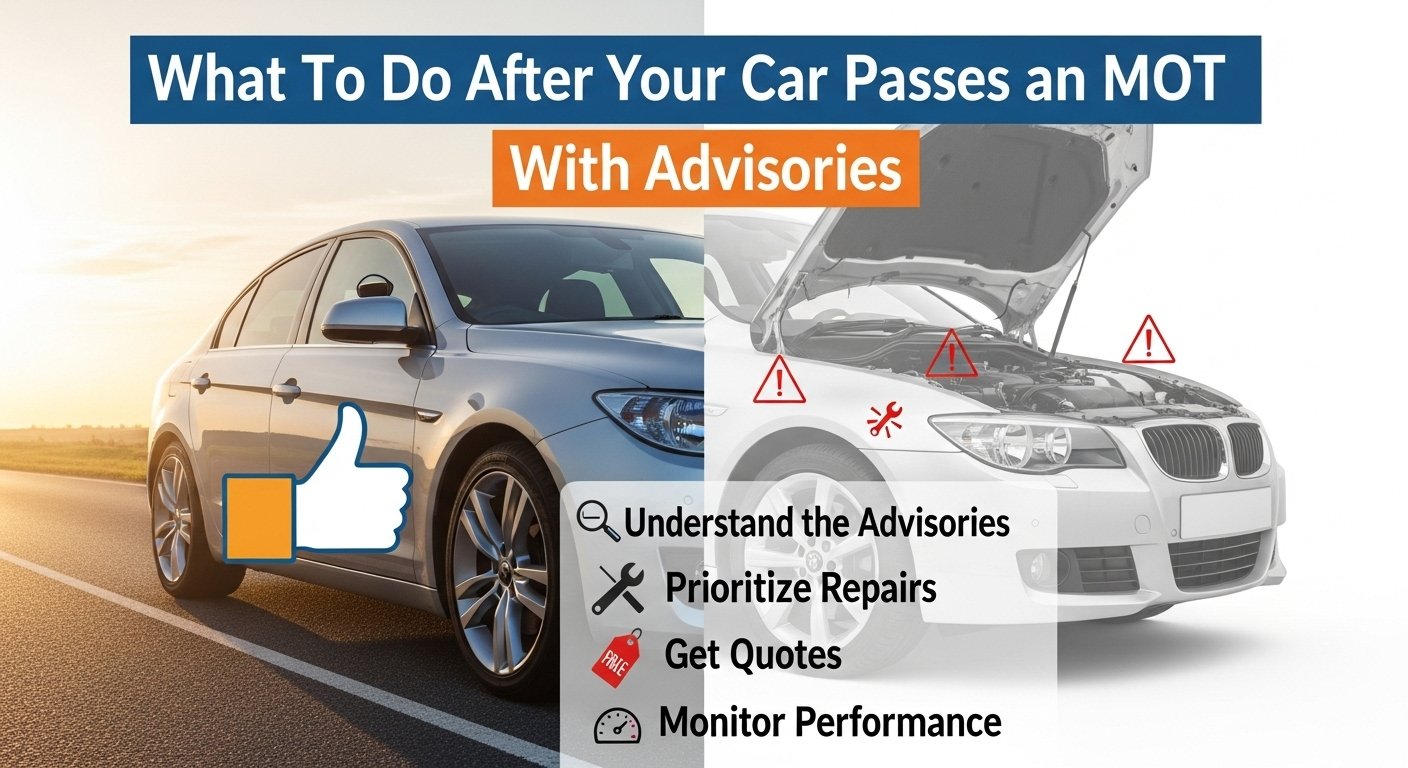
What To Do After Your Car Passes an MOT With Advisories
For many drivers, seeing the word “PASS” on an MOT certificate feels like a huge relief. The car is legal, the stress is over, and it’s tempting to put the paperwork away and forget about it for another year.
But if your MOT pass came with advisories, the job isn’t quite finished.
MOT advisories are early warnings that certain parts of your car are worn, deteriorating, or close to the legal limit. Ignoring them now often leads to MOT failures, breakdowns, or expensive repairs later.
How you respond to these advisories often determines whether your next MOT is smooth and affordable or stressful and expensive.
This guide explains exactly what to do after passing an MOT with advisories, why they matter, which ones need urgent attention, and how acting early can save you money, protect your safety, and extend the life of your vehicle.
What Are MOT Advisories?
An MOT advisory is a note added by the MOT tester to highlight components that are not yet serious enough to fail, but are showing signs of wear or deterioration.
In simple terms:
- Your car is road-legal today
- Certain parts are likely to fail in the near future
- Action is recommended before the next MOT
Advisories are recorded on the official MOT history database, meaning they can be viewed online by anyone who checks your registration number. They remain visible even after future MOTs.
This makes advisories important not just for maintenance, but also for vehicle value, insurance considerations, and long-term reliability.
Why MOT Advisories Should Never Be Ignored?
Many drivers assume advisories are optional. Technically, you are allowed to drive the car, but ignoring advisories is one of the most common reasons vehicles:
- Fail their next MOT
- Break down unexpectedly
- Develop costly secondary damage
Advisories exist because MOT testers are required to flag developing safety or compliance risks. These risks almost always worsen with time and mileage.
Ignoring advisories often leads to:
- Higher repair bills later
- Sudden loss of braking, grip, or control
- Emergency repairs instead of planned maintenance
- Multiple MOT failures in one test
Think of advisories as advance notice, they give you control over when and how repairs are done.
Step One: Read the MOT Advisory Notes Properly
The first thing to do after passing an MOT with advisories is to read the advisory section carefully, not just glance at the result.
Pay attention to:
- Which parts are mentioned
- The wording used by the tester
- Whether the issue is described as “worn,” “deteriorated,” “corroded,” or “close to limit”
The language often gives clues about urgency. For example:
- “Worn but not excessively” suggests monitoring
- “Nearside tyre close to legal limit” suggests replacement soon
- “Brake pipe corroded” suggests priority attention
Understanding what’s been flagged helps you plan the next steps properly.
Common MOT Advisories and What They Mean
Common MOT advisories are meant to help you find out what makes you fail the MOT and what you should follow next. Here are the common MOT advisories and what they mean.
- Tyres Close to the Legal Limit
Tyres are one of the most common advisory items. The legal minimum tread depth in the UK is 1.6mm, but tyres often lose effectiveness well before that.
An advisory usually means:
- The tyre is legal today, but will soon need replacing
- Wet grip and braking performance are already reduced
- There may be alignment or suspension issues causing uneven wear
Left unaddressed, tyre advisories almost always turn into MOT failures.
- Brake Pads or Discs Showing Wear
Brake advisories should always be taken seriously. While pads and discs are designed to wear, ignoring early signs leads to much bigger problems.
A brake advisory often means:
- Pads are approaching minimum thickness
- Discs may soon be damaged by metal-on-metal contact
- Braking efficiency will gradually decline
Replacing brake pads early is far cheaper than replacing pads, discs, and calipers together.
- Suspension Wear or Deterioration
Suspension advisories often mention bushes, ball joints, shock absorbers, or springs.
These parts affect:
- Vehicle stability
- Steering accuracy
- Tyre wear
- Braking performance
What feels like a minor knock or vibration today can become a serious handling issue within months if ignored.
- Exhaust Corrosion or Minor Leaks
Exhaust advisories usually indicate corrosion, insecure mountings, or minor leaks that are not yet severe enough to fail.
These issues often worsen due to:
- Heat cycles
- Road salt
- Vibration
Left unattended, they can lead to emissions failures, increased noise, or complete exhaust replacement.
- Brake Pipes or Fuel Lines Showing Corrosion
This is a high-priority advisory that many drivers underestimate.
Corroded pipes:
- Weaken structurally over time
- Can suddenly rupture
- Pose serious safety risks
What is acceptable today may be unacceptable at the next MOT.
- Oil Leaks or Seepage
Advisories for oil leaks usually indicate a minor leak rather than an active drip.
However, leaks:
- Rarely fix themselves
- Often worsen as seals degrade
- Can lead to engine damage or MOT failure
Addressing leaks early prevents major mechanical issues later.
- Wipers, Windscreen, and Visibility Issues
Advisories may note:
- Worn wiper blade
- Ineffective washer jets
- Minor windscreen damage outside the driver’s direct view
These are inexpensive fixes when done early, but can quickly turn into MOT failures if ignored.
Step Two: Prioritise Advisories by Safety
Not all advisories carry the same level of risk. After reading your MOT report, the next step is to prioritise repairs.
High-priority advisories include:
- Brakes
- Tyres
- Steering
- Suspension
- Brake pipes or fuel lines
These affect your ability to control and stop the vehicle safely.
Lower-priority advisories may include:
- Cosmetic corrosion
- Minor exhaust deterioration
- Non-critical leaks
However, even lower-priority items should be scheduled, not forgotten.
Step Three: Book a Post-MOT Inspection
An MOT advisory is a snapshot, it doesn’t tell you how long a part will last or how urgent the repair really is.
A professional inspection after the MOT allows a technician to:
- Assess the true condition of advisory items
- Estimate remaining lifespan
- Identify related wear not mentioned on the MOT
- Help you plan repairs sensibly
This avoids both unnecessary immediate work and dangerous delays.
How TJ Services Fleet Helps After an MOT With Advisories
At TJ Services Fleet, we regularly help drivers who have passed an MOT with advisories and want clarity, not guesswork.
Our post-MOT advisory inspections focus on:
- Explaining what each advisory actually means
- Identifying which items need urgent attention
- Preventing small issues from turning into failures
- Helping customers spread repair costs sensibly
We offer full and interim servicing, brake repairs, suspension work, diagnostics, and preventative maintenance, all aimed at keeping vehicles reliable between MOTs, not just on test day.
By addressing advisories early, our customers benefit from:
- Fewer unexpected breakdowns
- Lower long-term repair costs
- Better MOT pass rates year after year
- Improved safety and performance
Step Four: Fix Advisories Before They Become Failures
The biggest mistake drivers make is waiting until the next MOT to deal with advisories.
By then:
- Wear has increased
- Secondary damage may have occurred
- Multiple items may fail at once
Fixing advisories early means:
- Repairs are simpler and cheaper
- You avoid emergency bookings
- You stay in control of your maintenance budget
Planned repairs are always better than forced ones.
How Advisories Affect Your Next MOT
MOT testers check previous MOT history. If advisory items:
- Reappear unchanged
- Have clearly worsened
- Have caused related damage
They are far more likely to result in failures.
Repeated advisories year after year suggest poor maintenance and increase the likelihood of multiple failures in one test.
Booking early MOT testing in Fleet helps ensure advisory items are resolved before they turn into full MOT failures.
Advisories and Vehicle Resale Value
Anyone buying a used car in the UK can check MOT history online.
Multiple unresolved advisories:
- Reduce buyer confidence
- Suggest neglect
- Lower resale value
Fixing advisories before selling:
- Makes the car more attractive
- Supports a higher asking price
- Speeds up the sale
Advisories and Insurance Considerations
While advisories alone do not invalidate insurance, problems can arise if:
- An accident is linked to an advisory-related fault
- The vehicle is deemed poorly maintained
- Safety issues were knowingly ignored
Maintaining the car properly protects you legally as well as mechanically.
Turning Advisories Into a Smart Maintenance Plan
The best approach is to treat advisories as a maintenance roadmap.
A smart plan includes:
- Immediate repair of safety-critical items
- Scheduling remaining advisories over time
- Combining repairs with routine servicing
- Monitoring wear patterns to prevent repeat issues
This approach spreads costs and keeps the car reliable all year.
Final Thoughts
Passing an MOT with advisories is not a warning sign, it’s an opportunity.
It gives you:
- Advance notice of developing issues
- Time to plan repairs properly
- The chance to avoid future failures and high costs
Drivers who act on advisories early enjoy safer vehicles, lower bills, and far less MOT stress.
If your car has recently passed with advisories, now is the best time to deal with them, while they are still manageable, affordable, and easy to fix.