




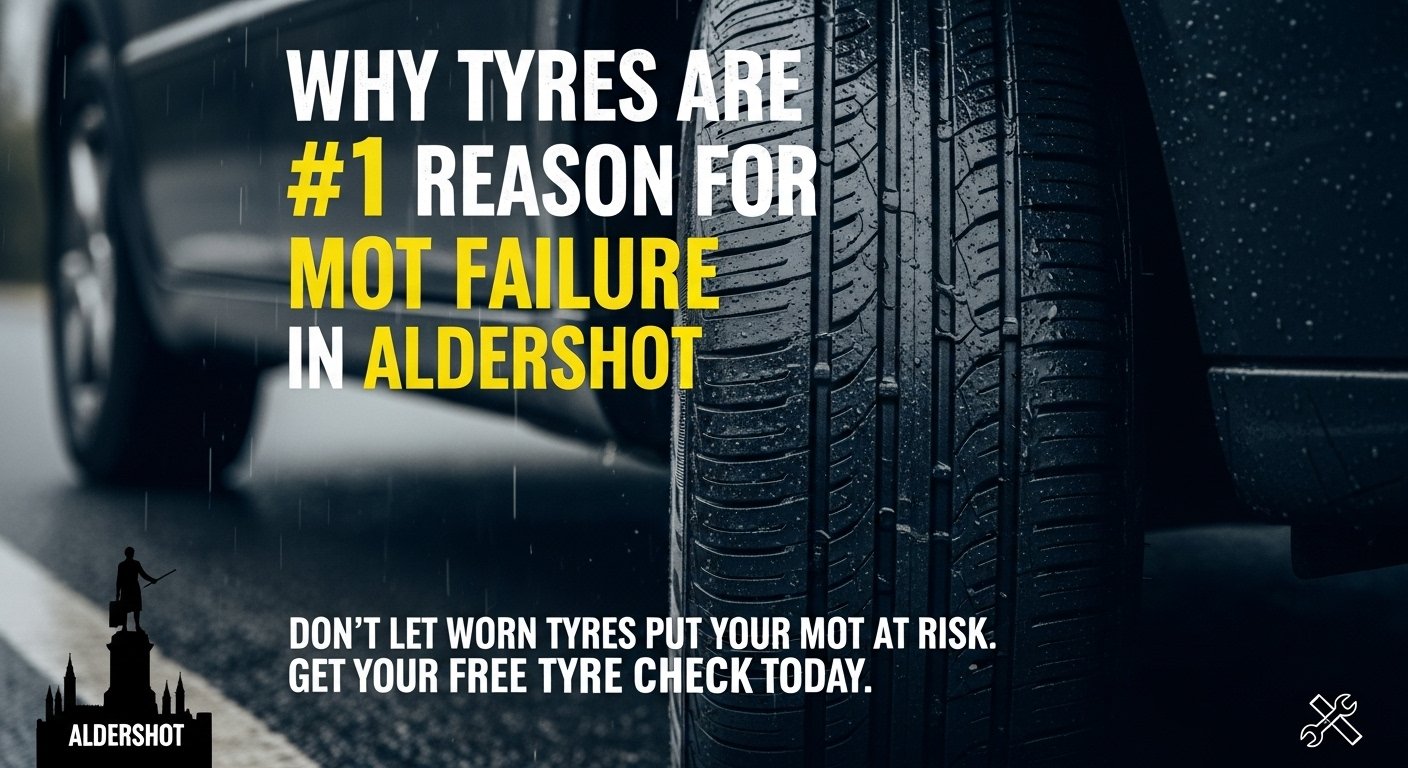
Every year, hundreds of thousands of UK vehicles fail their MOT tests for a range of reasons, from faulty lights to suspension issues. But among all the causes of MOT failures, tyres consistently top the list and for good reason. In Aldershot and across the UK, poor tyre condition is the most common hurdle drivers face when taking their cars for inspection.
In this blog we will explain
- How MOT testers inspect tyres
- The most frequent tyre problems that lead to MOT failures
- Why tyres often fail even when the rest of a vehicle is in good shape
- How regular checks and maintenance can prevent failures
- What drivers in Aldershot should be aware of
- How Gforce Tyres can help you avoid tyre-related MOT failures
Let’s begin by understanding the role tyres play in MOT tests and vehicle safety.
The Importance of Tyres in MOT Inspections
Tyres are not just rubber rings that keep your car moving. They are your only contact with the road surface. A tyre’s tread, condition, and inflation level directly affect grip, braking performance, stability, and even fuel efficiency. Because of this crucial role, tyre condition is a central focus of MOT checks.
MOT testers look at tyres in several key areas
- Tread Depth: Must meet the legal minimum
- Tyre Condition: Free from severe damage such as cuts, bulges, or exposed cords
- Proper Size and Type: Tyres on the same axle must match correctly
- Structural Integrity: No unsafe defects in the tyre’s construction
Failing any of these checks can lead to an MOT fail, whether the problem is a bald tyre, visible sidewall damage, or mismatched sizes.
Tyres as the Top Cause of MOT Failures
Analysis of millions of MOT tests reveals that tyres are the number one reason cars fail their MOT. Poor condition tyres, especially those failing to meet the legal tread depth requirement, account for a significant portion of MOT failures across the UK.
To put this in perspective
- Tyre failures top the MOT failure charts before issues such as coil springs, headlamp problems, and brake defects
- Among tyre-related problems, tread depth below the legal minimum of 1.6mm across the central three-quarters of the tyre is the most common fault flagged by testers
- The front driver-side tyre alone contributes to a large proportion of total tyre failures, indicating how critical front tyres are for steering and braking performance
Other analysis confirms that tyres are at or near the top of MOT failure reasons when looked at alongside categories like lights, suspension, and brakes. In some datasets tyres and brakes together account for the vast majority of serious defects found during tests.
Legal Minimums and MOT Tyre Rules
In the UK, it is a legal requirement that all tyres on a vehicle meet specific safety standards. The primary one is tread depth
- Minimum legal tread depth is 1.6mm across the central three-quarters of the tread and around the entire tyre circumference
- Tyres that fall below this minimum automatically fail an MOT
- Tyres must also be intact, with no bulges, cuts deep enough to expose cords, or other serious structural damage
These rules are in place because sufficient tread is vital for
- Water displacement in wet conditions
- Grip and traction under acceleration or braking
- Stability when turning or cornering
Failing to meet these standards is not just about test failure but is a safety hazard every time you drive.
5 Common Tyre Problems That Cause MOT Failures
Let’s break down the tyre issues MOT testers see most often
- Insufficient Tread Depth
Undoubtedly the most common reason for tyre failures, worn tread below the legal minimum of 1.6mm will cause an MOT fail every time. Cars driven frequently, especially on urban or rural roads with potholes, can wear tyres unevenly, leading to points on the tyre tread dropping below legal requirements.
- Cuts, Cracks, and Bulges
Tyres that have visible damage such as deep cuts, sidewall bulges, or cracks are flagged as unsafe. These issues significantly increase the risk of a sudden tyre failure on the road, which could cause loss of control.
- Mismatched or Incorrect Tyres
Tyres that are not the correct size or of mismatched types on the same axle may fail an MOT. It is important to fit tyres that comply with the manufacturer’s specifications for size, load rating, and speed rating.
- Age-Related Tyre Degradation
Tyres degrade over time, even if tread levels are adequate. Rubber can harden, cracks can form, and older tyres can become unsafe due to age alone. While age is not a direct MOT test parameter, significant ageing can contribute to advisory faults or failures if it affects integrity.
- Uneven Wear from Misalignment or Pressure Issues
Tyres that have wear on the edges or uneven patterns can indicate poor alignment or incorrect tyre pressures. These faults may not only cause MOT problems but also point to underlying vehicle setup issues.
Why Drivers Often Overlook Tyre Maintenance?
Despite these clear risks, many drivers do not check their tyres as often as they should. Research indicates that a large portion of UK drivers change tyres only when they absolutely have to, when the tread is almost completely worn. This reactive approach is one reason tyre failures are so common at MOT.
Regular tyre checks tend to be overlooked because
- Many motorists confuse tyre age with tread depth
- Visual checks without a gauge can be misleading
- Some drivers do not understand the importance of sidewall condition or pressure
- Urban drivers may not feel the loss of grip in everyday low-speed driving
MOT testers, however, are trained to catch these issues systematically, and the results leave many drivers unexpectedly failing their test. Awareness and routine checking can make all the difference.
Safety Implications of Poor Tyres
Failing an MOT is not just a paperwork problem. Poor tyres are a real danger on the road.
Bad tyres can affect
- Stopping distances, especially in wet or icy conditions
- Steering response
- Aquaplaning resistance
- Vehicle stability in emergencies
In fact, tyres and brakes together account for the vast majority of dangerous MOT failures, those where the vehicle cannot be driven until repaired. Tyre defects alone can account for a significant portion of these serious failures.
This level of risk underscores why annual MOTs and routine tyre maintenance are not optional extras. They are central to protecting yourself and others on the road.
What Aldershot Drivers Should Focus On?
Whether you are driving daily in town streets or frequently travelling on regional roads, Aldershot motorists should pay extra attention to tyre condition before heading for an MOT. Here is a simple pre-MOT tyre checklist
- Monthly Assessments
Every month, check
- Tyre tread using a simple gauge or the 20p test
- Sidewall condition for cracks, bulges, or excessive wear
- Tyre pressures set to manufacturer recommendations
- Check Before Long Trips
Long journeys increase tyre load and temperature. Rechecking tyre condition before a long trip is an easy way to spot issues early.
- Alignment and Suspension Evaluations
Uneven tread wear often means alignment or suspension issues. Fixing these early reduces tyre wear, potentially saving money on replacements.
How to Avoid Tyre-Related MOT Failures
Passing an MOT should not be a gamble. Here is a practical maintenance plan to avoid tyre failures
- Regular Tread Checks: Use a gauge or the 20p test to ensure 1.6mm or more across the tyre central grooves
- Pressure Monitoring: Maintain correct pressures to extend tyre life and improve safety
- Inspect for Physical Damage: Look for bulges, cracks, cuts, and exposed cords
- Replace Tyres Early: Consider changing tyres before they hit the legal limit to improve safety and avoid last-minute MOT fails
- Seek Professional Advice: If you are unsure about tyre condition, a trained technician can provide expert guidance
Why Choose Gforce Tyres As a Service Provider?
If you want to steer clear of common tyre-related MOT failures, a trusted local provider can make all the difference. Gforce Tyres is a reputable tyre and wheel service provider that offers
- Professional tyre inspections and condition checks
- Accurate tread depth measurement
- Tyre replacement with quality brands
- Free advice on tyre size, fitment, and legal compliance
- Alignment and wheel balancing to prevent uneven wear
At Gforce Tyres, technicians understand how critical tyres are to MOT success and overall road safety. They help Aldershot drivers spot problems early, recommend the right tyre solutions, and ensure your car is ready on MOT test day.
Choosing quality tyres and keeping them in good condition not only improves safety but can save you money in the long run by avoiding costly MOT repairs and premature tyre replacements.
Conclusion
It is clear that tyres are the number one cause of MOT failures in the UK, and this trend holds true for Aldershot drivers too. Worn tread, sidewall damage, mismatches, and age-related issues all contribute to failures that are often preventable with regular checks and professional care.
Remember
- Tyre failures are avoidable with monthly checks
- Safety and handling improve long before tyres hit legal limits
- Professional help from a service like Gforce Tyres can keep you ahead of issues
Your tyres are your first line of defence on the road. Treat them with the attention they deserve, and you are far more likely to pass your MOT smoothly, safely, and with confidence.