

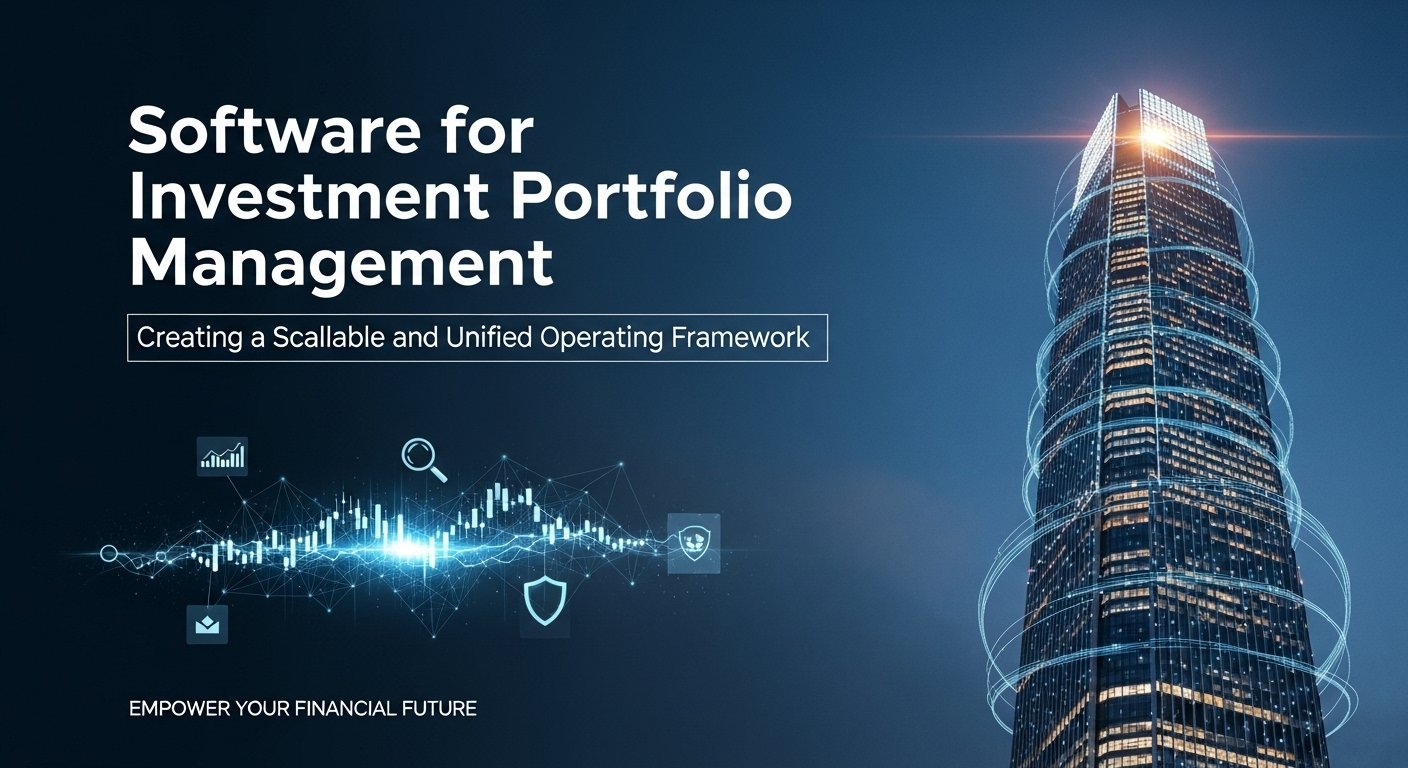
The investment management industry is facing a period of accelerated change. Increasing regulatory requirements, diversified asset structures, higher expectations for transparency, and the demand for digital-first service models have exposed the limitations of traditional operational systems. Spreadsheets, fragmented tools, and manual workflows no longer provide the reliability or scalability required for sustainable growth. In this context, software for investment portfolio management has become a strategic foundation rather than a supporting resource. Modern platforms such as https://www.performativ.com/who-we-empower illustrate how unified technology can support different investment professionals while maintaining operational clarity, governance, and consistency.
Investment firms today must manage complex portfolios across asset classes, custodians, and jurisdictions while delivering accurate reporting and maintaining regulatory compliance. Disconnected systems introduce data inconsistencies, slow decision-making, and increase operational risk. A platform-driven approach replaces fragmentation with cohesion, enabling firms to operate from a centralized, reliable source of truth that supports both day-to-day operations and long-term strategy.
Software for investment portfolio management aligns technology with business objectives by structuring workflows, data, and reporting within a single environment. Rather than managing multiple tools, firms gain an integrated operational framework that simplifies complexity and supports scalability. This shift reflects a broader industry transition toward platform-based infrastructures that unify investment, compliance, and client engagement activities.
The Growing Complexity of Portfolio Management
Managing investment portfolios today involves far more than monitoring performance metrics. Firms must oversee public and private assets, coordinate with custodians, maintain regulatory documentation, and deliver transparent reporting to clients. As portfolios become more diversified, operational demands increase significantly.
Common challenges include:
- Fragmented data across systems and custodians
- Manual reconciliation processes
- Limited real-time portfolio visibility
- Increasing regulatory and audit requirements
- Difficulty scaling operations without increasing overhead
Software for investment portfolio management addresses these challenges by creating a unified environment where data, workflows, and insights coexist. Instead of managing operational complexity manually, firms can rely on structured systems that support accuracy, consistency, and scalability.
From Fragmented Tools to Unified Platforms
Traditional portfolio management often relies on multiple systems that do not communicate effectively. Portfolio tracking, reporting, compliance monitoring, and client communication may exist in separate environments, creating inefficiencies and inconsistencies.
A platform-based model replaces this fragmentation with integration. By centralizing portfolio data and operational workflows, firms gain:
- A single source of truth for all portfolio information
- Reduced reliance on manual processes
- Improved audit readiness
- Faster access to accurate insights
- Better collaboration across teams
This transformation is not only about efficiency. It establishes a stable foundation that supports governance, scalability, and strategic decision-making.
Investment and Portfolio Management Software as a Strategic Core
Investment and portfolio management software provides the structural backbone of modern investment operations. It connects portfolio data, compliance requirements, reporting processes, and operational workflows into a single unified system.
By adopting an integrated platform, firms can:
- Centralize client and portfolio data
- Automate routine operational processes
- Enhance transparency across teams
- Reduce operational and regulatory risk
- Support informed, data-driven decision-making
Investment and portfolio management software enables firms to move away from reactive operations and toward structured, scalable models that support long-term growth. It ensures that portfolio oversight remains consistent as asset volumes increase and investment strategies evolve.
Portfolio Visibility and Data Consolidation
Accurate portfolio visibility is essential for effective investment management. Clients increasingly hold assets across multiple custodians, brokers, and asset classes, making aggregation critical.
Modern software for investment portfolio management supports:
- Automated data synchronization from custodians
- Consolidated views across public and private assets
- Manual data input for complex or illiquid assets
- Unified valuation and reporting structures
This comprehensive visibility ensures that investment professionals always work with accurate, up-to-date information. Consolidated data supports better portfolio analysis and strengthens client communication by providing clear, reliable insights.
Reporting and Compliance as Integrated Processes
Reporting and compliance are central to investment management operations. Manual reporting workflows consume significant resources and increase the risk of errors. Regulatory frameworks continue to evolve, requiring adaptable and reliable reporting structures.
Investment portfolio platforms support regulatory readiness through:
- Automated report generation
- Standardized reporting templates
- Centralized compliance documentation
- Immutable audit trails
- Consistent data validation processes
By embedding compliance into daily workflows, software for investment portfolio management ensures that governance becomes a structural component of operations rather than an isolated responsibility.
Investment Management Portfolio Software and Operational Efficiency
Investment management portfolio software focuses on streamlining complex operational processes through automation and standardization. By reducing reliance on manual workflows, firms improve efficiency and minimize operational risk.
Key efficiency features typically include:
- Rule-based portfolio rebalancing
- Automated compliance monitoring alerts
- Streamlined onboarding workflows
- Scheduled reporting cycles
- Data consistency checks
Automation enables teams to focus on strategic activities such as portfolio construction, risk management, and client advisory services. Operational consistency becomes inherent in the system rather than dependent on individual processes.
Digital-First Access and Operational Resilience
The transition toward digital-first operations has accelerated across financial services. Online platforms enable firms to operate securely while offering real-time access to data and reporting.
Software for investment portfolio management supports digital delivery by enabling:
- Secure, role-based system access
- Cloud-based data availability
- Continuous platform updates
- Collaboration across distributed teams
Digital-first architecture also supports business continuity and resilience, allowing firms to adapt to changing operational conditions without compromising data integrity or security.
Security and Governance as Structural Priorities
Investment firms manage highly sensitive financial data, making security and governance fundamental requirements. Modern platforms embed security measures into their architecture rather than treating them as external controls.
Typical security features include:
- Advanced encryption standards
- Role-based access permissions
- Secure authentication protocols
- Centralized activity logging
- Regulatory compliance alignment
By integrating these safeguards, software for investment portfolio management protects institutional integrity and reduces exposure to operational and reputational risks.
Supporting a Diverse Range of Investment Professionals
Investment management platforms must accommodate a variety of business models while maintaining operational consistency. Software for investment portfolio management is designed to support:
- Independent advisors seeking efficiency and scalability
- Asset managers managing diversified portfolios
- Banks balancing governance and client service
- Multi-family offices overseeing complex wealth structures
This flexibility ensures that technology serves as shared infrastructure rather than a rigid framework.
Scalability as an Operational Requirement
Growth introduces complexity. Without scalable infrastructure, increasing data volumes and client activity strain operational systems.
Investment management platforms support scalability by:
- Managing larger datasets without performance loss
- Maintaining consistent workflows as teams expand
- Supporting regulatory compliance across jurisdictions
- Enabling new service models without disrupting operations
Scalability ensures that growth remains sustainable and operationally controlled.
The Strategic Role of Software for Investment Portfolio Management
Software for investment portfolio management defines how modern firms structure operations, manage risk, and deliver transparency. It unifies data, automates workflows, and integrates compliance into daily processes.
By replacing fragmented tools with cohesive platforms, firms gain operational clarity and long-term resilience. Investment management portfolio software acts as the strategic foundation that supports growth, governance, and consistency in an increasingly complex industry.
As the investment management landscape continues to evolve, platform-driven solutions will remain central to how firms adapt and compete. A unified approach to portfolio management software is no longer optional; it is essential for institutions seeking stability, scalability, and operational confidence.