


Have you ever wondered why a capable team still struggles to deliver consistent results? CIPD Level 3 often explains that the issue is rarely about talent or effort. It usually comes down to gaps in People Management Skills that go unnoticed in daily interactions. Small behaviours from managers influence trust and teamwork more than formal rules. Simple things, such as unclear expectations or inconsistent feedback, slowly affect performance. Recognising these common mistakes helps managers create a supportive environment where teams can work with confidence and clarity.
This blog explores the most common people management mistakes that reduce team effectiveness and what managers should be mindful of in their daily interactions.
Table of Contents
- People Management Mistakes That Lower Team Productivity
- Conclusion
People Management Mistakes That Lower Team Productivity
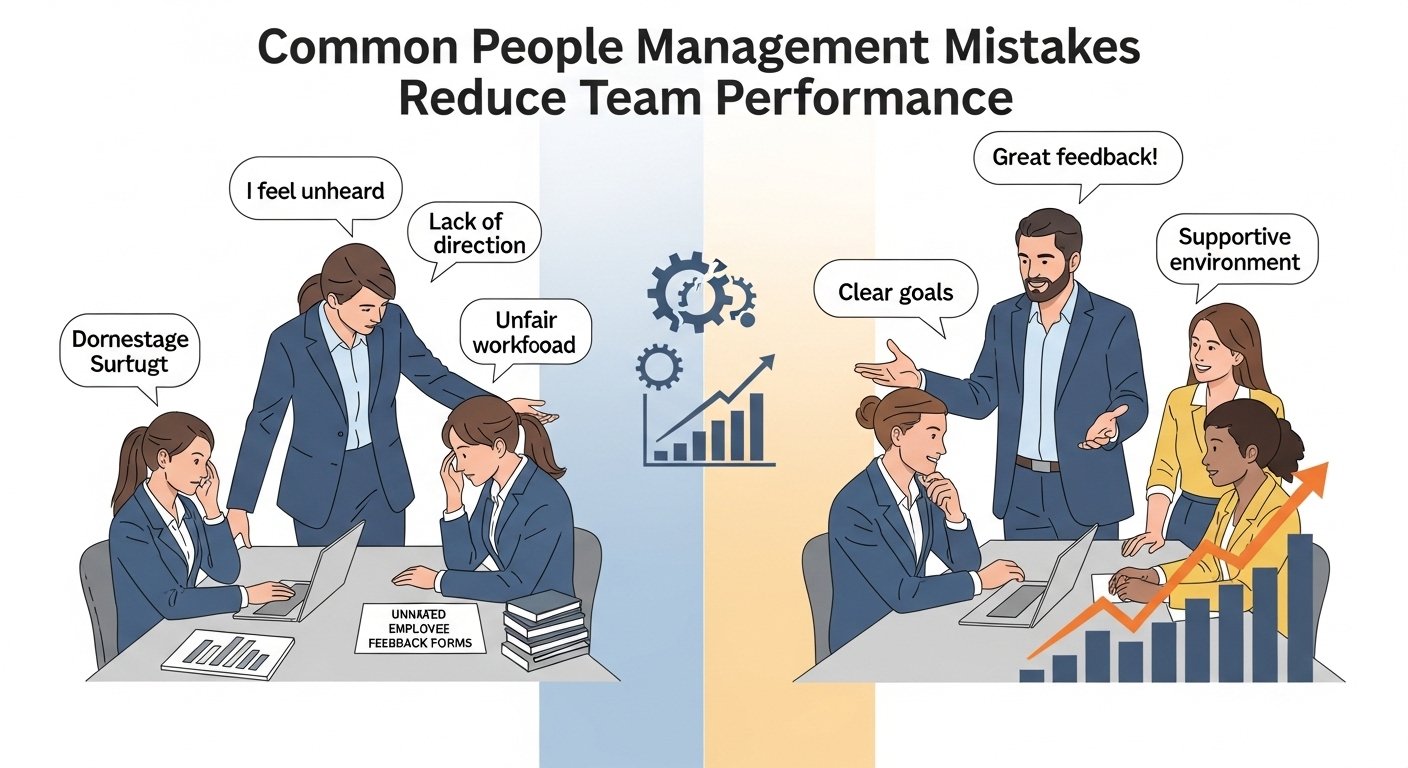
Even small management habits can quietly affect how a team performs every day. Below are the common people management mistakes that often reduce team productivity:
Assuming Everyone Understands Expectations
Many managers think that everyone on their team knows exactly what is expected of them. The instructions are only ever provided once. Confusion increases with time, and duties are carried out in various ways.
A key component of effective people management is having clear expectations. Regular discussion of roles and results improves team performance. Clarity eliminates uncertainty and boosts self-assurance in everyday tasks. This is something that is frequently stressed in CIPD courses.
Avoiding Difficult Conversations
To keep things amicable, some managers stay away from difficult conversations. People disregard problems with performance or missing deadlines until they get really bad.
This method makes people less likely to trust each other. In managing people, it is important to have honest and timely talks. People can get better if they deal with problems right away, and it stops negativity from spreading across the team.
Giving Feedback Only When Something Goes Wrong
Feedback is frequently associated with errors. The management only communicates with the team when something is wrong. This lowers morale and causes anxiety.
Better people management is supported by balanced feedback. Consistency is encouraged when good effort is acknowledged. Positive direction promotes progress without instilling dread. In CIPD frameworks, this behaviour is regularly discussed.
Managing Everyone in the Same Way
Every team member has a different way of thinking and working. Some people like thorough instructions. Independentness is valued by others. Performance is limited when everyone is treated the same way.
Individual working habits must be understood. The goal of people management is to modify the strategy to accommodate various personality types. This increases comfort and enhances outcomes.
Ignoring Team Morale and Motivation
Sometimes managers merely pay attention to deadlines and goals. They fail to pay attention to the team’s emotions. Disengagement and irritation go unnoticed.
Keeping an eye on morale is a key component of effective people management. Even during hectic times, little acts of encouragement and gratitude can maintain motivation.
Poor Communication During Changes
Teams frequently receive little information when changes occur. Without knowing the rationale behind the shift, they are supposed to adapt.
Trust is developed through open communication during transition. Confusion and resistance are decreased when the team is informed of the changes and their implications. This is an additional point that CIPD Level 3 frequently emphasises.
Micromanaging Daily Tasks
A lack of trust is indicated by constantly reviewing work and tightening control over minor issues. Members of the team feel constrained and lose faith in their own skills.
When people feel trusted, they perform better. Effective people management gives people the freedom to assume accountability while also providing assistance when required.
Not Encouraging Team Collaboration
By assigning tasks separately without promoting teamwork, some managers inadvertently create silos. Members of a team who work alone lose out on opportunities to share knowledge.
Collaboration enhances problem solving and builds bonds with others. It is an essential component of every workplace’s successful people management strategy.
Conclusion
Small management habits often have a larger impact on performance than complex strategies. Improving people management helps managers create clarity and motivation within teams. When these mistakes are avoided, teams naturally become more confident and productive. Learning structured approaches through Oakwood International can help managers strengthen their approach in practical workplace settings.