
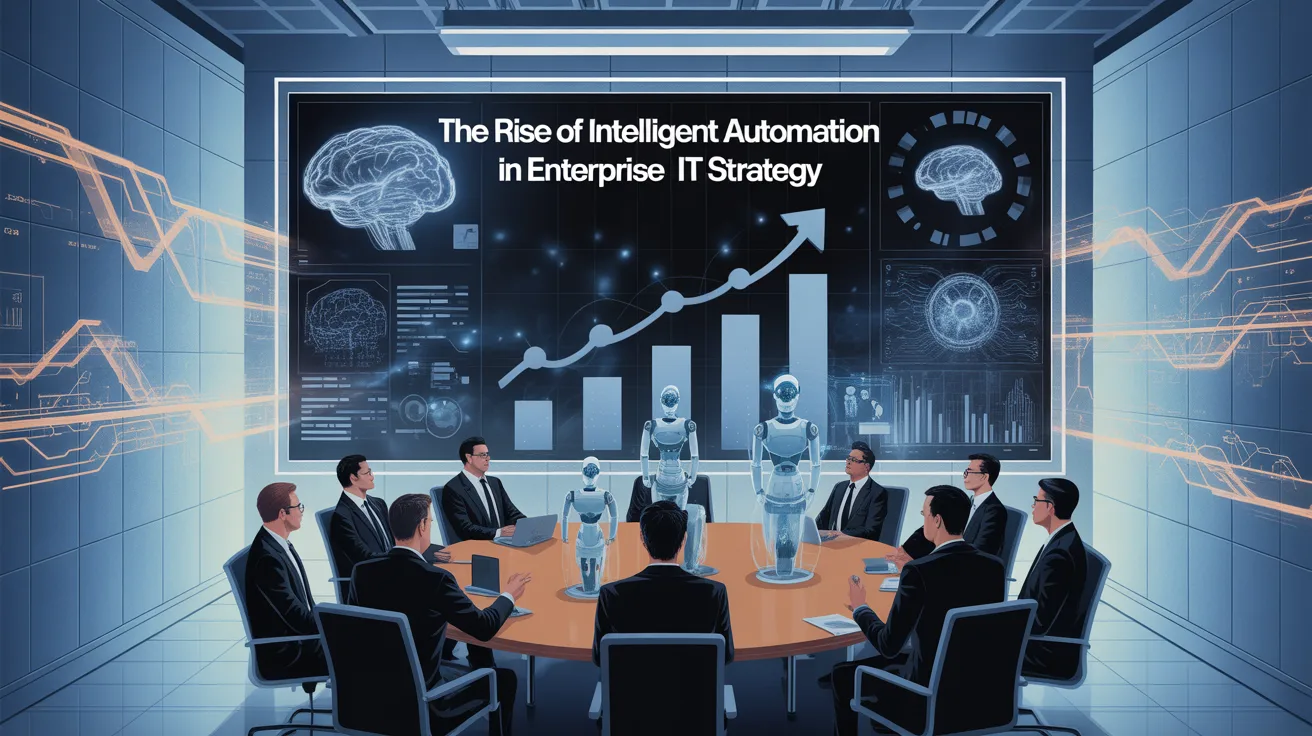
Enterprise IT strategy is undergoing a significant transformation. As organisations navigate increasing digital complexity, growing cybersecurity risks, and rising customer expectations, traditional operational models are no longer sufficient. Intelligent automation has emerged as a core pillar of modern IT strategy, enabling enterprises to combine artificial intelligence, machine learning, and advanced analytics to improve performance and resilience.
Rather than simply automating repetitive tasks, intelligent automation integrates decision-making capabilities into business systems. It allows enterprises to streamline operations, optimise infrastructure, and maintain system reliability while scaling rapidly in competitive markets.
Understanding Intelligent Automation in the Enterprise Context
Intelligent automation extends beyond basic robotic process automation. While traditional automation focuses on rule-based tasks, intelligent systems incorporate learning algorithms that adapt to new data and environments. These systems can analyse patterns, predict outcomes, and recommend actions.
In enterprise IT environments, intelligent automation supports:
- Infrastructure monitoring and optimisation
- Cybersecurity threat detection
- Incident management workflows
- Predictive maintenance
- Software testing and validation
- Data governance and compliance monitoring
By embedding intelligence into automation processes, enterprises gain the ability to operate proactively rather than reactively.
Why Enterprises Are Prioritising Intelligent Automation
Several key factors are driving adoption across industries.
Increasing Operational Complexity
Modern enterprises rely on cloud computing, hybrid infrastructures, APIs, microservices, and distributed systems. Managing these environments manually is inefficient and error-prone. Intelligent automation simplifies orchestration across complex systems.
Digital Transformation Initiatives
Organisations pursuing digital transformation require scalable frameworks that can support innovation without compromising stability. Automation reduces bottlenecks in deployment pipelines and accelerates time to market.
Risk Reduction and Compliance
Regulatory requirements continue to evolve across sectors such as finance, healthcare, and telecommunications. Automated monitoring systems powered by AI help ensure compliance by continuously analysing system behaviour and flagging anomalies.
Cost Efficiency
Manual processes increase labour costs and slow productivity. Intelligent automation reduces human intervention in routine operations, allowing skilled professionals to focus on strategic initiatives.
Intelligent Automation and IT Infrastructure Management
Infrastructure reliability is fundamental to enterprise success. Downtime can result in revenue loss, reputational damage, and customer dissatisfaction. Intelligent automation enhances infrastructure management through predictive analytics.
AI-powered monitoring tools analyse system logs, performance metrics, and usage patterns. They identify irregularities that may indicate potential failures. Instead of waiting for outages, IT teams receive early alerts and recommended corrective actions.
This proactive approach minimises disruptions and ensures consistent performance across enterprise platforms.
The Strategic Role of AI in Software Quality Assurance
Software reliability is equally critical in enterprise IT strategy. With continuous integration and deployment practices, code changes occur frequently. Without automated validation processes, defects can quickly reach production environments.
AI-driven quality assurance tools are transforming how enterprises approach software testing. These platforms analyse application behaviour, detect visual inconsistencies, and adapt test scripts as interfaces evolve. For business leaders seeking deeper insights into scalable QA solutions, an AI testing tools blog can provide valuable context on how intelligent systems enhance enterprise-level validation strategies.
By integrating AI-based testing into development pipelines, enterprises achieve faster release cycles without sacrificing quality.
Self-Healing Capabilities and Adaptive Systems
One of the most promising advancements in intelligent automation is self-healing functionality. Traditional automated scripts often fail when minor changes occur in user interfaces or system configurations. This results in false positives and unnecessary debugging efforts.
Modern AI solutions incorporate adaptive mechanisms that recognise contextual changes. Learning more about automation in testing reveals how self-healing frameworks adjust to evolving environments, reducing maintenance overhead and improving long-term efficiency.
Self-healing systems represent a shift from static automation toward dynamic, learning-based processes.
Enhancing Cybersecurity Through Intelligent Automation
Cybersecurity threats are increasing in sophistication. Enterprises must continuously monitor network activity, user behaviour, and system access patterns. Intelligent automation strengthens cybersecurity frameworks by identifying unusual activity in real time.
Machine learning models detect anomalies that may signal data breaches or unauthorised access attempts. Automated response protocols can isolate affected systems, initiate investigations, and alert security teams.
This rapid response capability reduces vulnerability windows and strengthens enterprise resilience.
Data-Driven Decision Making
Intelligent automation supports advanced analytics, enabling enterprises to derive actionable insights from large datasets. Automated reporting systems generate performance dashboards, compliance summaries, and operational forecasts.
Executives gain visibility into key metrics without relying on manual data compilation. This enhances strategic planning and resource allocation.
Predictive analytics also allows organisations to anticipate market shifts, optimise supply chains, and improve customer engagement strategies.
Integration with DevOps and Agile Methodologies
Modern enterprises increasingly adopt DevOps and Agile methodologies to accelerate innovation. Intelligent automation aligns seamlessly with these frameworks by automating repetitive processes within development cycles.
Continuous testing, automated code reviews, and deployment validation reduce human error. Development teams can focus on innovation rather than troubleshooting routine issues.
This integration strengthens collaboration between development and operations teams while maintaining high-quality standards.
Overcoming Implementation Challenges
Despite its advantages, implementing intelligent automation requires careful planning. Enterprises must assess infrastructure readiness, data quality, and skill gaps.
Key considerations include:
- Establishing governance frameworks for AI-driven decisions
- Ensuring transparency in automated processes
- Training IT teams to manage intelligent systems
- Aligning automation initiatives with business objectives
Successful adoption depends on strategic alignment rather than isolated technology investments.
The Future of Enterprise IT Strategy
As artificial intelligence continues to evolve, intelligent automation will become increasingly autonomous. Future enterprise systems may feature advanced cognitive capabilities that anticipate business needs and optimise operations without direct human oversight.
Emerging innovations may include:
- Fully autonomous incident resolution systems
- Integrated AI governance platforms
- Real-time adaptive security architectures
- Advanced natural language interfaces for IT management
Enterprises that embrace intelligent automation today will be better positioned to navigate tomorrow’s technological challenges.
Conclusion
The rise of intelligent automation marks a pivotal shift in enterprise IT strategy. By integrating artificial intelligence, machine learning, and advanced analytics into operational frameworks, organisations enhance efficiency, reduce risk, and improve scalability.
From infrastructure management to software quality assurance and cybersecurity, intelligent automation enables proactive decision-making and resilient system design. Enterprises that adopt these technologies strategically gain a competitive advantage in an increasingly digital world.
Intelligent automation is no longer a forward-looking concept. It is a present-day necessity for organisations seeking sustainable growth and operational excellence.