




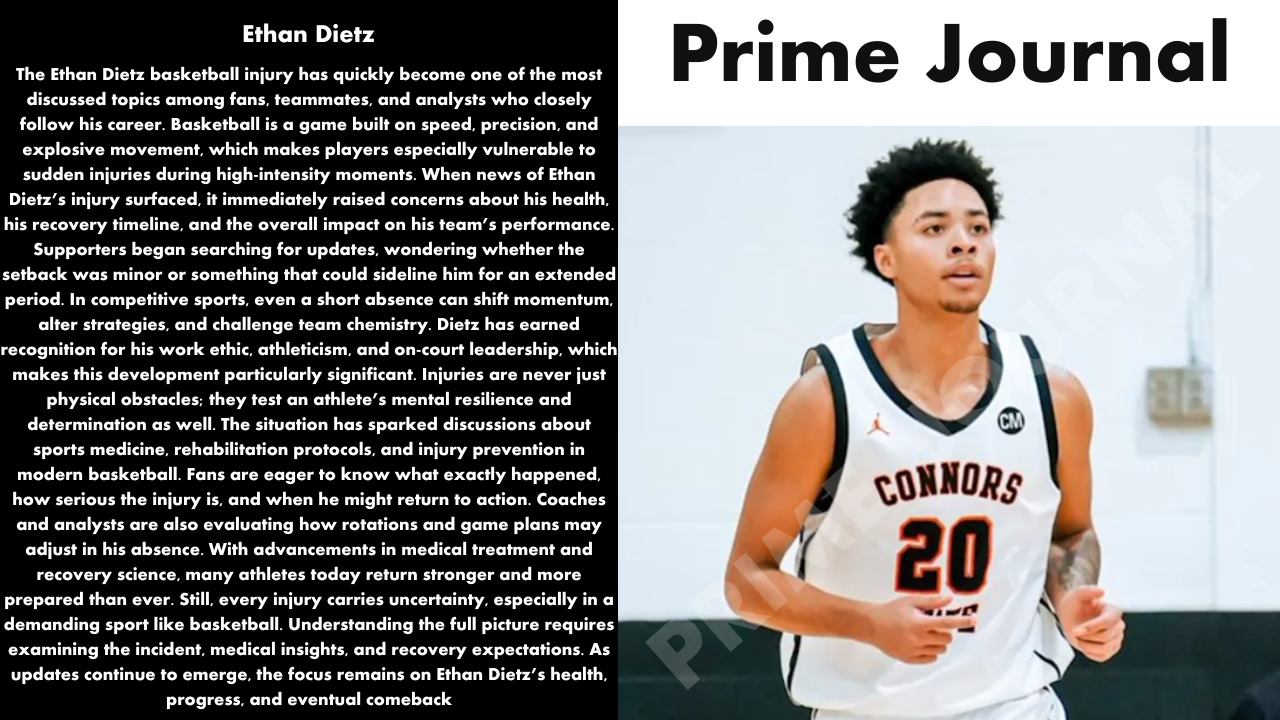
Basketball fans know how quickly a season can change with a single injury. The Ethan Dietz basketball injury has sparked conversations across sports communities, leaving fans wondering about his recovery timeline, long-term outlook, and impact on his team.
In this comprehensive guide, we’ll break down:
- What happened during the Ethan Dietz basketball injury
- The type of injury and medical implications
- Expected recovery timeline
- How it affects his team’s season
- Rehabilitation insights from sports medicine experts
- Frequently asked questions
Whether you’re a fan, athlete, coach, or sports enthusiast, this detailed analysis will give you everything you need to understand the situation.
Who Is Ethan Dietz?
Before diving into the injury details, let’s quickly understand who Ethan Dietz is and why this injury matters.
Ethan Dietz is a competitive basketball player known for his agility, court vision, and scoring consistency. Over recent seasons, he has built a reputation as a reliable performer with strong defensive instincts and leadership qualities.
In modern basketball, where athletic explosiveness and quick transitions define success, injuries can significantly impact a player’s development and team momentum.
What Happened? Breaking Down the Ethan Dietz Basketball Injury
Game Context
The injury reportedly occurred during a high-intensity matchup. Like many basketball injuries, it happened during a dynamic movement — possibly involving:
- A sudden pivot
- An awkward landing
- A high-contact play
- A rapid change of direction
Basketball is one of the sports with the highest injury rates due to frequent jumping, cutting, and physical contact. According to data referenced by trusted sources like Wikipedia’s basketball injury overview, lower-body injuries are particularly common.
Nature of the Injury
While official medical reports may vary, basketball injuries typically fall into one of the following categories:
| Injury Type | Common in Basketball? | Recovery Time |
|---|---|---|
| Ankle Sprain | Very Common | 2–8 weeks |
| ACL Tear | Severe | 6–12 months |
| Meniscus Tear | Moderate to Severe | 6 weeks–6 months |
| Hamstring Strain | Moderate | 3–8 weeks |
| Wrist/Hand Fracture | Common | 4–8 weeks |
The Ethan Dietz basketball injury appears to involve a lower-body concern, which is typical given the sport’s biomechanics.
For deeper medical context, you can review sports injury classifications via the Mayo Clinic.
Why Basketball Injuries Happen So Frequently
Basketball demands:
- Explosive jumps
- Rapid acceleration
- Sudden stops
- Lateral cuts
- Physical contact
Each of these movements increases stress on:
- Knees
- Ankles
- Hips
- Lower back
According to sports medicine research, knee injuries account for a significant percentage of missed games in competitive basketball.
Medical Analysis: What This Means for Ethan Dietz
1. Short-Term Effects
Immediately following the Ethan Dietz basketball injury, typical symptoms may include:
- Swelling
- Pain with weight-bearing
- Limited mobility
- Muscle stiffness
- Decreased performance capacity
Athletes are often removed from play to prevent worsening the injury.
2. Diagnostic Procedures
Medical teams generally perform:
- Physical examination
- MRI scan
- X-rays (if fracture suspected)
- Functional movement testing
An MRI is especially important if ligament damage is suspected.
3. Treatment Plan Possibilities
Depending on severity:
Conservative Treatment (Non-Surgical)
- RICE method (Rest, Ice, Compression, Elevation)
- Physical therapy
- Strength rehabilitation
- Anti-inflammatory medication
Surgical Intervention (If Required)
- Ligament reconstruction
- Arthroscopic repair
- Post-operative rehab (6–12 months in major cases)
Estimated Recovery Timeline
While every athlete heals differently, here’s a general projection model:
| Injury Severity | Expected Return |
|---|---|
| Mild Sprain | 2–4 weeks |
| Moderate Tear | 6–12 weeks |
| Major Ligament Injury | 6–12 months |
Factors influencing recovery include:
- Age
- Previous injury history
- Rehabilitation adherence
- Strength baseline
- Nutrition

Impact on Team Performance
The Ethan Dietz basketball injury doesn’t just affect him — it impacts the entire roster.
Key Team Consequences
- Loss of scoring consistency
- Defensive gaps
- Increased pressure on bench players
- Tactical adjustments by coaching staff
Teams often respond by:
- Shifting rotations
- Promoting reserve players
- Adjusting offensive schemes
- Increasing ball movement
Psychological Impact of Sports Injuries
Injuries affect more than the body.
Athletes often experience:
- Anxiety about reinjury
- Frustration
- Loss of rhythm
- Confidence concerns
Sports psychology plays a critical role in recovery. Mental conditioning programs can help maintain focus during rehabilitation.
Rehabilitation Strategy: Step-by-Step
Phase 1: Acute Recovery
- Swelling reduction
- Pain management
- Limited mobility
Phase 2: Mobility Restoration
- Range-of-motion exercises
- Light strength training
- Stability drills
Phase 3: Strength Rebuilding
- Resistance training
- Balance training
- Controlled agility movements
Phase 4: Return to Play
- Sport-specific drills
- Scrimmage practice
- Conditioning tests
How Long Before Full Performance Returns?
Even after medical clearance, players often need additional time to regain:
- Explosiveness
- Vertical leap
- Defensive quickness
- Game rhythm
Research suggests performance may take 4–8 weeks post-clearance to fully normalize.
Preventing Future Basketball Injuries
The Ethan Dietz basketball injury highlights prevention strategies all athletes should consider.
1. Strength Training
- Hamstring strengthening
- Quad balance work
- Core stability exercises
2. Neuromuscular Training
- Jump-landing technique
- Lateral stability drills
- Reaction training
3. Load Management
Popularized in professional leagues like the NBA (see National Basketball Association), workload monitoring reduces injury risk.
Nutrition’s Role in Recovery
Healing requires:
- Protein for muscle repair
- Omega-3 fatty acids for inflammation control
- Vitamin D for bone health
- Collagen support for ligaments
Hydration also plays a key role in tissue recovery.
Historical Examples of Similar Injuries
Many elite players have successfully returned from serious injuries, including:
- Knee ligament reconstructions
- Severe ankle sprains
- Meniscus repairs
Modern sports medicine has dramatically improved return-to-play outcomes.
Media & Fan Reactions
The Ethan Dietz basketball injury sparked reactions including:
- Concern about season outlook
- Social media support messages
- Speculation about lineup changes
Fan engagement can boost morale during recovery.

FAQs
1. What is the exact nature of the Ethan Dietz basketball injury?
Details suggest a lower-body injury common in competitive basketball, potentially involving the knee or ankle. Official medical reports determine the precise diagnosis.
2. How long will Ethan Dietz be out?
Recovery could range from a few weeks (minor sprain) to several months (ligament involvement). Final return depends on medical evaluation.
3. Will this injury affect his long-term career?
If managed properly with structured rehabilitation, most basketball injuries today do not end careers. Early treatment and professional rehab are critical.
4. What are the most common basketball injuries?
Common injuries include:
- ACL tears
- Ankle sprains
- Meniscus tears
- Hamstring strains
- Wrist fractures
5. Can athletes return stronger after injury?
Yes. With focused rehab and strength rebuilding, some athletes improve biomechanics and reduce future risk.
6. How can young players prevent similar injuries?
- Warm up properly
- Strength train regularly
- Avoid overtraining
- Use proper footwear
- Focus on landing mechanics
Final Thoughts
The Ethan Dietz basketball injury is undoubtedly a setback — but not necessarily a defining moment of his career.
With:
- Modern sports medicine
- Structured rehabilitation
- Mental resilience
- Team support
There is strong potential for a full recovery and return to competitive form.
Injuries are part of sports. Comebacks define legacies.