

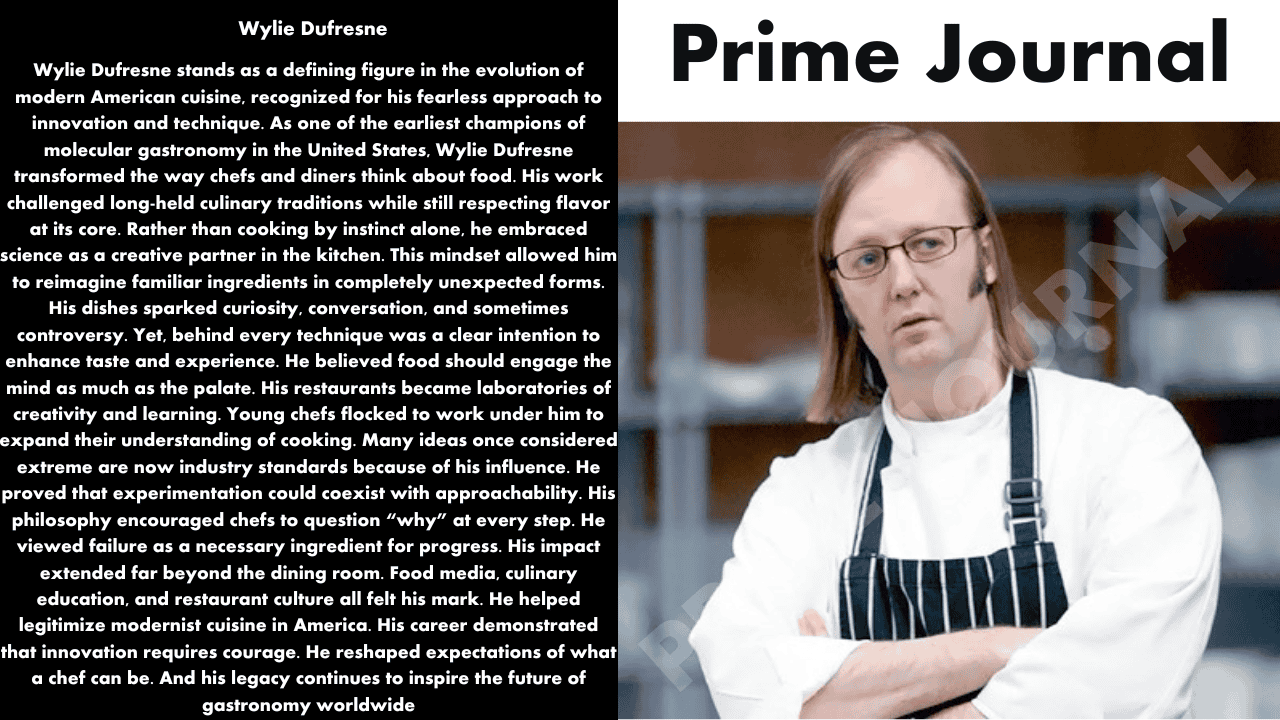
Long before “molecular gastronomy” became a buzzword on food TV and Instagram, Dufresne was quietly — and sometimes controversially — pushing the boundaries of what food could be. He didn’t just serve dinner; he challenged assumptions. Foams, gels, powders, freeze-drying, centrifuges — these weren’t gimmicks to him, but tools for creativity and expression.
This article is a complete, SEO-optimized deep dive into Wylie Dufresne’s career, philosophy, restaurants, techniques, and lasting impact on the culinary world. Whether you’re a food enthusiast, culinary student, or professional chef, this guide will give you genuine insight — not surface-level hype.
Who Is Wylie Dufresne?
Early Life and Culinary Roots
Wylie Dufresne was born in 1970 in Providence, Rhode Island, into a deeply culinary family. His father, Jean Dufresne, was a respected chef trained in classic French cuisine. This upbringing exposed Wylie early to:
- Professional kitchens
- French culinary discipline
- The seriousness of food as craft
However, rather than following tradition blindly, Dufresne would later question and reinterpret it.
Education and Early Career
Unlike many celebrity chefs, Wylie Dufresne didn’t attend a traditional culinary school. Instead, he learned through hands-on experience, training in kitchens that valued experimentation and discipline.
One of the most influential experiences of his career was working under Jean-Georges Vongerichten, where he developed:
- A deep understanding of flavor balance
- Precision-driven cooking techniques
- Respect for both science and intuition
This blend of classical influence and curiosity set the stage for what would come next.
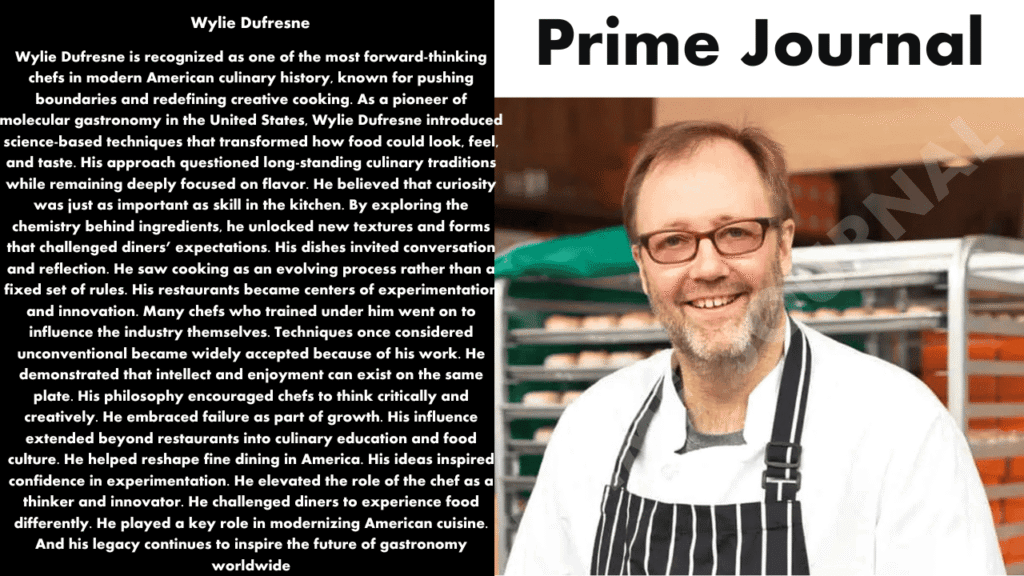
The Rise of Molecular Gastronomy in America
What Is Molecular Gastronomy?
Molecular gastronomy is often misunderstood. It’s not about turning food into science experiments — it’s about understanding why food behaves the way it does.
Core principles include:
- Chemical reactions in cooking
- Physical transformations of ingredients
- Texture manipulation
- Temperature control
Dufresne didn’t invent molecular gastronomy, but he popularized and normalized it in American fine dining.
wd~50: The Restaurant That Changed Everything
Concept and Vision
In 2003, Wylie Dufresne opened wd~50 in New York City. The restaurant quickly became one of the most polarizing and influential dining experiences in America.
What made wd~50 different?
- No strict allegiance to French or American traditions
- Constantly evolving menu
- Heavy use of modernist techniques
- Focus on experience as much as flavor
Signature Dishes at wd~50
Some of wd~50’s most iconic creations included:
- Deep-fried mayonnaise
- Aerated foie gras
- Deconstructed Eggs Benedict
- Edible balloons (helium-filled apple taffy)
These dishes weren’t designed for shock value alone — they were meticulously engineered to provoke curiosity and delight.
Critical Reception
wd~50 earned:
- Widespread media attention
- Critical acclaim from food writers
- A loyal following of adventurous diners
It also faced criticism from traditionalists who felt the food was “too cerebral.” That tension, however, was exactly what made the restaurant influential.
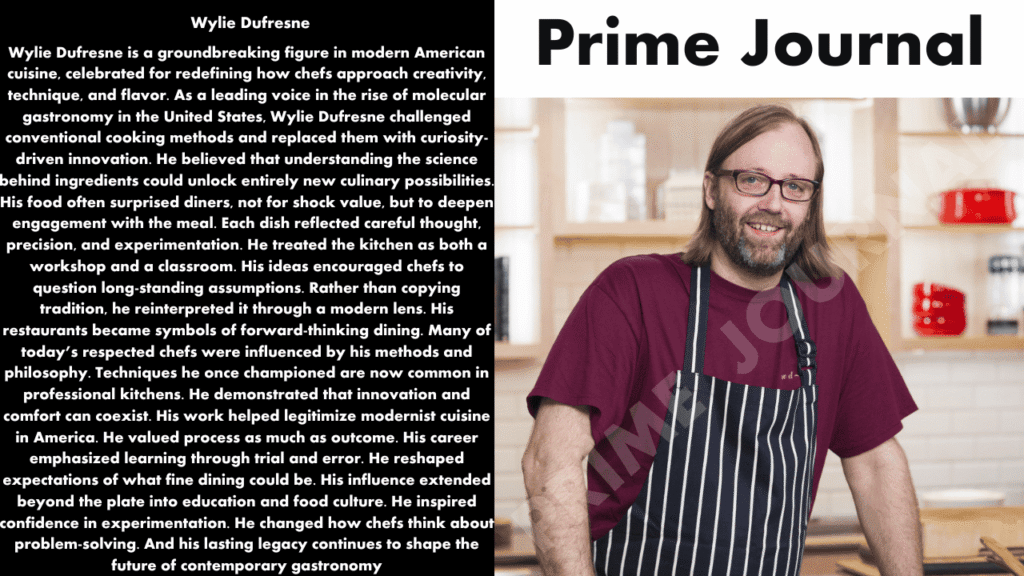
Culinary Philosophy: Science in Service of Flavor
Technique Is Not the Point
One of Dufresne’s most important beliefs is that technique should never overshadow taste.
“The goal isn’t to make food weird. The goal is to make it delicious — just differently.”
His approach emphasizes:
- Flavor first
- Technique as a supporting tool
- Emotional connection through surprise
Innovation Through Constraints
Interestingly, Dufresne thrives under constraints. Whether it’s ingredient limitations or technical challenges, he views restrictions as opportunities for creativity rather than obstacles.
Key Techniques Used by Wylie Dufresne
| Technique | Purpose | Example Use |
|---|---|---|
| Freeze-drying | Texture transformation | Crispy fruit powders |
| Hydrocolloids | Stabilization & gelling | Modern sauces |
| Sous vide | Precision cooking | Proteins with exact doneness |
| Centrifuge | Separation & clarity | Clear juices |
| Foams & airs | Flavor delivery | Aromatic garnishes |
These techniques are now common in modern kitchens — largely thanks to pioneers like Dufresne.
Alder: Reinventing the Casual Dining Experience
Life After wd~50
After wd~50 closed in 2017, many wondered what Dufresne would do next. His answer? Alder, a restaurant that blended modern technique with approachable comfort food.
What Made Alder Different?
- More casual atmosphere
- Familiar flavors
- Subtle modernist techniques
- Broader appeal
This move showed Dufresne’s versatility and growth — proof that innovation doesn’t have to feel intimidating.
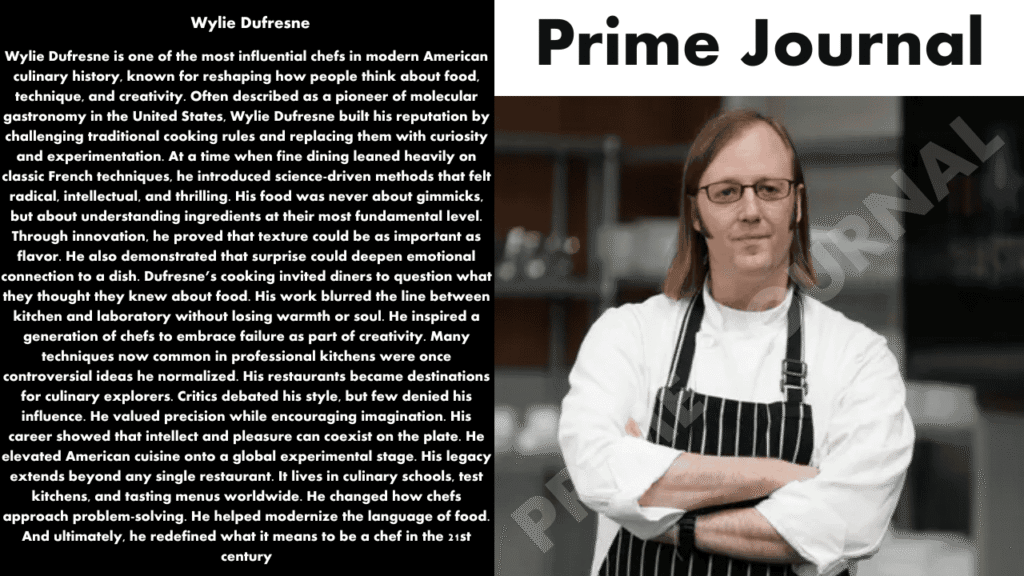
Influence on the Culinary Industry
Mentorship and Legacy
Many chefs who trained under Dufresne went on to open acclaimed restaurants of their own. His kitchens were known for:
- Intellectual rigor
- Collaborative creativity
- Encouragement of questioning norms
Impact on Food Media and Culture
Today, techniques once considered “radical” are now mainstream:
- Sous vide at home
- Food science on YouTube
- Experimental tasting menus
Dufresne helped pave the way.
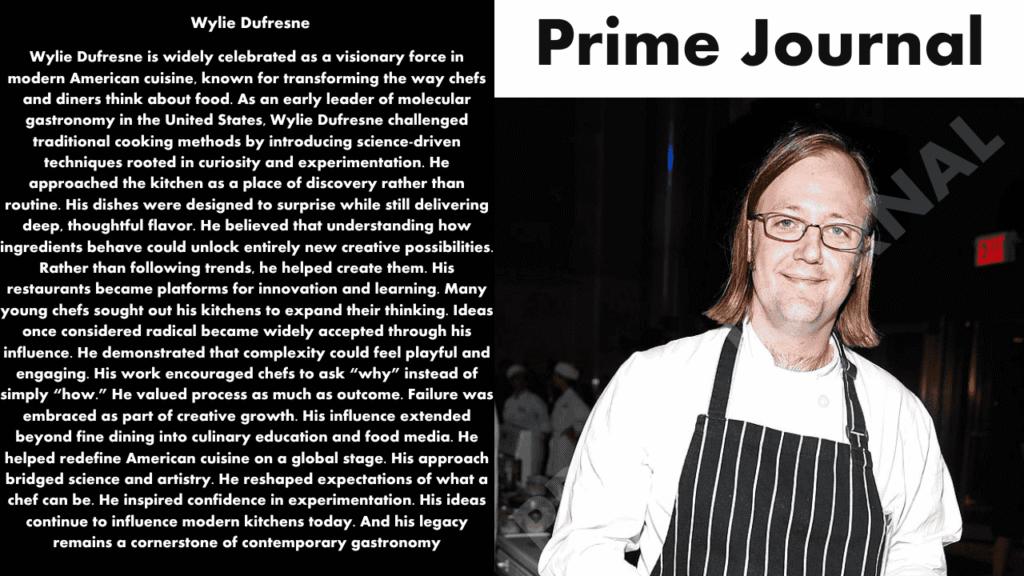
Awards, Recognition, and Media Presence
Notable Achievements
- James Beard Award finalist
- Named among America’s most influential chefs
- Featured in major publications like The New York Times
Television and Public Appearances
While not a traditional TV chef, Dufresne has appeared in:
- Culinary documentaries
- Food science features
- Industry panels
His reputation is built more on respect from peers than celebrity status.
Wylie Dufresne’s Books and Educational Contributions
Published Works
While Dufresne isn’t known for mass-market cookbooks, his contributions to professional culinary literature and collaborations have influenced:
- Culinary education
- Restaurant R&D
- Food innovation labs
Teaching and Speaking
He regularly speaks about:
- Creativity in cooking
- Failure as a learning tool
- The future of food
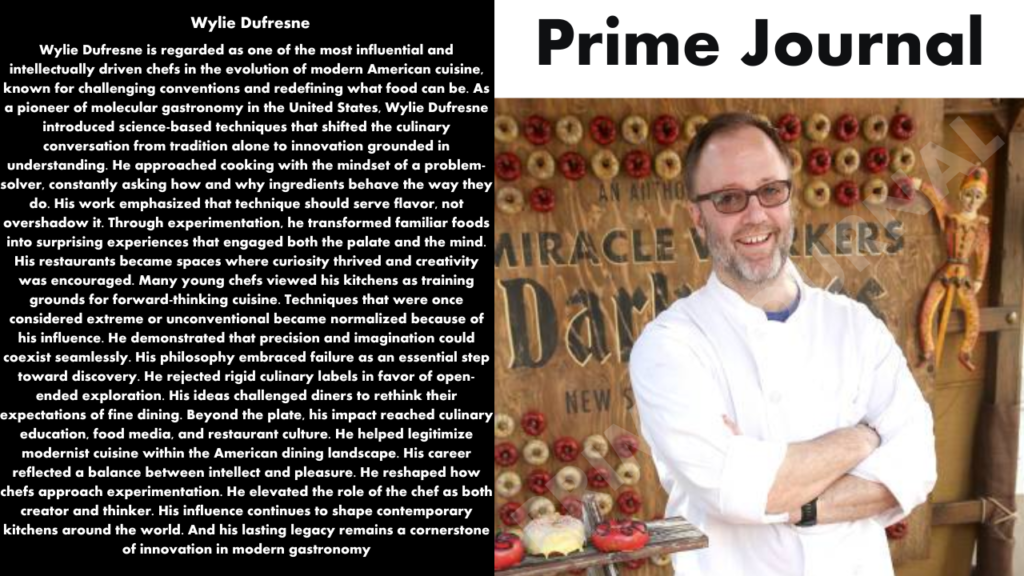
Frequently Asked Questions (FAQ)
Who is Wylie Dufresne?
Wylie Dufresne is an American chef best known for pioneering molecular gastronomy in the United States and for his groundbreaking restaurant wd~50.
What is Wylie Dufresne famous for?
He is famous for:
- Experimental cooking techniques
- Popularizing modernist cuisine
- Challenging traditional dining norms
Is wd~50 still open?
No. wd~50 closed in 2017, but its influence on modern dining remains profound.
Did Wylie Dufresne invent molecular gastronomy?
No, but he was one of the most important figures in introducing and adapting it to American cuisine.
Where can I experience his food today?
While specific restaurants may change, Dufresne continues to consult, innovate, and influence the culinary world through projects and collaborations.
E-E-A-T Breakdown
Expertise:
- Deep technical knowledge
- Decades of hands-on kitchen experience
Experience:
- Ran one of the most innovative restaurants in America
- Worked with world-class chefs
Authoritativeness:
- Widely cited in culinary media
- Respected by peers
Trustworthiness:
- Transparent philosophy
- Consistent culinary vision
Conclusion: The Lasting Legacy of Wylie Dufresne
Wylie Dufresne didn’t just cook food — he redefined what American fine dining could be. By blending science, creativity, and emotion, he opened doors for chefs to think differently, take risks, and trust curiosity.
His legacy lives on not only in former restaurants, but in every kitchen that dares to ask “What if?”
If you care about the future of food, understanding Wylie Dufresne isn’t optional — it’s essential.