



An ageing process is both wise and experienced, and in most cases, it brings about a shift in the way we navigate the world. To most elderly people, staying active is among the highest values in their lives, but with ageing comes the physical disabilities of less muscle tone, joint pains, or bow-and-arrow imbalances that make what used to be easy chores look impossible. The moment when the complete unassisted movement is changed into one with the aid is a serious milestone- one that must be considered not as an indicator of losing freedom, but as an artificial instrument of regaining it.
The caregivers and the seniors should be aware of the details of the mobility support. With the appropriate support in place, the fear of falling is not an issue anymore, but the pleasure of participation. This resource discusses the typical issues of mobility in old age and how current solutions may contribute to a safer and more confident everyday life.
Navigating the Physical Challenges of Aging
The body experiences physiological changes as we age, and this has a direct effect on gait and stability. These transitions are usually in minor forms, and then they develop into big obstacles.
The Impact of Balance and Coordination
Balance involves a complicated process that involves the inner ear, visual feedback, and proprioception, or the capacity of the body to know its spatial position. Once any of these systems degenerate, there is an increased risk of a stumble.
In most elderly people, this causes fear of falling, a state of mind that is no less limiting than physical harm. This fear leads to the condition of a sedentary lifestyle, which further weakens the muscles and leads to an increased problem of balance.
Stamina and Rest Support
There is a possibility that cardiovascular health and muscular endurance decline with age. Even a walk to the local park or a walk in a big grocery store can be tiresome. Many seniors would prefer to stay at home instead of risking being caught in the street without a seat since they have no place to go.
Social withdrawal may in turn result in isolation, and there is a necessity for a portable rest solution is necessary, not necessarily due to physical health but due to emotional well-being.
Managing Uneven Terrain
The outdoors is a diverse environment as compared to the indoor ones, which are usually controlled. Sidewalks, lawns, and roofs with slopes are more difficult to use than a levelled living room carpet. Safety on these surfaces can be the main factor which makes families start searching for assistive equipment such as WHLICKS rollators.
The Role of Assistive Technology in Daily Life
Any mobility aid is aimed at narrowing the gap between the present physical capacity of an individual and the surroundings he or she would like to explore. Present-day engineering has transformed these aids from mere walkers to ergonomic aids.
Promoting Proper Posture
The effect of a high-quality mobility aid on posture is one of the benefits that can be easily disregarded. People become unstable and hunch forward, staring at their feet. This moves the centre of gravity and puts one at risk of a fall. A well-fitted device enables a person to be erect, equally balancing his/her weight and enhancing their respiratory ability by opening up the chest.
Enhancing Confidence and Social Connection
Independence is strongly connected with the possibility to interact on the level of the community. Be it going to watch a soccer game played by a grandchild or going to a museum, the knowledge that a stable support is underhand would offer that psychological safety net needed to say yes to an invitation.
Exploring Options: From Standard Walkers to Rollators
The selection of appropriate equipment is extremely dependent on the needs of the user, climate, and physical activity.
Standard Walkers
Normal folding walkers are not heavy, and they are as stable as possible, as they do not have wheels (or two front wheels). They demand that the user lift the device a little with each step. They can be best used in short ranges within the house or when one needs weight-supporting help greatly.
The Versatility of Rollators
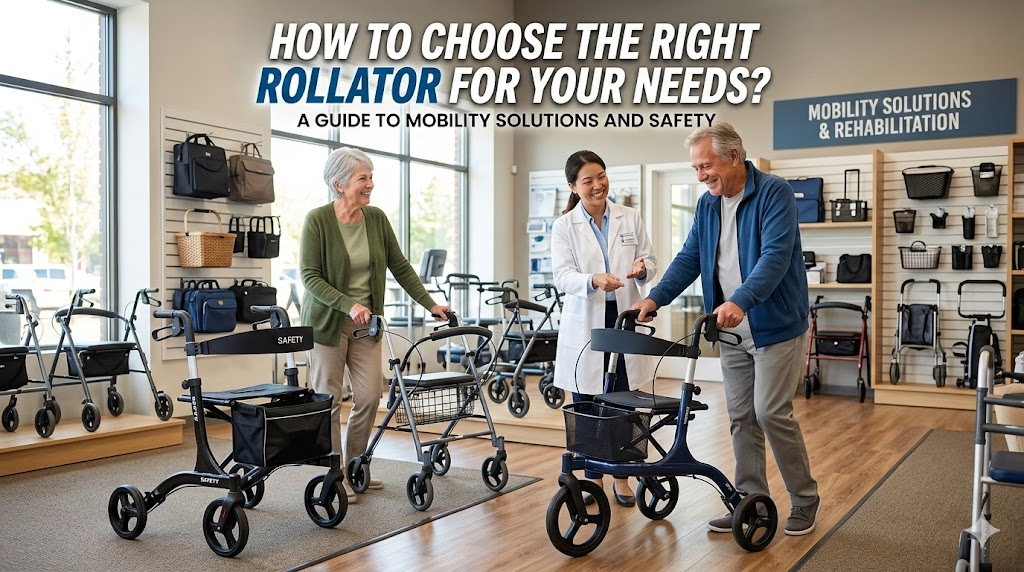
A rollator usually becomes the choice of those who are strong enough to remain on their feet and need assistance with balance and stamina. These machines have four wheels, hand brakes and an inbuilt seat.
- Constant Mobility: Since the four wheels remain in contact with the ground, the walking movement is more natural and smooth than the regular walker.
- Integrated Seating: The aspect of a seat is a changer of fortunes to the seniors who have low stamina. It is a fixed, secure bench to sit on anytime one feels tired, be there in a line or after a stroll.
- Storage: All models have a basket or pouch, or may be used to carry personal objects, groceries, or oxygen tanks without holding them in hands, which also enhances balance.
To the people undertaking research on certain designs, a search through the different types of https://whlicks.net/ would give an idea of the different sizes of the wheels and the weight of the frame, which ought to fit different lifestyles.
Key Considerations for Choosing a Mobility Aid
The choice of a device is a subjective procedure. A physical therapist can be of great assistance, as it can be valuable to consult with a physical therapist and make sure that the decision is based on the specific biomechanics of a user.
1. Maneuverability and Environment
Take into account the most frequent use of the device. When the main application is within the confines of a small flat, a three-wheeled model or a small four-wheeled one with a small turning radius is the perfect choice. When the user likes to use the outdoor trails or resides in a place where the sidewalks are old and with patches here and there, they need larger wheels (usually 8 inches or more) that can absorb the shock and roll over the uneven patches without difficulties.
2. Weight and Portability
Seniors who continue driving or travelling often should be very concerned with the weight of the frame. The popularity of aluminium frames is due to the fact that they have high strength-to-weight ratio. The folding system must be simple and user-friendly for a person with arthritis or lacking the strength to operate the hand.
3. Brake Systems
Safety is paramount. Rollators have most loop brakes like a bicycle. Before sitting, it is crucial to make certain that the user is comfortable in being in a position to squeeze the brakes to decelerate and pressing down the pedal, which holds the device in place to lock.
4. Adjustability
A mobility aid which is excessively high or excessively low may result in strains to the shoulder or back pain. Get models that have adjustable handle heights to get a perfect fit. At the natural position, the handles must coincide with the wrists of the person using them.
Safety Tips for Using Mobility Aids
Having the equipment is one thing, but using it properly is what helps to avoid getting hurt. Check the “Tread” Just as car tyres do, wheels on a mobility device may wear out. Check them frequently and make sure they are not cracked or unevenly worn.
- Clear the Path: In the house, throw carpets and power cables which may snare the wheels or feet.
- The Back into it Rule: Use the seat on a rollator, but it is always important to lock the brakes before use. Sit backwards until your legs are in contact with the back of your seat, and then gently lift yourself downward, using the armrests.
- Remain Strauss: Do not cause the device to lean far ahead of the body. Remain inside the frame of the walker or rollator to have the best centre of gravity.
Conclusion
One of the most proactive things a senior can do is to address the issue of mobility at an early age, which helps in the long-term health of the person. Instead of being reactive to the fall, it is possible to prevent accidents even before they happen and make a supportive device a part of everyday life.
The resources of modernity, including those on the webpage at https://whlicks.net/, provide plenty of information to families making these decisions. With attention to safety, ergonomics, and individual needs of the specified person, caregivers and seniors will be able to keep the golden years a movable, exploratory, and dignified period of independence.
Mobility aids are not only concerned with getting around, but making the world accessible one sure step at a time.