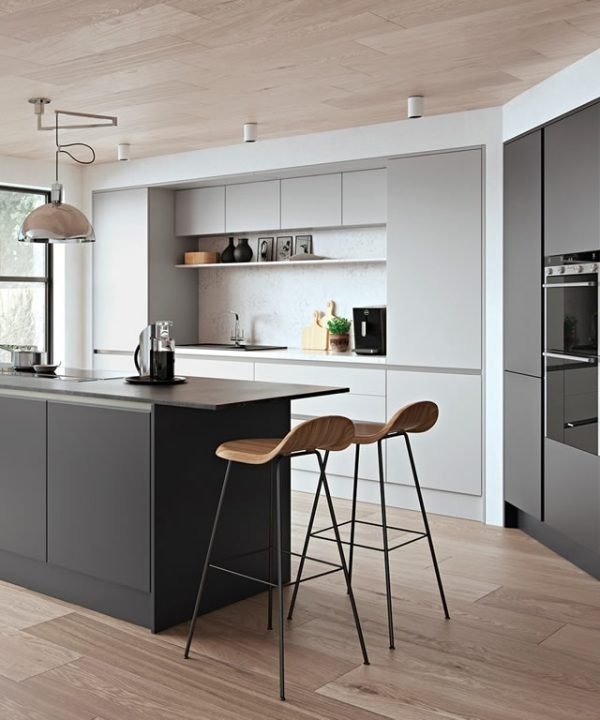




A modern kitchen renovation is about much more than new appliances and cabinetry. The tiles you choose for your floors, walls and splashback do a huge amount of work in defining the room’s style, making it easy to clean, and tying the entire space together. In a city like Melbourne – with its mix of heritage homes, minimalist apartments and architect-designed townhouses – getting those tile choices right can make the difference between “nice update” and “wow, this feels like a brand-new home”.
This guide walks you through how to choose the right combinations of splashback and kitchen tiles so your renovation looks cohesive, feels practical, and stands the test of time.
Start with Your Kitchen Layout and Lifestyle
Before you dive into colours and patterns, step back and think about how you actually use your kitchen.
If you cook most nights of the week, you’ll need tiles that are highly resistant to stains and easy to wipe clean. Households with young kids or pets may prioritise slip-resistant flooring and surfaces that hide crumbs and smudges. Compact inner-city kitchens often benefit from lighter tones and reflective finishes to bounce light around and make the room feel larger.
Your layout matters too. An L-shaped or galley kitchen may have one long run of splashback that becomes a natural focal point. An island bench might shift attention to the flooring. Take a moment to decide which surfaces you want to stand out and which should sit quietly in the background.
Choosing the Right Kitchen Tiles for Everyday Use
The main working surfaces of a kitchen – particularly the floor and the wall areas around cooking zones – need to be tough, low-maintenance and safe.
Porcelain and ceramic tiles are popular because they’re durable, resistant to moisture and available in almost any look you can imagine: concrete, stone, timber, terrazzo, marble and more. Larger format tiles can minimise grout lines, making cleaning easier and creating a more seamless look underfoot. Matte finishes are often preferred for flooring because they tend to be less slippery and more forgiving of scuffs and crumbs.
When you start comparing kitchen tiles melbourne options, pay attention to slip ratings for floors, water- and stain-resistance around sinks and cooktops, and how the tile feels underfoot. Kitchens flow into living and dining spaces in many modern Melbourne homes, so consider how the flooring will transition into adjacent rooms as well.
Designing a Splashback That Complements Your Space
Your splashback is both a functional shield against moisture and cooking splatter and a design opportunity. It’s one of the most visible surfaces in the whole room, sitting directly behind the cooktop and benchtop, often right in your line of sight as you walk in.
A few practical design principles can help:
Use the splashback to introduce contrast. If your cabinetry and benchtops are neutral, this is a great place to bring in colour, pattern or texture. On the other hand, if your benchtop already has a strong grain or veining, a simpler splashback can provide balance.
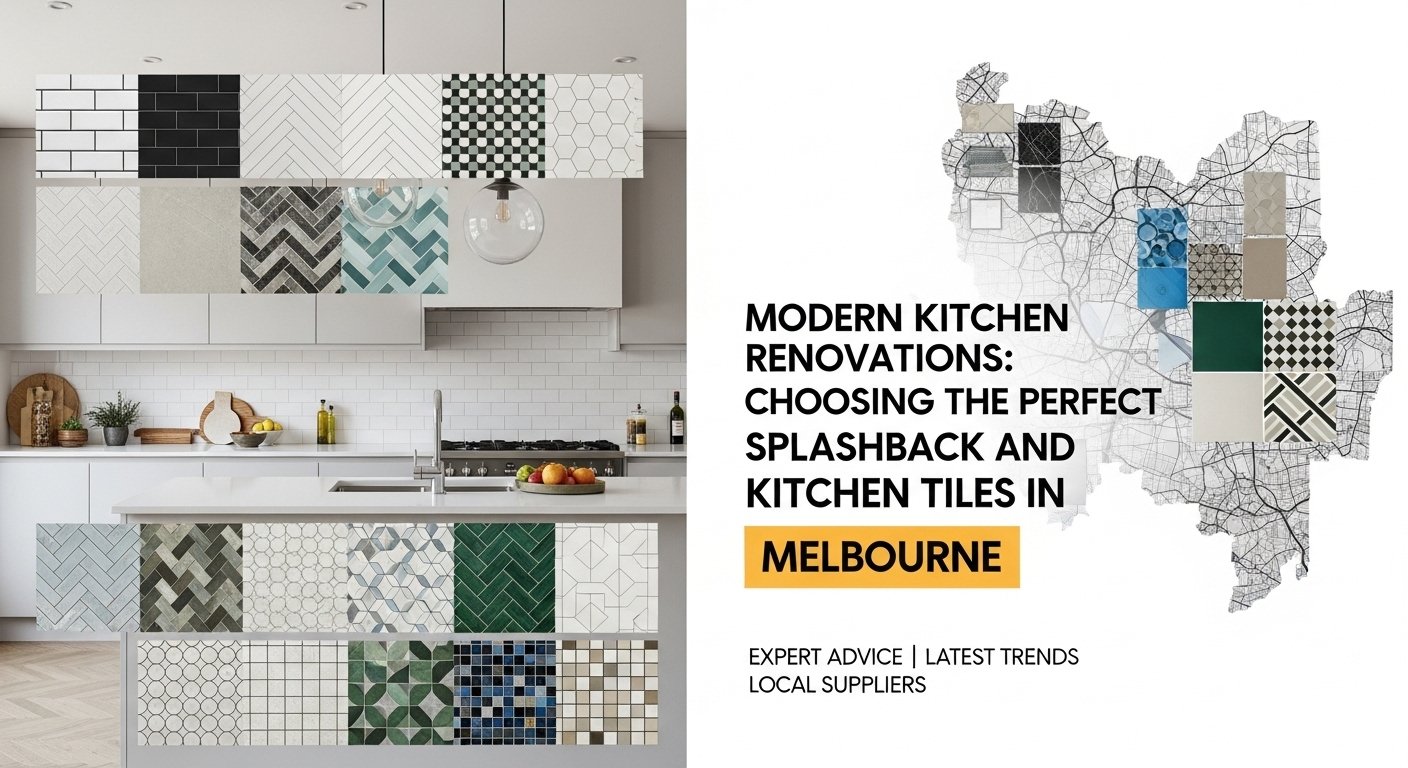
Think about tile shape and layout. Classic subway tiles laid in a brick bond or stacked pattern remain popular, but you can modernise the look with elongated rectangles, square formats, finger mosaics or hexagons. Even a simple tile can look high-end when the layout is considered.
Plan the height of the splashback. Running tiles all the way to the underside of overhead cabinets is standard, but extending them to the ceiling behind a rangehood or open shelves creates a feature wall that draws the eye upward and makes the room feel taller.
Grout colour also plays a big role. A matching grout gives a smooth, cohesive look, while a contrasting grout will highlight the pattern and shape of the tiles.
Coordinating Your Splashback and Floor Tiles
One of the most common renovation mistakes is choosing tiles in isolation. Samples can look beautiful on their own but clash once installed together. The goal is to create a relationship between your floor and splashback without making them compete.
A simple way to do this is to let one be the “hero” and the other more supportive. For example, you might choose a stone-look floor tile in warm grey and pair it with a glossy white splashback laid in an interesting pattern. Or you could keep the floor neutral and use a coloured or textured splashback as the main decorative element.
When comparing splashback tiles melbourne ranges, always view them alongside your floor tile, benchtop and cabinet samples, not separately. Looking at everything together will quickly show you which combinations feel harmonious and which introduce too many competing tones.
Don’t Forget Lighting, Maintenance and Long-Term Style
Lighting can completely change how your tiles look. Under-cabinet LED strips will emphasise texture on a handmade-style tile, while strong overhead lighting might increase glare on highly polished surfaces. Whenever possible, check tile samples under similar lighting conditions to your own kitchen – both natural daylight and evening lighting.
Maintenance should be part of your decision, not an afterthought. Highly polished dark tiles may look incredible in a showroom, but they can show streaks and crumbs more easily. Textured tiles hide marks well but may take a little more effort to clean in heavy-use zones. Choosing mid-tones and soft, natural textures often gives a good balance between aesthetics and practicality.
Finally, think about longevity. Trends come and go, but your tiles will likely stay in place for a decade or more. If you love bold patterns or strong colours, consider using them in smaller areas – like a feature niche or open shelving backdrop – while keeping your main surfaces more timeless. That way, you can refresh your kitchen with paint, hardware and décor without having to rip tiles off the wall every time styles shift.
Bringing It All Together
Modern kitchen renovations in Melbourne succeed when function and design are treated as equal priorities. By starting with your lifestyle, choosing hard-working floor and wall tiles, designing a splashback that supports your overall scheme, and viewing all materials together, you can create a space that feels cohesive and genuinely enjoyable to cook in.
Working with a specialist tile showroom such as Erneste can make the process smoother, as you can compare multiple options side by side and get guidance on how different tiles will perform in real-world conditions. With the right planning and the right tiles, your new kitchen won’t just look modern on day one – it will keep looking and feeling great for years to come.