



Believe you live five miles outside of town on a quiet country road. The nearest streetlight is somewhere back near the gas station you passed twenty minutes ago. Every night, you pull into your driveway in complete darkness, hoping nothing is in the way. Your kids wait for the school bus before sunrise on a road where passing drivers can barely see them. This is daily life for millions of rural residents, and this is exactly where Off-Grid Roadway Lighting Systems step in and genuinely change things.
Why Rural Roads Stay Dark and Why That Matters
It is easy to take streetlights for granted when you live in a city or suburb. But in rural areas, the absence of lighting is not an oversight. It is a structural reality. Running power lines to remote roads costs money that utility companies and local governments rarely have. So the roads stay dark, and residents simply learn to live with the risk.
- The Real Cost of Unlit Rural Roads
Dark roads in rural areas are not just uncomfortable; they are genuinely dangerous. Studies consistently show that roadway accidents are more likely to happen at night, and rural roads already carry higher fatality rates than urban ones. Without lighting, the margin for error shrinks considerably for everyone using those roads after sunset.
- Utility Infrastructure Does Not Reach Everyone
Extending the electrical grid to remote locations is expensive and logistically complicated. Trenching, poles, wiring, and ongoing maintenance all add up fast. For a stretch of rural road serving a handful of homes, that investment rarely gets prioritized. Residents end up at the back of a very long line, waiting for infrastructure that may never arrive.
- Darkness Affects Daily Routines in Real Ways
This is not just about safety statistics. It is about real people adjusting their lives around darkness. Parents are driving slower than they need to. Elderly residents are avoiding evening trips altogether. Children waiting at bus stops cannot clearly see. Darkness shapes behavior in ways that quietly reduce quality of life over time.
- Rural Communities Deserve the Same Safety Standards
There is something fundamentally unfair about the gap between how well-lit urban streets are and how dark rural roads remain. Safety should not depend on zip code. Residents in remote areas pay taxes, follow the same laws, and face the same risks as anyone else. The infrastructure should reflect that.
- Local Governments Often Lack the Budget to Fix It
Even when rural counties recognize the problem, the budget simply is not there to address it through conventional means. Traditional streetlight installation requires electrical infrastructure that small municipalities cannot afford to extend. That gap between need and resources is exactly what makes off-grid solutions so relevant and so timely right now.
How Roadway Lighting Systems Change the Equation?
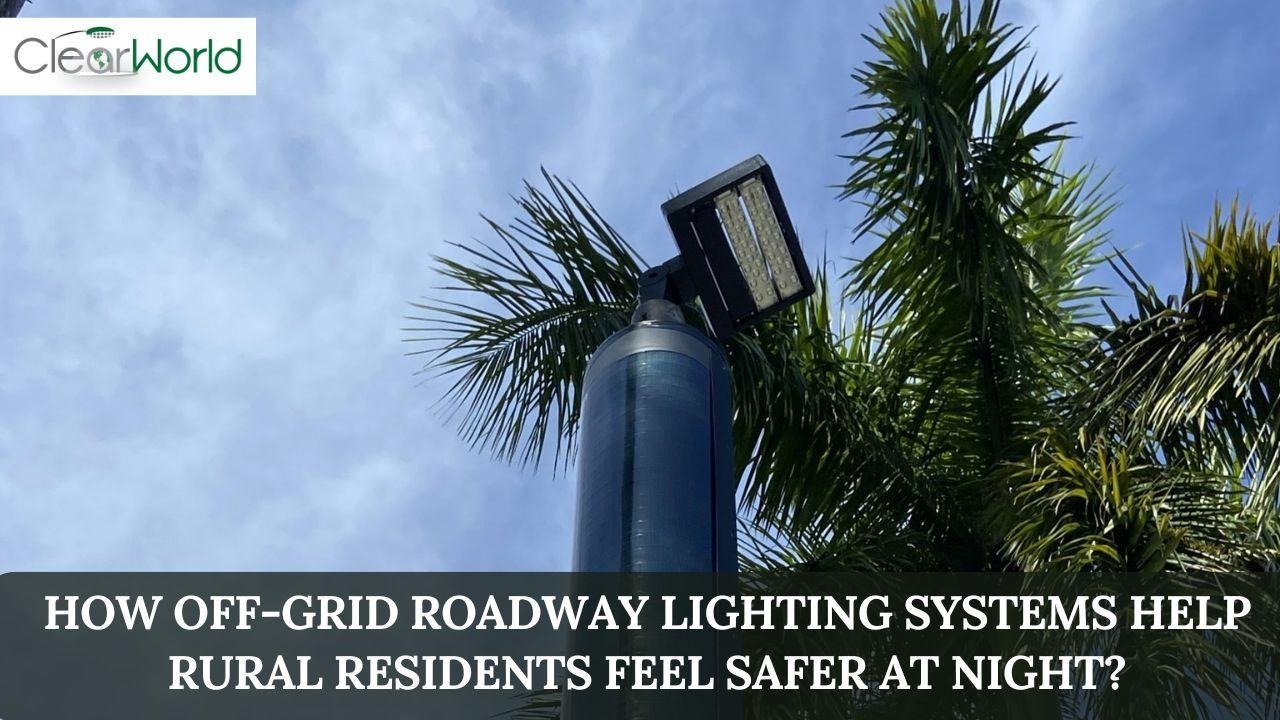
The good news is that solving rural lighting no longer requires solving the grid extension problem first. Roadway Lighting Systems Work completely independently, powered by the sun, stored in onboard batteries, and installed without a single trench being dug. For rural residents, that shift is significant.
- No Grid Connection Needed
Roadway lighting systems generate their own power through solar panels and store it in batteries built directly into each unit. There is no need to connect to utility lines, which means remote roads that were previously impossible to light economically are now completely viable candidates for safe, reliable illumination.
- Installation Without Major Disruption
Because there is no underground wiring involved, installation on rural roads is straightforward and fast. Crews can place poles and have them operational quickly, without tearing up road shoulders or coordinating with utility companies. For residents who have waited years for a solution, speed matters.
- Consistent Light Through the Night
A common concern with solar lighting is reliability after dark or during cloudy periods. Modern off-grid systems are designed with battery capacity that handles overnight operation consistently. Even after overcast days, well-engineered units maintain enough stored energy to keep the light on when it is needed most.
- Built to Handle Rural Conditions
Rural roads face weather that urban infrastructure sometimes does not. High winds, heavy rain, temperature swings, and road dust are all part of the environment. Lighting systems are built with this in mind, using durable materials and weather-resistant construction that holds up year after year without constant maintenance visits.
- A Scalable Solution That Grows With Community Needs
One of the most practical advantages of off-grid systems is that they scale without complication. A rural community can start with a few poles at the most dangerous intersections and expand coverage gradually over time. Each unit works independently, so adding more never requires redesigning what is already in place.
A Closing Thought
Living on a dark rural road should not mean accepting risk as part of the deal. Off-Grid Roadway Lighting Systems offer a practical, proven way to bring consistent, reliable light to the roads that have gone without it the longest. For rural residents, that is not a small thing. It is safer mornings, calmer evenings, and the quiet confidence that comes from knowing your road is finally visible.