



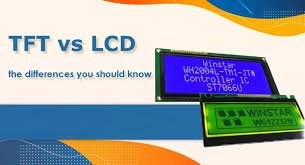
In today’s digital world, monitors play a huge role in how we work, learn, and enjoy entertainment. When buying a screen, many people come across the terms TFT and LCD and wonder what they really mean. Understanding the TFT vs LCD Monitors comparison can help you choose the right display for your needs.
While both technologies are closely related, they have important differences in performance, clarity, and responsiveness. Modern devices, especially those using a Capacitive Touchscreen TFT Display, rely on advanced versions of these technologies to provide smooth and accurate interaction.
Understanding LCD Technology
LCD stands for Liquid Crystal Display. This technology uses liquid crystals placed between two layers of glass. When electricity passes through the crystals, they align in a way that controls how light passes through the screen. This process creates the images you see.
LCD monitors became popular because they replaced bulky CRT screens. They are thinner, lighter, and more energy-efficient. Today, LCD screens are used in laptops, televisions, smartphones, and desktop monitors.
However, basic LCD technology has some limitations. Traditional LCD screens may have slower response times and less accurate color reproduction compared with more advanced display types.
What Is a TFT Monitor?
TFT stands for Thin Film Transistor. It is actually a type of LCD technology that improves how pixels are controlled on the screen. Each pixel in a TFT monitor has its own transistor. This allows the monitor to control pixels individually and more precisely.
Because of this design, TFT monitors offer:
- Better image quality
- Faster refresh rates
- Improved brightness and contrast
- Sharper visuals
In simple terms, when discussing TFT vs LCD Monitors, TFT is an upgraded form of LCD that delivers better performance.
Many modern devices, including tablets, industrial screens, and smart control panels, use a Capacitive Touchscreen TFT Display because it combines responsive touch capability with high-quality visuals.
Key Differences Between TFT and LCD Monitors
1. Image Quality
TFT monitors generally provide sharper images and more accurate colors. This makes them ideal for graphic work, gaming, and multimedia use.
Standard LCD screens may appear slightly dull compared with TFT panels.
2. Response Time
Response time refers to how quickly a pixel can change from one color to another.
TFT monitors usually have faster response times. This reduces motion blur when watching videos or playing games.
3. Energy Consumption
Both displays consume less power than older CRT monitors. However, TFT screens often manage energy more efficiently due to better pixel control.
4. Touchscreen Compatibility
Many modern interactive devices rely on a Capacitive Touchscreen TFT Display. These screens allow users to interact with devices through touch gestures such as tapping, swiping, and zooming.
This technology is widely used in smartphones, kiosks, and industrial systems.
Why Capacitive Touchscreen TFT Displays Are Popular
A Capacitive Touchscreen TFT Display uses electrical conductivity from the human finger to detect touch. Unlike resistive screens, capacitive displays offer smoother and more accurate responses.
Benefits include:
- Multi-touch support
- Higher durability
- Clearer display quality
- Faster touch response
Because of these advantages, many modern monitor manufacturers combine TFT panels with capacitive touch technology to create interactive displays.
Choosing the Right Monitor
When deciding between TFT vs LCD Monitors, the best option depends on how you plan to use the screen.
Choose a TFT monitor if you want:
- Better image quality
- Faster response time
- A smoother viewing experience
A standard LCD screen may still work well for basic tasks such as office work or browsing.
If you need interactive functionality, a Capacitive Touchscreen TFT Display is often the best solution for both clarity and touch accuracy.
Final Thoughts
Understanding the difference between TFT vs LCD Monitors helps buyers make smarter decisions when choosing a display. While LCD technology laid the foundation for modern flat screens, TFT panels improved image quality and performance.
Today, advanced displays like the Capacitive Touchscreen TFT Display combine high-resolution visuals with responsive touch control. This makes them ideal for modern electronics, smart devices, and professional applications.
Selecting the right monitor ensures better productivity, clearer visuals, and a more comfortable digital experience.