




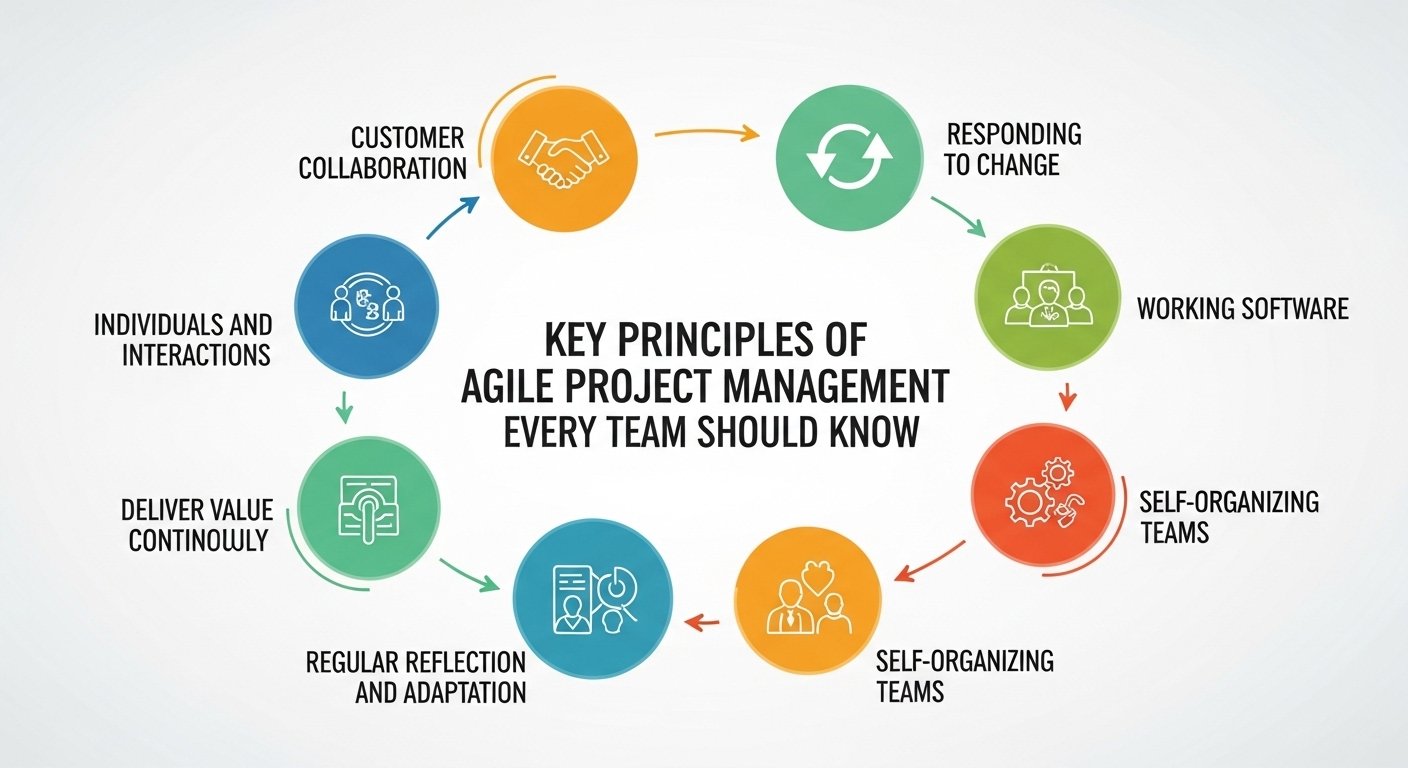
Have you ever thought about why some teams finish projects on time and with no problems, while others have trouble with delays and confusion? This is a problem that a lot of teams have when they stick to strict plans that can’t modify. This is when PRINCE2 Agile® Training comes in handy. It teaches professionals how to manage their work in real life by being flexible and working together clearly. Agile Project Management focuses on making teamwork better and making things better all the time. When teams understand these principles, they handle complex projects with confidence and achieve better results.
In this blog, we will discuss the key principles that make agile project management successful.
Table of Contents
- Core Principles That Make Agile Project Management Successful
- Conclusion
Core Principles That Make Agile Project Management Successful
Below are the most important principles that make Agile Project Management work and enable teams to produce value with confidence and clarity:
Focus on Giving Customers Value
Delivering value to the customer is the cornerstone of Agile Project Management. Enhancing the product or service for the user should be the goal of every project job.
Teams ask a straightforward question and monitor progress on a regular basis. Does the customer gain anything from this work? They change their priorities if the response is negative.
This method preserves the project’s focus on results instead of pointless tasks. Additionally, it helps teams avoid wasting time on activities that don’t advance the ultimate objective.
Accept Change at Any Point
Because they adhere to rigid plans, traditional project techniques frequently oppose change. Agile project management adopts an alternative perspective. It acknowledges that any undertaking will inevitably involve change.
The needs of customers can change. Trends in the market could change. Throughout the course of a project, technology may advance.
Agile teams routinely evaluate input and modify their plans as necessary. This adaptability keeps initiatives current and productive.
Deliver Work in Small Steps
Agile projects move through manageable, incremental phases. A functional portion of the project is delivered at each step.
Teams can test outcomes early with this strategy. They get input and enhance the subsequent phase.
Teams increase quality and lower risk by working in short cycles. Errors are promptly detected and fixed before they become more serious issues.
Promote Continuous Improvement
Learning from each stage of the project is a key component of Agile Project Management.
Teams evaluate their work and pose straightforward queries. What was effective? What can be done better the next time?
With each cycle, this process makes teams stronger. The team gradually improves in speed, organisation, and project management confidence.
Empower Teams to Make Decisions
When agile teams are allowed to make choices about their job, they function at their best.
Although they trust the team to make the best decisions, managers offer guidance and assistance. This strategy promotes responsibility and inventiveness.
People accept responsibility for their actions when they feel trusted. Better outcomes and increased team performance follow from this.
Make Work Simple and Clear
Projects are frequently slowed down by complicated procedures. Simplicity is encouraged by agile project management.
Teams concentrate on finishing important tasks. They steer clear of pointless paperwork and difficult procedures.
Tracking progress and finding rapid solutions are made easier with a straightforward procedure. Additionally, it enables teams to concentrate on providing value.
Encourage Regular Feedback
An effective tool in Agile project management is feedback. At various phases of the project, teams get feedback from stakeholders and clients.
What is effective and what requires improvement are highlighted in this feedback. After that, teams modify their work to meet expectations.
Frequent feedback ensures that the finished product satisfies actual business requirements.
Conclusion
Teams may operate with more clarity and confidence if they know the basic ideas behind Agile Project Management. When teams put the needs of the client first and work to improve all the time, it’s easier to manage and deliver projects. These ideas help people make better choices and get better results at work today.
PRINCE2 Training also helps professionals understand structured project management principles and deliver projects effectively. Many professionals improve these skills by taking PRINCE2 Agile® Training, which mixes formal project management with agile. This method helps teams deal with change well while still keeping a tight grip on project delivery and company goals.