



Managing one gym is hard. Managing five, ten, or fifty locations across different cities is an entirely different challenge.
Most multi-location fitness chains struggle with the same issues: inconsistent security policies, after-hours staffing costs, unauthorized access, membership abuse, and slow response times during incidents. At the same time, members expect 24/7 access, seamless entry, and a safe environment.
Here’s the promise: cloud-based gym access control solves these problems without adding operational complexity.
According to IHRSA, the global health club industry generates over $96 billion annually, and chains continue to expand into suburban and secondary markets. With growth comes risk. The U.S. Bureau of Labor Statistics also reports that theft and workplace safety incidents remain consistent concerns in retail-style facilities, including fitness centers.
For multi-location operators, the question is no longer whether to modernize security. It’s how to do it without slowing down growth.
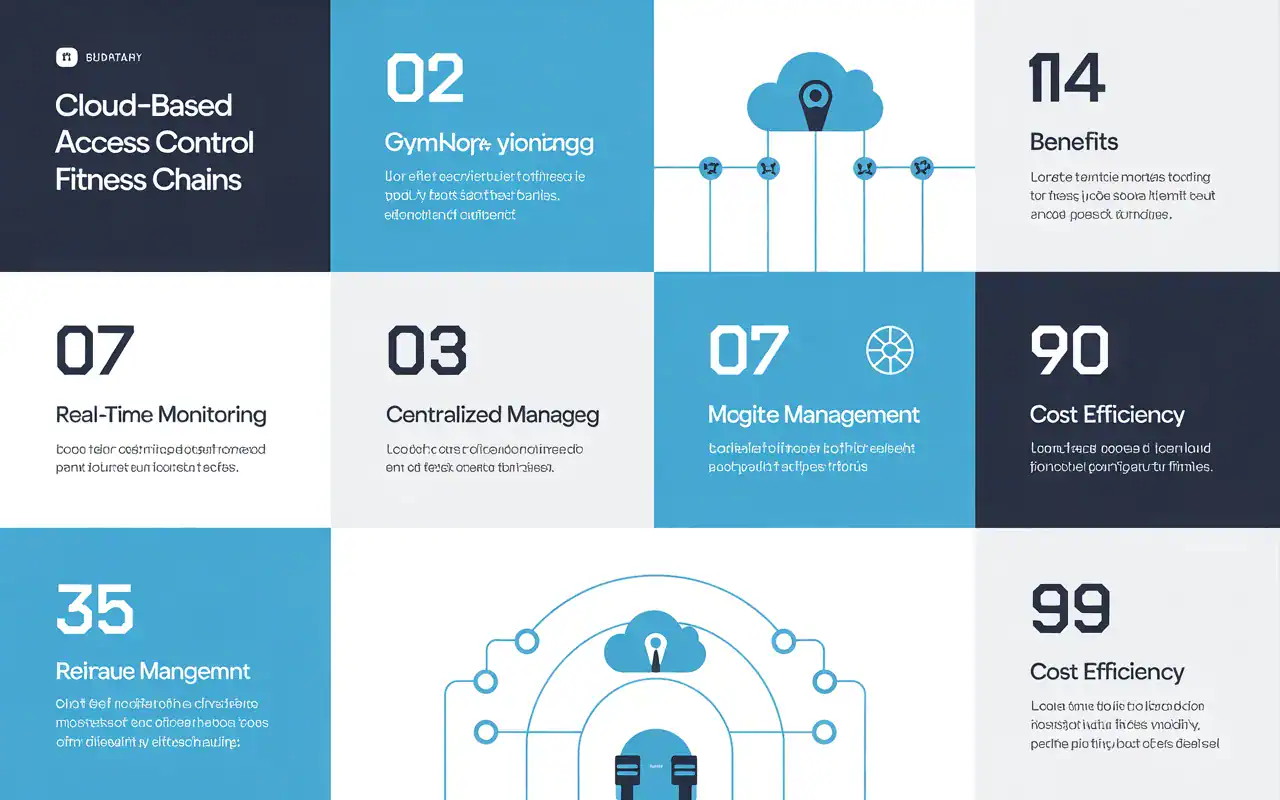
Below are 9 specific, data-backed benefits of adopting a cloud-based gym access control system across multiple locations.
1. Centralized Control Across Every Location
The biggest challenge for gym chains is fragmentation.
Without a cloud-based system:
- Each location may operate independently
- Access credentials are managed locally
- Policies differ from branch to branch
- Security visibility is limited
Cloud-based access control changes that.
With a centralized dashboard, management can:
- Add or remove members instantly
- Update access schedules across all locations
- Monitor door activity in real time
- Enforce consistent policies everywhere
This is especially important for franchises or rapidly expanding brands. According to Deloitte’s 2024 retail operations survey, organizations using centralized cloud management platforms reduce administrative overhead by up to 30% compared to location-based systems.
For gym chains, that translates directly into saved payroll hours and fewer compliance gaps.
2. True 24/7 Member Access Without Staffing Costs
Members increasingly expect 24/7 access. But keeping staff onsite overnight is expensive.
The average hourly wage for security personnel in the U.S. is approximately $18–$22 per hour, according to BLS data. Overnight staffing across multiple locations can cost tens of thousands annually per gym.
Cloud-based gym access control enables:
- Secure mobile, PIN, or card entry
- Automated access during assigned membership hours
- Full logging of entry and exit events
This eliminates the need for overnight desk staff while maintaining accountability.
Modern platforms also track every entry event, creating an audit trail that protects both the business and the member.
3. Reduced Membership Abuse and Tailgating
One of the most common revenue leaks in multi-location gyms is credential sharing.
Members sometimes:
- Let friends in after hours
- Share PIN codes
- Tailgate behind authorized users
Over time, this leads to:
- Lost revenue
- Overcrowding
- Safety risks
Advanced systems now use AI-driven detection to identify when multiple people enter on a single credential. Alerts can be sent instantly to management.
For example, some modern gym access control systems integrate video intelligence that flags suspicious entry behavior. As seen in platforms like Coram’s gym access control system, features such as tailgating detection, credential misuse alerts, and automatic event logging help maintain fair usage without requiring additional staff. The system can also manage secure 24/7 entry through mobile apps, cards, or PIN credentials, while tracking all activity centrally.
The key benefit here is revenue protection. Even a 2–3% reduction in credential abuse can represent significant annual savings for multi-location operators.
4. Faster Incident Response and Documentation
When something goes wrong in a gym, timing matters.
Common incidents include:
- Altercations between members
- Equipment misuse
- Medical emergencies
- Forced entry attempts
Cloud-based access control systems often integrate with video and alert tools. This allows management to:
- Review door logs immediately
- See who entered and when
- Pair access events with recorded footage
Faster response reduces liability.
According to industry insurance data, documented access logs and video evidence can significantly reduce dispute-related claims and lower legal exposure.
For chains operating in multiple states, centralized documentation also helps standardize reporting procedures.
5. Improved Security for Restricted Areas
Not all gym spaces should be accessible to every member.
Restricted zones may include:
- Staff offices
- Cash handling rooms
- Storage areas
- Server closets
- Childcare rooms
Cloud-based access control allows operators to assign permissions by:
- Role
- Membership tier
- Time of day
- Location
For example:
- Personal trainers can access private training rooms
- Cleaning crews can access specific areas during scheduled hours
- Managers can override access remotely
This layered security model reduces internal risk and prevents unauthorized access.
6. Scalable Growth Without Infrastructure Overhaul
Growth is expensive when security systems require hardware replacement at every new site.
Traditional access control often involves:
- Local servers
- On-site IT configuration
- Separate vendor contracts
Cloud-based systems remove most of this complexity.
New locations can be:
- Connected to the central dashboard
- Configured remotely
- Managed under one unified system
McKinsey reports that cloud adoption reduces infrastructure deployment time by 40–60% compared to traditional on-premise models.
For expanding fitness brands, that speed matters. It means:
- Faster openings
- Lower IT costs
- Simplified vendor relationships
7. Better Member Experience and Convenience
Security should not feel restrictive.
Cloud-based systems support:
- Mobile app entry
- Touchless access
- Instant credential updates
- Temporary guest passes
Consumers increasingly prefer mobile-first experiences. A 2023 survey by PYMNTS found that over 60% of consumers prefer digital access methods over physical cards when available.
For gyms, this means:
- Fewer lost keycards
- Reduced administrative workload
- Faster entry during peak hours
Convenience and security can coexist when the system is designed correctly.
8. Data-Driven Operational Insights
Modern cloud platforms provide more than security. They generate data.
Operators can analyze:
- Peak entry times
- Member traffic patterns
- Multi-location usage trends
- After-hours activity
This data supports smarter decisions:
- Adjust staffing levels
- Optimize cleaning schedules
- Plan expansion
- Improve member retention
For multi-location chains, aggregated insights across all branches provide a competitive edge.
9. Lower Long-Term Total Cost of Ownership
At first glance, cloud-based systems may appear more expensive than basic keycard setups.
However, total cost analysis shows otherwise.
Consider the following cost factors:
- Reduced overnight staffing
- Lower IT infrastructure maintenance
- Decreased revenue leakage
- Fewer security incidents
- Reduced insurance claims
When these factors are combined, many operators see positive ROI within 12–24 months.
Cloud platforms also eliminate costly server replacements every 3–5 years, which traditional systems often require.
Key Takeaways
- Cloud-based gym access control centralizes security across multiple locations
- It enables secure 24/7 access without overnight staffing costs
- AI-driven tailgating detection reduces membership abuse
- Centralized logs and video pairing improve incident response
- Scalable cloud deployment supports rapid expansion
- Digital credentials enhance member convenience
- Data analytics provide operational insights beyond security
- Long-term ROI often outweighs initial investment
Conclusion
Multi-location gym chains face a balancing act: growth, member experience, and security must all scale together.
Cloud-based gym access control systems address these challenges by centralizing management, enabling secure 24/7 entry, reducing revenue leakage, and supporting rapid expansion.
The shift toward cloud security mirrors broader business trends. As organizations move core operations to centralized digital platforms, physical security is following the same path.
The real question for operators is not whether cloud-based access control is the future. It is whether waiting to modernize is costing more than upgrading.
What challenges are you facing in managing access across your gym locations?