



Introduction: A Global Shift Toward Automation
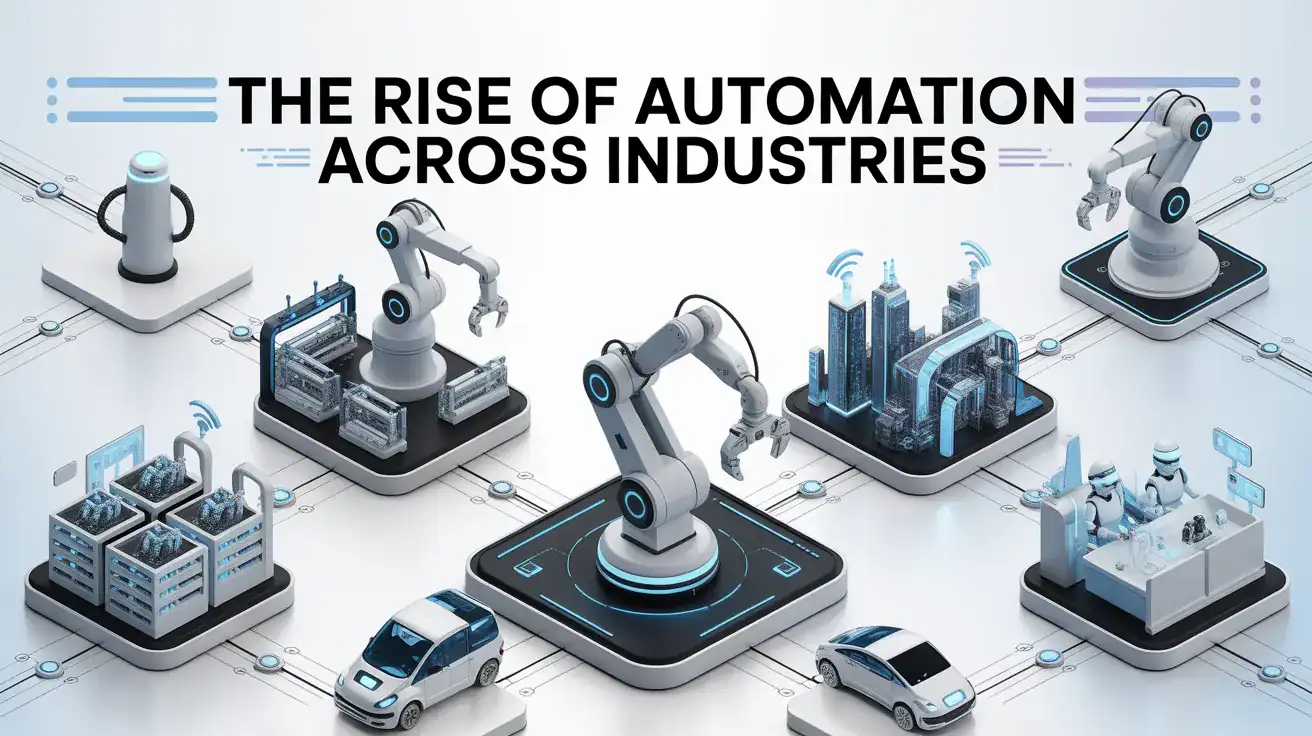
Automation is no longer a concept of the future—it is a defining feature of the present. Across industries, from manufacturing and healthcare to finance and retail, organizations are integrating automated systems to improve efficiency, reduce costs, and stay competitive in a rapidly evolving market.
Driven by advancements in artificial intelligence (AI), robotics, and data analytics, automation is transforming not only how businesses operate but also how work itself is defined. As companies increasingly rely on machines and algorithms, the implications extend far beyond productivity gains, touching on employment, skills, and societal structure.
According to technology analyst Dr. Richard Evans:
“Automation represents one of the most significant economic shifts since the Industrial Revolution. Its impact will be felt across every sector and every level of the workforce.”
The Evolution of Automation
From Mechanization to Intelligent Systems
Automation has evolved significantly over time. Early forms focused on mechanization—replacing manual labor with machines. Today, automation is driven by intelligent systems capable of learning, adapting, and making decisions.
Key Stages of Automation
- Mechanical automation (industrial machinery)
- Digital automation (software and systems)
- Intelligent automation (AI and machine learning)
This progression has enabled businesses to automate increasingly complex tasks.
Automation in Manufacturing
The Foundation of Industrial Automation
Manufacturing has long been at the forefront of automation. Robotics and assembly lines have transformed production processes, enabling mass production with high precision.
Smart Factories
Modern factories use interconnected systems and IoT (Internet of Things) devices to create “smart” environments where machines communicate and optimize operations in real time.
Expert Insight
Industrial engineer Sarah Mitchell explains:
“Smart factories are not just automated—they are adaptive. They can respond to changes in demand and optimize production without human intervention.”
Automation in Healthcare
Enhancing Efficiency and Accuracy
Healthcare is increasingly adopting automation to improve patient outcomes and operational efficiency.
Applications in Healthcare
- Automated diagnostics
- Robotic surgery
- Administrative task automation
Automation reduces human error and allows healthcare professionals to focus on patient care.
Automation in Finance
Transforming Financial Services
The financial sector has embraced automation through technologies such as algorithmic trading, fraud detection systems, and robotic process automation (RPA).
Key Benefits
- Faster transaction processing
- Improved risk management
- Enhanced customer experience
Expert Commentary
Financial analyst James Carter notes:
“Automation has made financial systems more efficient, but it also introduces new risks that must be carefully managed.”
Automation in Retail and E-commerce
Redefining Customer Experience
Retail is undergoing a significant transformation through automation. From inventory management to personalized recommendations, automation enhances both efficiency and customer engagement.
Examples
- Automated warehouses
- Self-checkout systems
- AI-driven product recommendations
These innovations streamline operations and improve service delivery.
The Role of AI in Automation
Intelligent Decision-Making
AI is the driving force behind modern automation. Unlike traditional systems, AI can analyze data, identify patterns, and make decisions.
Integration Across Industries
Businesses are increasingly integrating AI tools into their workflows. In many cases, professionals interact with AI systems conversationally—using platforms similar to Overchat – free AI chat—to analyze data, generate insights, and support decision-making processes.
This shift reflects a broader trend toward accessible and user-friendly automation tools.
Workforce Transformation
Changing Nature of Jobs
Automation is reshaping the workforce by altering job roles and skill requirements.
Job Displacement vs Job Creation
While automation can replace certain tasks, it also creates new opportunities:
- Technical roles (AI specialists, data analysts)
- Maintenance and oversight positions
- Creative and strategic roles
Expert Insight
Labour economist Dr. Emily Watson explains:
“Automation does not eliminate jobs entirely—it transforms them. The key challenge is managing this transition effectively.”
Skills and Education in the Age of Automation
The Need for Reskilling
As automation advances, the demand for new skills is increasing.
Critical Skills for the Future
- Digital literacy
- Data analysis
- Problem-solving
- Adaptability
Educational institutions and businesses must invest in training programs to prepare workers for these changes.
Ethical and Social Implications
Balancing Efficiency and Responsibility
Automation raises important ethical questions, particularly around job displacement and inequality.
Key Concerns
- Income inequality
- Loss of traditional jobs
- Ethical use of AI
Expert Commentary
Ethics researcher Dr. Laura Bennett states:
“The challenge is not whether we should automate, but how we do it responsibly.”
Economic Impact of Automation
Productivity and Growth
Automation contributes to economic growth by increasing productivity and efficiency.
Long-Term Effects
- Lower production costs
- Increased competitiveness
- Potential for economic expansion
However, these benefits must be balanced against social challenges.
Challenges in Implementing Automation
Barriers to Adoption
Despite its advantages, automation is not without challenges.
Common Obstacles
- High initial investment
- Integration with existing systems
- Resistance to change
Organizations must carefully plan implementation strategies to overcome these barriers.
The Future of Automation
Emerging Trends
Automation continues to evolve, with new technologies shaping its future.
Key Developments
- Autonomous systems
- Advanced robotics
- AI-driven decision-making
These innovations will further expand the scope of automation.
Conclusion: Navigating the Automated Future
The rise of automation across industries represents a fundamental shift in how businesses operate and how work is performed. It offers significant opportunities for efficiency, innovation, and growth.
However, it also presents challenges that require careful management. Ensuring that automation benefits society as a whole will depend on thoughtful policies, investment in education, and a commitment to ethical practices.
Ultimately, automation is not just about technology—it is about shaping the future of work and the economy. Organizations that embrace it strategically and responsibly will be best positioned to succeed in this new era.