



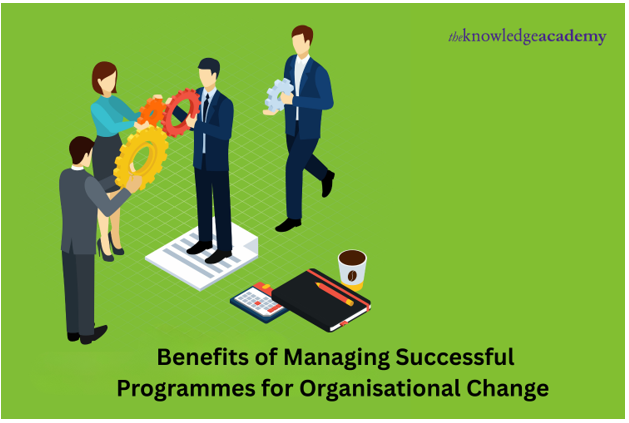
Ever wondered why some change programmes feel smooth and purposeful, while others create stress, confusion, and wasted effort? MSP® Courses often highlight a key truth: change succeeds when it is guided with structure and strong leadership. That is where Managing Successful Programmes becomes valuable. It helps organisations plan change in a way that feels controlled, measurable, and aligned with real business goals. Rather than chasing quick wins, teams learn how to deliver lasting outcomes.
Let’s explore what makes this approach so effective, and why it is trusted for complex organisational change.
Table of Contents
- Why Organisational Change Needs a Programme Mindset
- Key Benefits of MSP for Organisational Change
- Conclusion
Why Organisational Change Needs a Programme Mindset
For one straightforward reason, organisational transformation frequently fails. It is handled as though it were a collection of distinct projects. Systems are updated by one team. Another method of change. Training is run by someone else. However, nobody makes the connection. Programme management becomes crucial at this point.
A programme mindset prioritises results over tasks. It unifies the work under a common vision. People can see what is changing, why it matters, and how each component fits into the larger picture, which helps with organisational change management. Change feels less chaotic when it is connected. Measuring progress also gets easier.
Key Benefits of MSP for Organisational Change
Below are the key benefits that show how MSP supports structured and effective organisational change:
Clear Direction That Keeps Everyone Aligned
The emphasis on direction is one of the main advantages of Managing Successful Programmes. Change is more than just putting forth extra effort. It involves doing the appropriate tasks in the appropriate sequence. Teams make judgements based on assumptions when there is no common direction. That frequently results in delays.
When change leadership is incorporated into the strategy, leaders establish a distinct vision and consistently convey it. Teams have a trustworthy point of reference as a result. Because they comprehend the goal, stakeholders are also more able to remain involved. Better alignment leads to faster and more assured decision-making.
Better Control Over Complex Change
Change affects many businesses and many departments. Consider a programme for digital transformation or a change to new operational paradigms. These are not easy chores. Systems, people, attitudes, and performance goals are all involved. This is where the true benefit of organised programme governance lies.
Teams can measure progress, manage dependencies, and lower uncertainty with the aid of a solid foundation. It also instils discipline in the planning and implementation of change. Leaders are able to observe what is taking place at every stage, which facilitates corporate transformation. They can steer early rather than responding late. Change feels much more manageable and less dangerous as a result.
Stronger Benefits Realisation
This is a question that a lot of organisations overlook. Is the task being finished, or are outcomes being attained? Project completion does not always indicate an improvement in the organisation. For this reason, one of the main advantages of completing a programme is benefit realisation.
Teams are encouraged by Managing Successful Programmes to precisely define benefits and monitor them over time. It links work to quantifiable results like enhanced customer satisfaction, lower costs, increased output, or increased compliance. Change is kept rooted in value as a result. Additionally, it aids leaders in maintaining momentum and defending investment, particularly when change takes time.
Improved Risk and Issue Management
Risk is always present with change. People are resistant. Systems break down. Priorities change. Budgets become more constrained. Risk itself is not the real issue. Risk is being disregarded until a problem arises. Risk management is integrated into planning and decision-making when using a programme approach.
Teams evaluate hazards on a regular basis and take early action rather than treating them as a checklist. Because problems are identified before they become widespread, this aids in project and programme management. Additionally, it boosts stakeholders’ and senior leaders’ confidence. Trust increases when risk is managed coolly and consistently. Supporters of the change feel safer.
More Confident Leadership and Governance
Change initiatives require visible, stable, and well-organised leadership. People lose faith in the plan when they perceive uncertain leadership. By specifying who makes decisions, who owns results, and how progress is reported, a structured approach improves governance.
This encourages increased accountability throughout the company. Additionally, it establishes a sound cadence for escalation, evaluations, and approvals. Leaders may concentrate on steering the transition instead of battling fires when proper governance is in place. MSP® training helps professionals develop the confidence to lead programmes with authority and clarity.
Smoother Communication Across Teams
One of the quickest ways to ruin a change programme is through poor communication. People don’t just oppose change because they don’t like it. They resist because they are perplexed or feel left out. Stakeholder communication is therefore a key component of Managing Successful Programmes.
Instead of promoting sporadic updates, the strategy promotes organised communication. Teams determine the needs of stakeholders, customise communications, and maintain consistency in dialogue. Stakeholder involvement is strengthened as a result of people feeling informed and involved. It also lessens conflicting signals and rumours. Adoption happens more quickly and easily when communication increases.
Conclusion
Organisational change does not have to feel messy or exhausting. With Managing Successful Programmes, change becomes structured, measurable, and focused on real outcomes. It strengthens alignment, improves leadership, supports benefits delivery, and reduces avoidable risk. Most importantly, it helps people understand the change and stay engaged through it.
For anyone looking to lead change with more clarity and confidence, consider The Knowledge Academy as a supportive option for building programme management skills.