




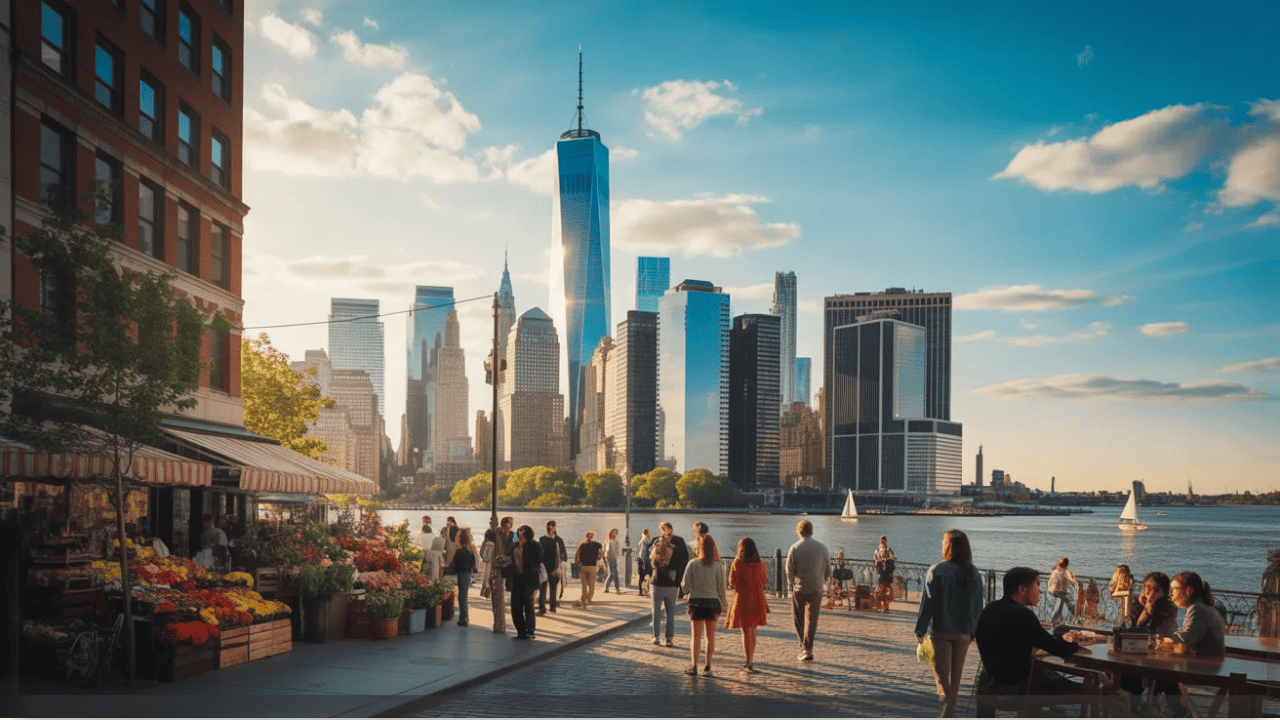
Lower Manhattan is where New York feels the most “New York”: tight streets that predate the grid, glass towers that reflect the sky like mirrors, and corners that switch mood every few blocks—from solemn to cinematic to unexpectedly cozy. If you’ve got only one day to fall in love with the city (or you want a break from Midtown’s crowds), this is the itinerary that delivers.
It’s also the easiest part of Manhattan to do smart: you can walk almost everything, you can book a few key experiences in advance, and you’ll end the day with that satisfying feeling of having seen both the icons and the hidden gems.
Morning: Start with a View, Not a Crowd
Begin early—Lower Manhattan rewards morning energy. If you want a skyline moment that doesn’t require a full-day commitment, head to the Financial District before the tour groups roll in. Even if you’re not obsessed with finance, the architecture here is dramatic: narrow canyons of stone and steel, sudden pockets of light, and that constant hum of people going somewhere important.
If you’re aiming for a “wow” moment, book a timed entry to One World Observatory or another nearby viewpoint on a clear day. The trick is timing: earlier slots tend to be calmer and the light is softer for photos. Also, pre-booking usually saves you from standing in long lines—time you’ll want for walking.
A practical note that saves money and stress: if you plan to do two or more paid attractions today (observatory + ferry + museum), compare combo tickets or a city pass. It’s one of those boring-sounding decisions that can quietly cut your costs.
Mid-Morning: The 9/11 Memorial, Quietly and Respectfully
A short walk brings you to the 9/11 Memorial. Give it the time it deserves. It’s not a “quick stop,” and it shouldn’t be treated like one. The space is designed to slow you down: the sound of the water, the names, the trees, and the feeling of the city continuing all around it.
If you’re visiting the museum, book a timed slot in advance. It’s popular year-round and it’s emotionally heavy—plan something lighter afterwards. Even if you don’t go inside, the memorial itself is an important part of understanding modern New York.
Lunch: A Street That Feels Like a Movie Set
From here, walk toward Stone Street. It’s one of those places that surprises you: cobblestones, low buildings, outdoor tables, and a vibe that feels almost European—except you’re still surrounded by skyscrapers. It’s a great lunch zone because it’s scenic, easy, and you can keep your day moving without losing time to long commutes.
This is where you can make your day “earn”: Lower Manhattan has a lot of tourist traps, but it also has genuinely good spots if you choose carefully. Look for places that are busy with locals, not just people holding souvenir bags. If you’re traveling with friends, this is also a perfect place to split a few plates and keep your budget under control.
The Heart of It: Wall Street Without the Cliché
After lunch, wander into the Financial District properly. Most people do it in five minutes: a quick photo, a quick joke about money, done. But this area is more interesting when you understand what it actually represents.
Wall Street is not just a street, and it’s not just a metaphor. It’s a neighborhood full of history, symbols, and contradictions: old institutions sitting next to modern glass towers; power and panic, optimism and crisis, all squeezed into a few blocks.
Right here, in the middle of the day, is the best moment to make sense of it. If you’ve ever caught yourself wondering what is wall street in bold headlines, this is the place where that question becomes real. It’s the shorthand for the U.S. financial system—markets, banks, investment firms, and the idea of capitalism at full volume—but it’s also a physical space you can walk through, observe, and photograph. Think of it as a living museum of ambition: grand façades built to inspire confidence, and streets that have seen both booms and collapses.
If you want the “story” version instead of the selfie version, consider a short guided walking tour of the Financial District. Good guides turn this area into a narrative—Dutch New Amsterdam roots, early American commerce, the rise of the stock exchange, and why the architecture looks the way it does. You’ll understand more, and your photos will suddenly have meaning.
Afternoon: Ferry Time (The Most Satisfying Paid Upgrade)
If you want a classic New York moment that feels worth the money, this is it: get on the water.
You have two good options depending on budget and style:
If you’re watching costs, the Staten Island Ferry is an easy win. It’s not glamorous, but it’s iconic, and you’ll get excellent Statue of Liberty views. If you want the full experience—closer views, island stops, museum access—go for the official Statue of Liberty and Ellis Island ferry tickets. Those sell out on busy dates, so booking ahead is one of the few “must-do” decisions.
Either way, the water resets your brain. After a morning of stone and glass, the skyline from the ferry feels like a reward.
Tip that saves headaches: check the weather before you commit. Wind can make the ride colder than you expect, even when the city feels mild. A light layer makes the photos more enjoyable.
Golden Hour: Walk the Brooklyn Bridge Like a Local
For the late afternoon, head toward the Brooklyn Bridge. Yes, it’s famous. Yes, it can be crowded. But golden hour turns it into one of the best walks in the city.
The secret is pace: don’t rush to “finish it.” Stop, look back at Manhattan, take the shots slowly, and let the city do what it does best—look unreal. If you want fewer people in your photos, start the walk slightly earlier than peak sunset time, or go on a weekday.
Once you reach Brooklyn, you can choose how you want your evening to feel. Dumbo is photogenic and easy, with views that practically design themselves. Or you can go a bit deeper into Brooklyn for dinner if you want something less touristy.
Evening: Make It Feel Special (Without Spending Like a Movie Star)
Lower Manhattan and nearby Brooklyn both reward the “small upgrade” approach: you don’t need luxury, you just need intention.
A few ways to keep it classy without blowing the budget:
Choose one “signature” experience—one great dinner, one rooftop drink, or one cocktail bar that feels like a scene. Book a reservation if it’s popular. That single choice makes the whole day feel premium.
If you want a hidden-gem vibe, look for places that don’t scream for attention. Some of the best cocktail spots in New York are the ones that make you work a little: a small door, a low sign, a narrow staircase. You’ll remember that more than another generic bar.
And if you’re traveling, here’s the unglamorous truth: the travel essentials can be the real money-savers. A reliable eSIM, a comfortable pair of shoes, and basic travel insurance can prevent those annoying “small disasters” that quietly cost more than a nice meal.
Final Thought: Why This Day Works
This itinerary is built to feel complete. You get:
The emotional core of the city (the Memorial), the power center (Wall Street), the cinematic skyline (the ferry and bridge), and the human side (food streets, small corners, slow walking).
Lower Manhattan isn’t just a checklist—it’s a story. And if you do it right, it’s one of those travel days that feels bigger than a day.
If you want, tell me your travel style (budget / mid-range / luxury) and whether you’re visiting in winter or summer, and I’ll tweak the same itinerary to match your pace, light, and crowd levels.