




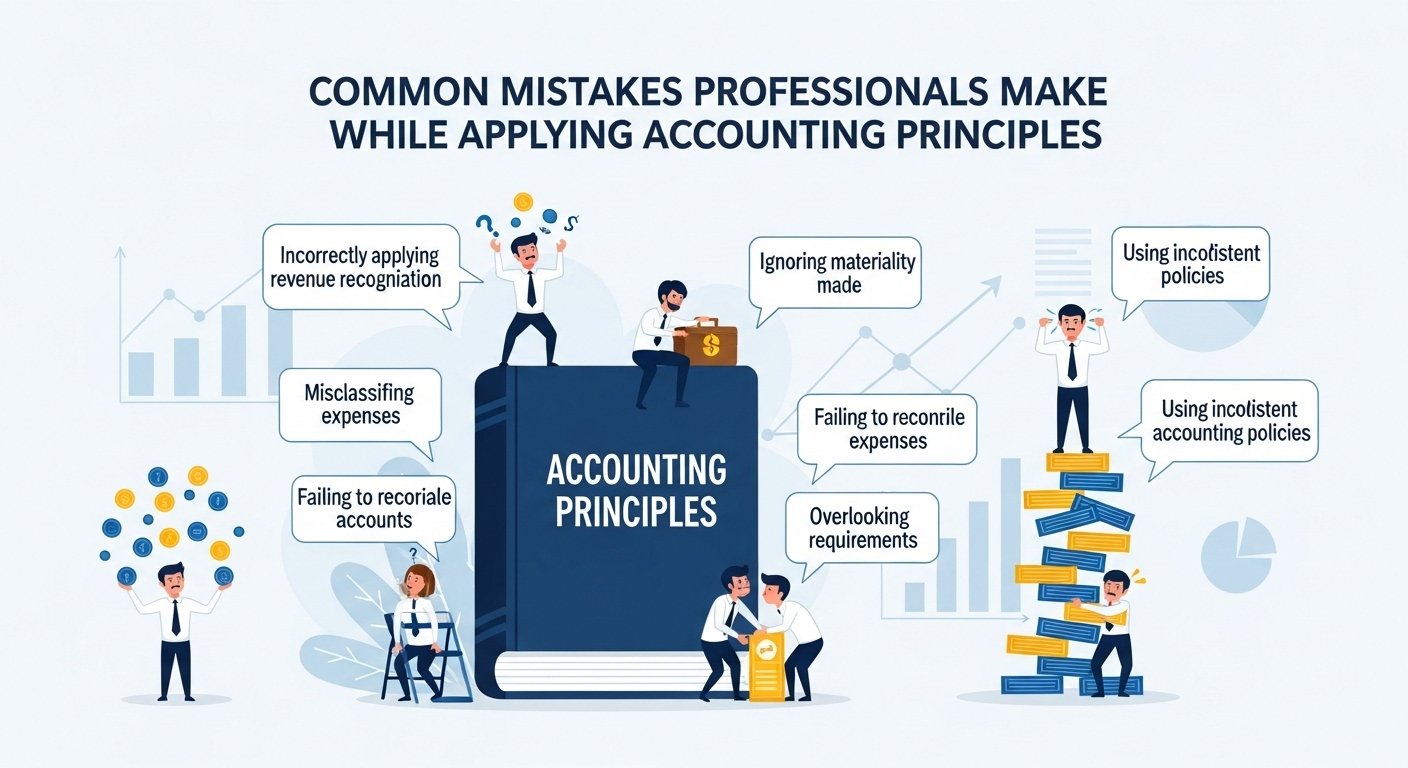
Accounting principles underpin reliable financial reporting and informed business decisions. Despite their importance, applying these principles correctly in everyday practice is not always straightforward. Even experienced professionals can fall into common traps, often due to partial understanding of key concepts, inconsistent approaches, or limited exposure to structured learning such as a ACA Certificate Level. In many cases, challenges also arise when financial data is interpreted without a clear grasp of how organisational structures operate.
This blog highlights frequent mistakes made when applying accounting principles, explains why they occur, and outlines how structured learning and organisational models, including a Accounting Principles can support more accurate judgment and consistent financial practices.
Table of Contents
- Understanding Accounting Principles Within Modern Organisations
- Key Accounting Mistakes Professionals Often Make in Practice
- Conclusion
Understanding Accounting Principles Within Modern Organisations
Different environments create different accounting principles, which develop into their specific applications in different situations. The financial information recording process and its subsequent review are controlled by the organisational structure, governance system, and reporting framework of the company.
As organisations expand their operations, financial data starts to move between their different divisions and departments and strategic units, which results in increased operational complexity. The established principles become vulnerable to misuse when organisations lack complete knowledge about transaction recognition, measurement, and reporting processes. The study of accounting within its broader organisational framework provides insight into the reasons behind financial reporting mistakes.
Key Accounting Mistakes Professionals Often Make in Practice
To apply accounting principles successfully, practitioners need to rely on their judgment while maintaining consistent practices and understanding the specific circumstances they face. The following mistakes are commonly seen and can have a lasting impact on financial accuracy and decision-making:
Misunderstanding Accrual Accounting
The widespread confusion between cash-based thinking and accrual accounting methods continues to exist. Some professionals continue to record income and expenses only when payments are made or received. The method does not provide an accurate view of actual financial obligations and generated income. Accrual accounting requires transactions to be recognised when they occur, allowing financial statements to present a more realistic picture of performance and financial position.
Applying Accounting Policies Inconsistently
Consistency is central to credible financial reporting, yet it is often overlooked. Changing methods for depreciation, inventory valuation, or revenue recognition without a clear reason reduces comparability over time. In organisations operating under an accounting can become more pronounced, as divisions may interpret policies differently. Such variation weakens consolidated reporting and reduces confidence in financial results.
Failing to Align Accounting with Organisational Design
The accounting methods used by an organisation should match its established operational framework. Organisations frequently make the mistake of implementing standardised accounting methods which do not match their unique business operations. The accounting principle allows each division to produce its own financial records. The absence of proper instructions for cost distribution, shared service usage, and inter-departmental financial transactions leads to incomplete and confusing financial records.
Incorrect Classification of Financial Transactions
The organisation faces persistent problems because its employees mistakenly categorise expenses and revenue sources. The evaluation of profitability and future business strategies encounters problems because organisations mistakenly treat capital expenditures as operational expenses and fail to identify their actual income sources. The errors occur because people experience time constraints, and they do not understand accounting definitions. The financial trends become inaccurate over time because of misclassification, which creates difficulties for audits, budgeting, and forecasting activities.
Underestimating the Role of Financial Controls
Some people see internal controls as common office procedures which they need to fulfil instead of vital security measures. The presence of weak controls creates a greater probability that errors and omissions will occur, together with misstatements. Financial records become more vulnerable to danger when organisations depend exclusively on their team members’ field experience without implementing formal procedures. The process of regular approvals together with reconciliations and reviews, which need to be done regularly, remains essential to ensure both precise results and proper responsibility handling.
Not Keeping Knowledge and Skills Current
Accounting standards and regulatory requirements keep changing because of ongoing industry developments. The use of outdated knowledge results in both principle-theoretical mistakes and compliance difficulties. Through continuous professional development and other business learning, delegates can enhance analytical abilities, ethical decision-making, and financial management skills.
Conclusion
Mistakes in applying accounting principles are rarely intentional, yet their impact can be significant. From misunderstandings around accrual accounting to limited awareness of organisational structures, these issues affect accuracy, credibility, and strategic insight. Addressing them requires more than technical knowledge alone. It calls for consistency, contextual understanding, and continuous development.
MPES Learning provides career-aligned learning that combines financial insight with organisational and people-focused development, supporting more confident and effective application of accounting principles.