




Most US expats with businesses aren’t trying to dodge the IRS. They file every year. They answer the questions in their tax software. They pay what’s due. And for a while, everything seems fine.
Then something odd happens. A new adviser asks about a form they’ve never heard of. Or an audit letter mentions a filing they didn’t realize existed. Or a restructuring suddenly gets complicated for reasons no one warned them about.
Missing forms, it turns out, is less about negligence and more about how strangely US business reporting fits into an expat’s life.
Why expats miss business-related US tax forms
Part of the problem is perspective. Local advisers think locally. A company registered in France or Singapore is treated as a local corporate matter, full stop. Meanwhile, the US tax system looks past the entity and straight at ownership and control.
Add citizenship-based taxation to the mix, and things get weird fast.
From the expat’s point of view, nothing feels hidden. From the IRS’s point of view, quite a lot is.
Form 5471: the foreign corporation surprise
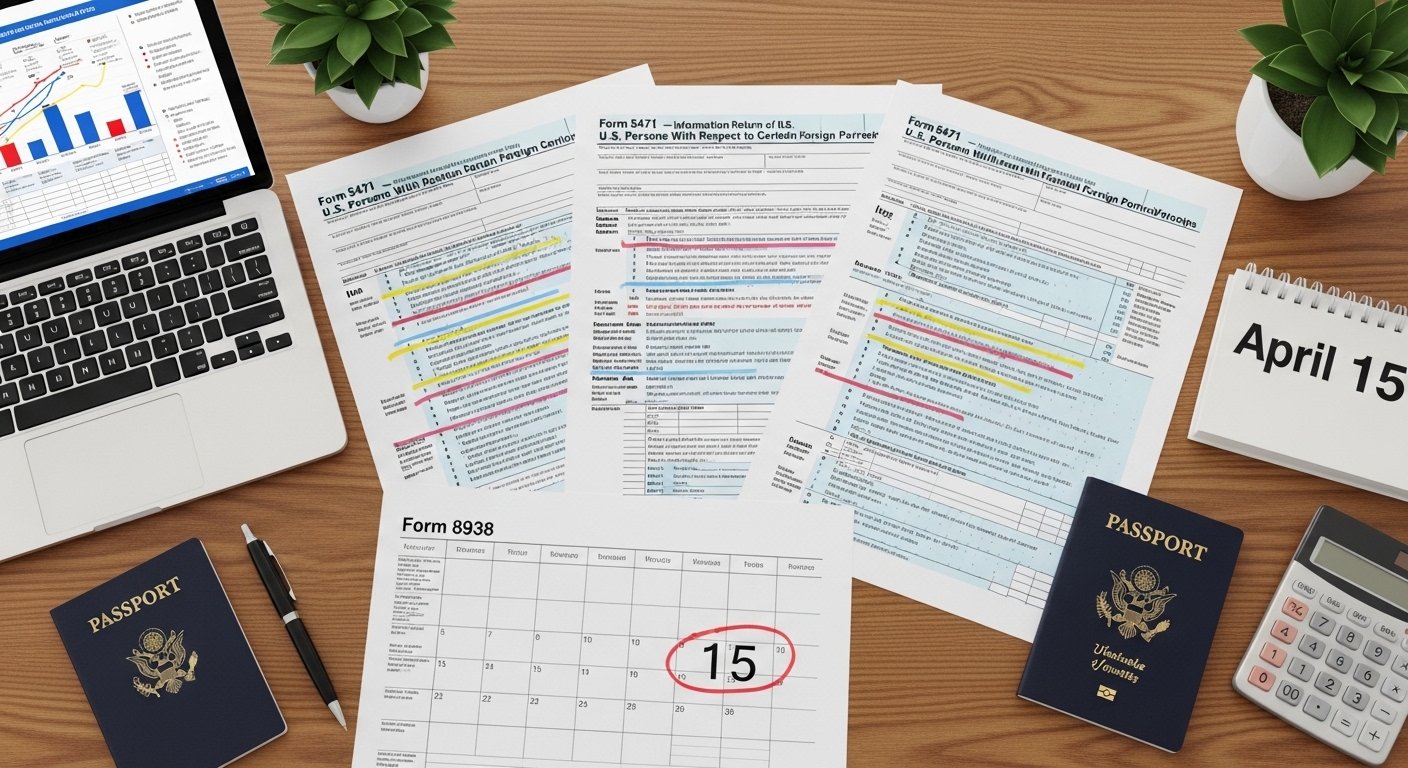
Form 5471 is probably the most commonly missed form among expats who own foreign companies.
It applies when a US person owns or controls a foreign corporation, even a small one. Especially a small one, actually. Solo founders often assume corporate tax abroad settles the matter. It doesn’t.
What catches people off guard is that Form 5471 is largely informational. No tax bill arrives with it. Which makes it easy to ignore without realizing anything is wrong. Until penalties enter the conversation later.
Form 8865: when a business quietly becomes a partnership
Things get murkier when more than one owner is involved.
Form 8865 applies to foreign partnerships, and many expats don’t think of their businesses that way. A spouse helps run the company. A friend owns 40 percent. The entity still feels “corporate” in everyday terms.
The IRS doesn’t always agree. Shared ownership can shift a company into partnership territory for US tax purposes, triggering Form 8865. No one intended that outcome. It just happened.
Form 8832: the election most people didn’t know they skipped
Form 8832 is missing for a different reason. It doesn’t look urgent. It doesn’t arrive in the mail. And doing nothing feels neutral. It isn’t.
This form allows certain entities to choose how they’re treated for US tax purposes. When it isn’t filed, default rules apply. Those defaults can push income onto a personal return or trigger other reporting forms downstream.
By the time someone realizes the classification doesn’t match their expectations, the window to change it cleanly may already be closed.
FBAR and Form 8938: business accounts still count
Foreign business bank accounts are another blind spot.
Many expats assume reporting rules apply only to personal accounts. But signature authority over a company account can be enough to trigger FBAR reporting. In some cases, Form 8938 enters the picture as well.
This is one of those areas where intent doesn’t matter much. The rules apply even if the account is used purely for payroll or operating expenses.
Forms tied to specific actions, not annual habits
Some forms don’t appear every year, which makes them easier to miss.
Transferring assets into a foreign company can trigger Form 926. Certain structures require corporate returns like Forms 1120 or 1120-F. These filings don’t become part of a routine, so they slip through the cracks.
Often, no one realizes they were required until long after the transaction is complete.
Why missing forms usually shows up later
One of the trickiest parts of US compliance is the delay. Missing forms don’t always cause immediate problems. Years can pass quietly.
Issues tend to surface during audits, amendments, or major changes, when past filings suddenly matter again. At that point, fixing the gap is more expensive than avoiding it would have been.
Getting clarity before forms turn into friction
Most expats who miss business-related US tax forms weren’t being reckless. They were navigating two systems that don’t speak the same language.
Understanding how the IRS views foreign businesses early on can prevent years of quiet exposure. Expat Tax Online helps US expats identify which business forms apply to their situation, and which don’t, so compliance stays boring and boring is usually the goal.