




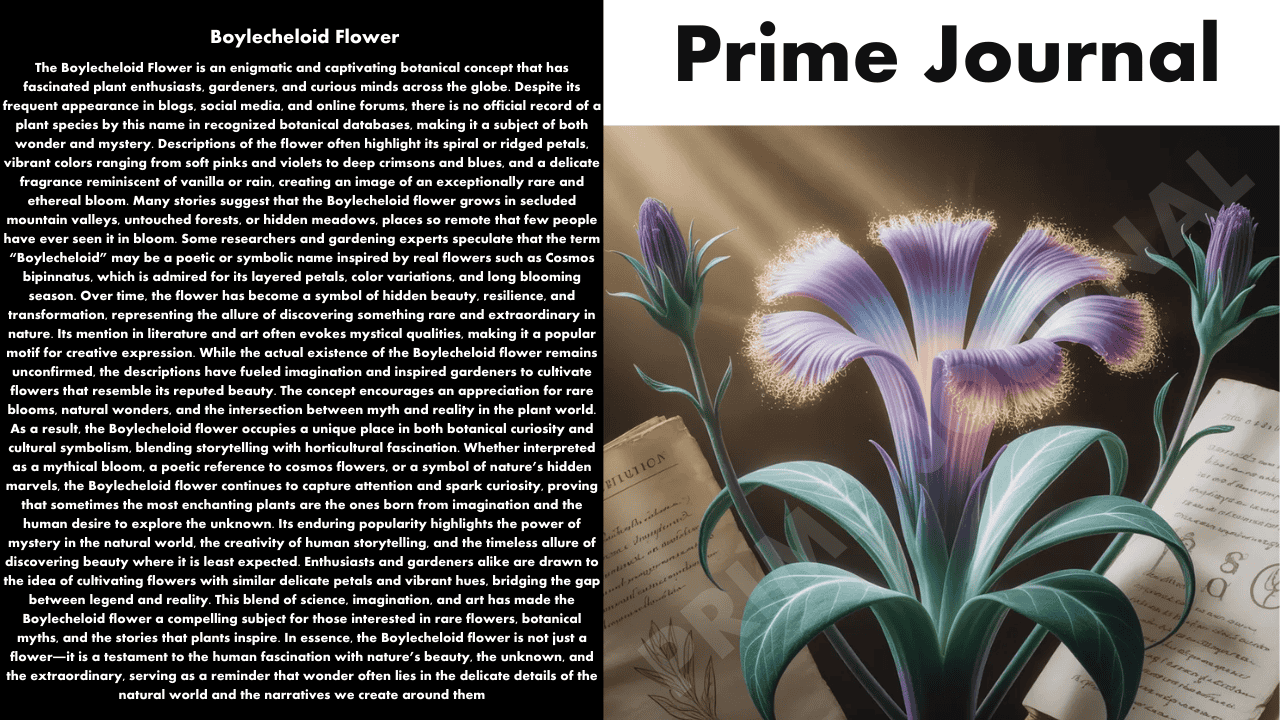
The Boylecheloid Flower is one of the most intriguing and mysterious botanical names circulating online today. Unlike roses, orchids, or tulips that are clearly docuented in botanical science, the Boylecheloid flower exists in a fascinating space between myth, symbolism, and horticultural curiosity. Gardeners, writers, and plant enthusiasts have discussed it in blogs and forums, describing it as a rare bloom with spiraled petals, shifting colors, and a captivating fragrance. However, when botanists and researchers examine plant databases and herbarium records, they discover something surprising: there is no officially recognized plant species called “Boylecheloid.” Instead, the name appears to be a blend of internet folklore, creative storytelling, and poetic descriptions of real flowers.
Despite this scientific mystery, the Boylecheloid flower has captured the imagination of readers around the world. Some believe it represents a hidden mountain bloom that appears only once every few years, while others suggest it is a symbolic reference to real plants such as Cosmos bipinnatus, a vibrant ornamental flower known for its delicate petals and colorful blooms. In this comprehensive guide, we will explore everything about the Boylecheloid Flower—including its origins, symbolism, botanical myths, cultivation ideas, and the real plants that may have inspired the legend.
What Is the Boylecheloid Flower?
The Boylecheloid Flower is commonly described as a rare and mystical bloom with unusual traits such as:
- Spiral or ridged petals
- Color-changing blooms
- A fragrance resembling vanilla, sandalwood, or rain
- Extremely rare blooming cycles
- Growth in remote valleys or mountainous regions
These descriptions make it sound like an extraordinary botanical discovery. However, scientific research has not documented any species under this name in official plant taxonomy databases.
Instead, the Boylecheloid flower is often considered:
- A symbolic or fictional plant
- A poetic reference to real flowers
- A concept born from internet culture and storytelling
This mixture of mystery and imagination is exactly what makes the Boylecheloid flower so fascinating.
Origin and History of the Boylecheloid Flower
The exact origin of the term Boylecheloid is unclear, but several theories exist.
Possible Linguistic Roots
Some sources speculate that the word may come from:
- Boyle – possibly referring to a historical botanist or surname.
- Cheloid – derived from the Greek word for claw-like or ridged texture.
This combination could describe the flower’s rumored ridged petals and sculptural shape.
Internet Culture and Digital Myth
The name gained popularity through:
- Gardening blogs
- Social media posts
- Online plant communities
- Creative writing websites
Over time, the descriptions evolved into a shared internet myth about a rare and magical flower.
Physical Characteristics and Appearance
Although Boylecheloid may not be a real species, most descriptions agree on certain visual features.
Commonly Described Traits
| Feature | Description |
|---|---|
| Petal Shape | Spiral or ridged texture |
| Colors | Crimson, violet, blue, pink |
| Fragrance | Vanilla, sandalwood, rain |
| Blooming Pattern | Rare or unpredictable |
| Size | Medium-sized ornamental bloom |
Unique Visual Details
Writers often describe the flower as having:
- Geometric petal patterns
- Dew collecting in the ridges
- Petals that shimmer under sunlight
- Gradual color transitions during the day
These imaginative descriptions are likely inspired by real ornamental flowers.
Habitat and Natural Environment
Stories about the Boylecheloid flower usually place it in remote and untouched landscapes.
Commonly mentioned habitats include:
- Mountain valleys
- High-altitude meadows
- Hidden forest clearings
- Remote regions of Asia or South America
These isolated environments add to the flower’s mystique because they suggest that only a few people have ever seen it bloom. However, because there is no scientific documentation, these habitats remain part of the flower’s legend rather than verified botanical locations.
Is the Boylecheloid Flower Real or a Myth?
The short answer is: most likely a myth or symbolic name.
Botanical experts have found:
- No herbarium specimens
- No taxonomic records
- No botanical classification
- No mention in scientific plant databases
This strongly suggests that the Boylecheloid flower does not exist as a formal species in botany. Instead, it likely represents a creative reinterpretation of real flowers.
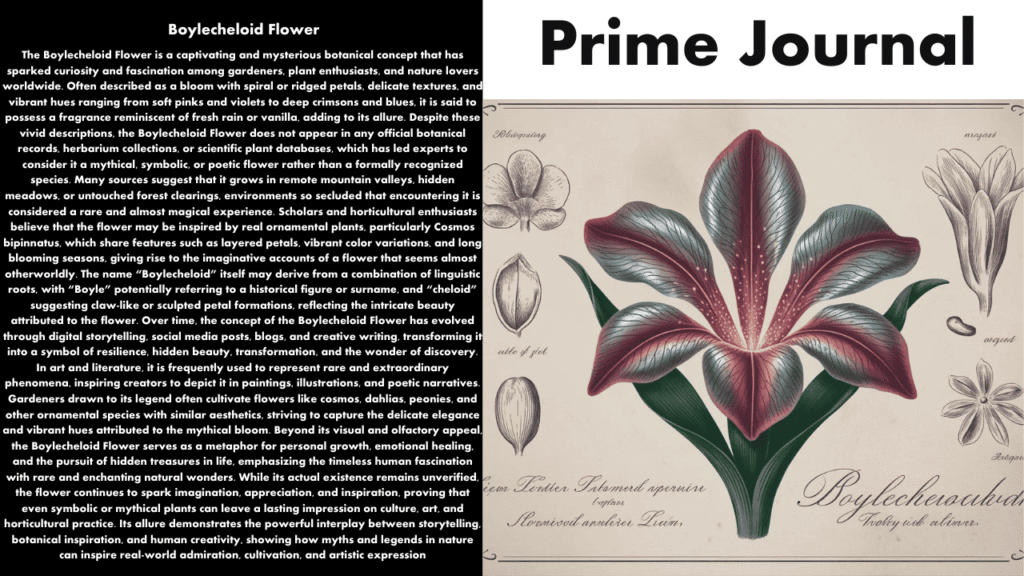
The Cosmos Connection
Many researchers believe the Boylecheloid flower actually refers to Cosmos bipinnatus, a beautiful ornamental plant in the daisy family.
You can learn more here:
https://en.wikipedia.org/wiki/Cosmos_bipinnatus
Why Cosmos?
Cosmos flowers share several traits with Boylecheloid descriptions:
- Soft layered petals
- Pink, white, and purple colors
- Delicate feathery leaves
- Easy garden cultivation
- Long blooming season
Because of these similarities, some experts believe Boylecheloid is simply a poetic nickname for cosmos flowers.
Symbolism and Cultural Meaning
Even if the flower is fictional, it carries strong symbolic meaning.
1. Resilience
Because it supposedly grows in harsh environments, the Boylecheloid flower symbolizes strength and survival.
2. Transformation
The changing colors represent:
- Personal growth
- Emotional healing
- Transformation
3. Hidden Beauty
The rare blooming cycle represents beauty that is not immediately visible but worth discovering.
Gardening and Cultivation Guide
Although Boylecheloid itself may not exist, gardeners can grow flowers with similar beauty.
Recommended Alternative Plants
Flower | Similar Traits |
|---|---|
| Cosmos | Delicate petals |
| Dahlia | Complex layered blooms |
| Peony | Luxurious petals |
| Chrysanthemum | Rich color variations |
| Anemone | Elegant structure |
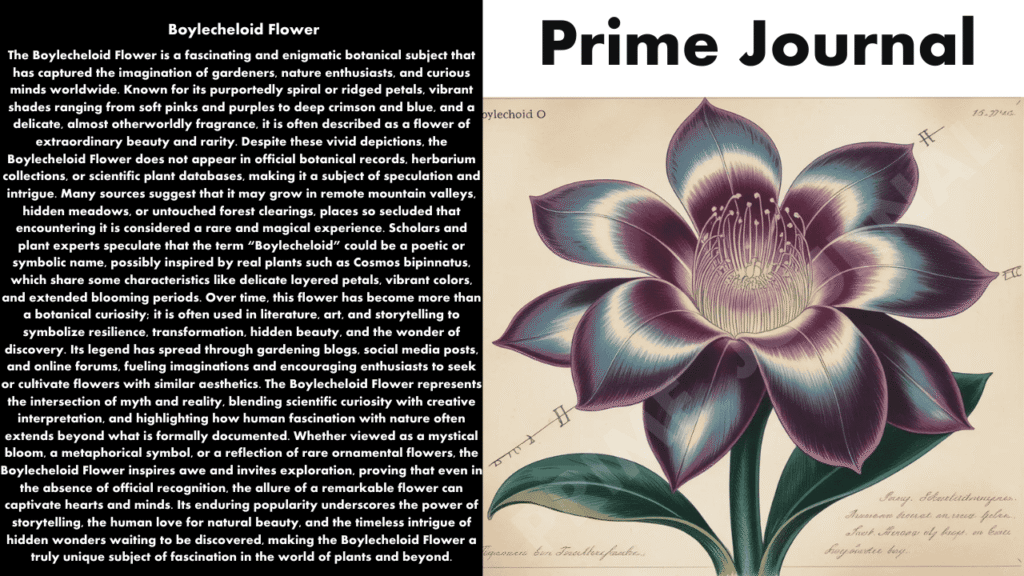
Growing Cosmos (Boylecheloid-like flower)
Soil
- Well-drained soil
- Moderate fertility
Sunlight
- Full sun
- 6–8 hours daily
Watering
- Moderate watering
- Avoid waterlogging
Temperature
- Warm climates
- Ideal for summer gardens
Uses in Art, Literature, and Wellness
The Boylecheloid flower has become a symbol in creative fields.
Literature
Writers use it to represent:
- Rare love
- Inner transformation
- Hidden beauty
Art
Artists depict it as:
- A mystical bloom
- A glowing flower in fantasy landscapes
- A metaphor for healing
Wellness and Meditation
Some wellness communities use it as a symbol for:
- Emotional recovery
- Personal growth
- Spiritual awakening
Comparison With Similar Flowers
| Flower | Similarity to Boylecheloid |
|---|---|
| Cosmos | Closest match |
| Dahlia | Complex petals |
| Ranunculus | Layered bloom |
| Peony | Rich structure |
| Camellia | Elegant petals |
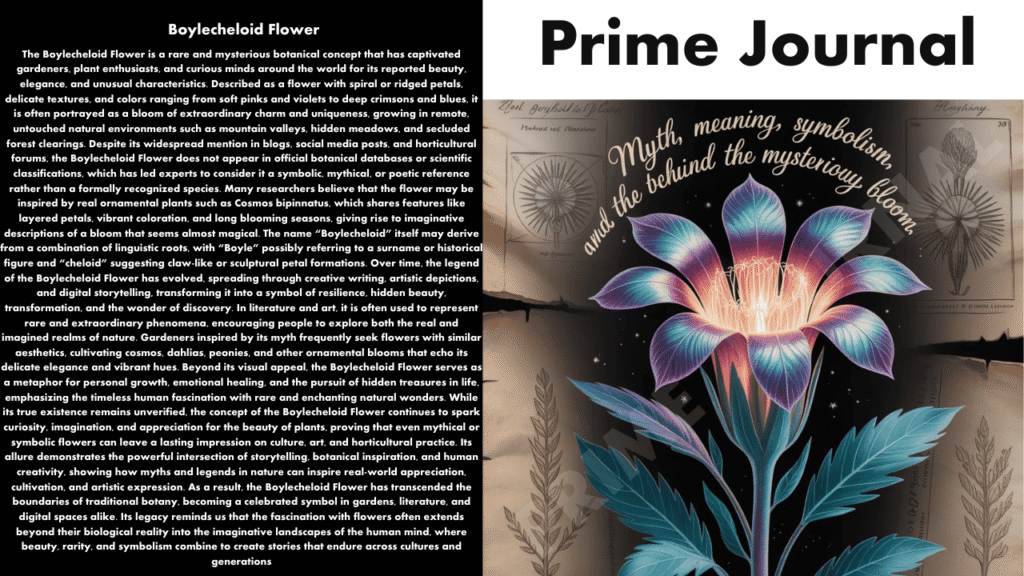
FAQs About the Boylecheloid Flower
Is the Boylecheloid Flower a real plant?
No. Botanical research shows that no officially recognized plant species exists under the name Boylecheloid. It appears to be a symbolic or fictional flower.
Why is the Boylecheloid flower popular online?
Its popularity comes from its mystery and poetic descriptions. People are fascinated by the idea of a hidden, rare flower with magical qualities
What flower is Boylecheloid most similar to?
Many experts believe the descriptions closely match Cosmos bipinnatus, a colorful ornamental flower grown worldwide.
Can you grow a Boylecheloid flower?
Since it is not a real species, you cannot grow it directly. However, you can grow cosmos flowers or similar ornamental plants to achieve a similar look.
What does the Boylecheloid flower symbolize?
It often represents:
- resilience
- hidden beauty
- transformation
- healing
- rare opportunities
Conclusion
The Boylecheloid Flower is a perfect example of how nature, imagination, and storytelling can blend into a captivating concept. While no scientific evidence confirms its existence, the idea of the flower has grown into a powerful symbol of mystery, resilience, and hidden beauty.
Whether it represents a poetic description of Cosmos flowers or simply a piece of internet folklore, the Boylecheloid flower reminds us that plants are more than biological organisms—they are also sources of inspiration, creativity, and wonder.
If you love discovering unusual plants and gardening mysteries, consider growing cosmos or other ornamental flowers in your garden. You might not find a real Boylecheloid bloom, but you may discover something equally magical.