




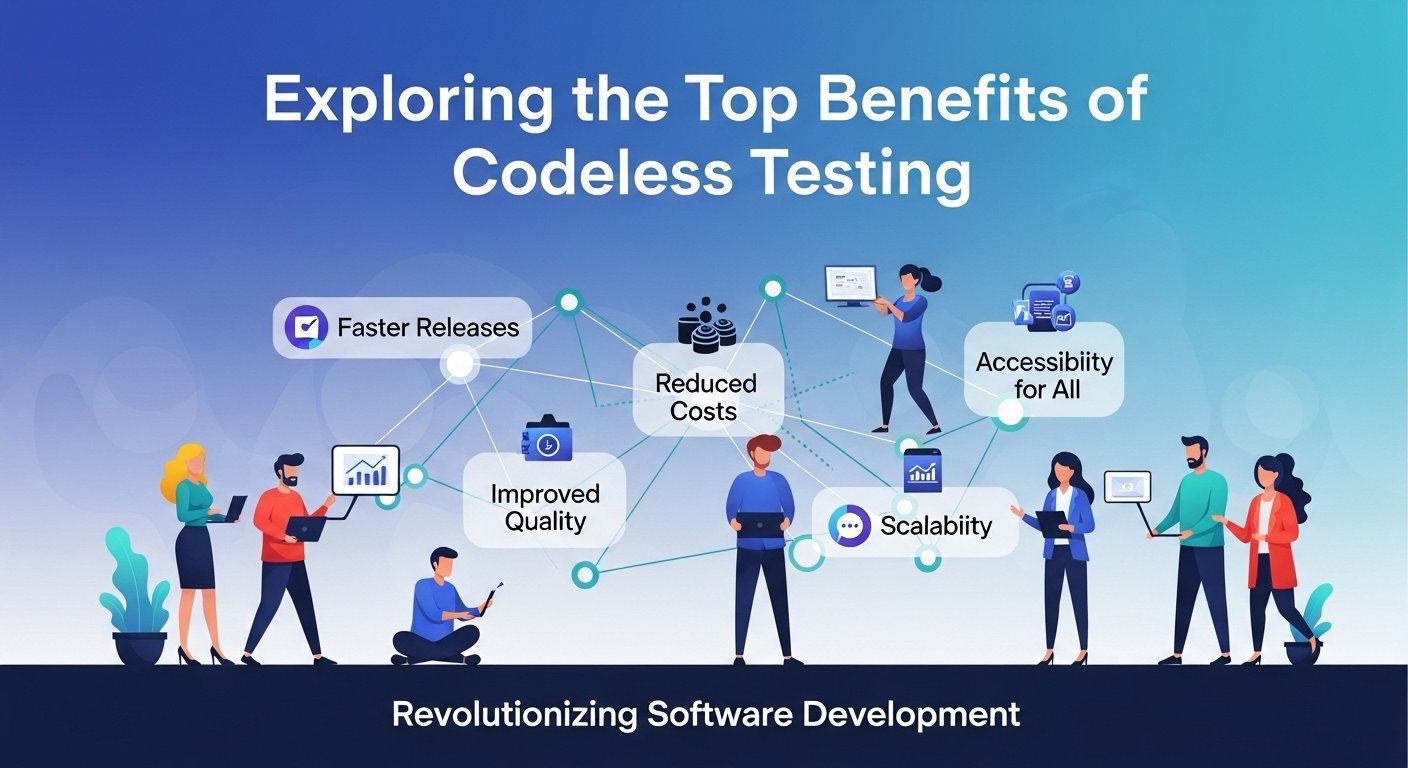
Software testing no longer belongs exclusively to developers. Codeless testing has opened QA to anyone who understands how software should behave – regardless of whether they can write a line of code. The result is faster feedback, lower maintenance overhead, and quality that the whole team owns. Here is what that looks like in practice.
What Is Codeless Testing?
Codeless testing is an approach to software quality assurance that lets testers design, build, and run test cases without writing scripts. It works through visual interfaces – record-and-playback, drag-and-drop test builders, and natural language inputs – that convert user actions directly into executable tests. The goal is to make testing faster to create, easier to maintain, and accessible to team members who have deep product knowledge but no programming background.
Key Benefits of Codeless Testing
Faster Test Creation Without Waiting on Developers
In traditional automation, every new test case requires a developer or SDET to write and review code. That creates a bottleneck – QA waits on engineering, engineering waits on QA, and coverage lags behind the actual pace of development.
Codeless testing removes that dependency. Product managers, business analysts, and QA specialists can build test cases independently, often within hours of a requirement being defined. The feedback loop shortens significantly, and teams catch bugs earlier in the cycle – when they are cheapest to fix.
Less Time Spent Fixing Broken Tests
Test maintenance is the hidden cost of conventional automation. A single UI update can break dozens of code-based tests simultaneously, pulling engineers away from building to firefight instead.
Codeless testing tools are designed to absorb UI changes more gracefully – many use AI-powered self-healing to detect what changed and update the affected tests automatically. Teams that switch from script-based automation consistently report spending far less time on test repair and far more time on coverage that actually matters.
Better Collaboration Across the Whole Team
Testing should not sit inside one department. When only engineers can write tests, QA becomes a silo – and coverage reflects what developers think users do, not what users actually do.
Codeless testing gives everyone a seat at the table. Project managers can validate acceptance criteria directly. Customer success teams can contribute edge cases based on real user behaviour. When more people participate in creating tests, coverage improves naturally, and releases are more aligned with what users actually expect from the product.
Conclusion
Codeless testing is not a simplification of quality assurance – it is a redistribution of it. By removing the scripting requirement, teams can build faster, maintain less, and involve the people who know the product best in the process of validating it. For any team under pressure to move quickly without compromising on quality, codeless testing is one of the most practical changes they can make to how they work.