




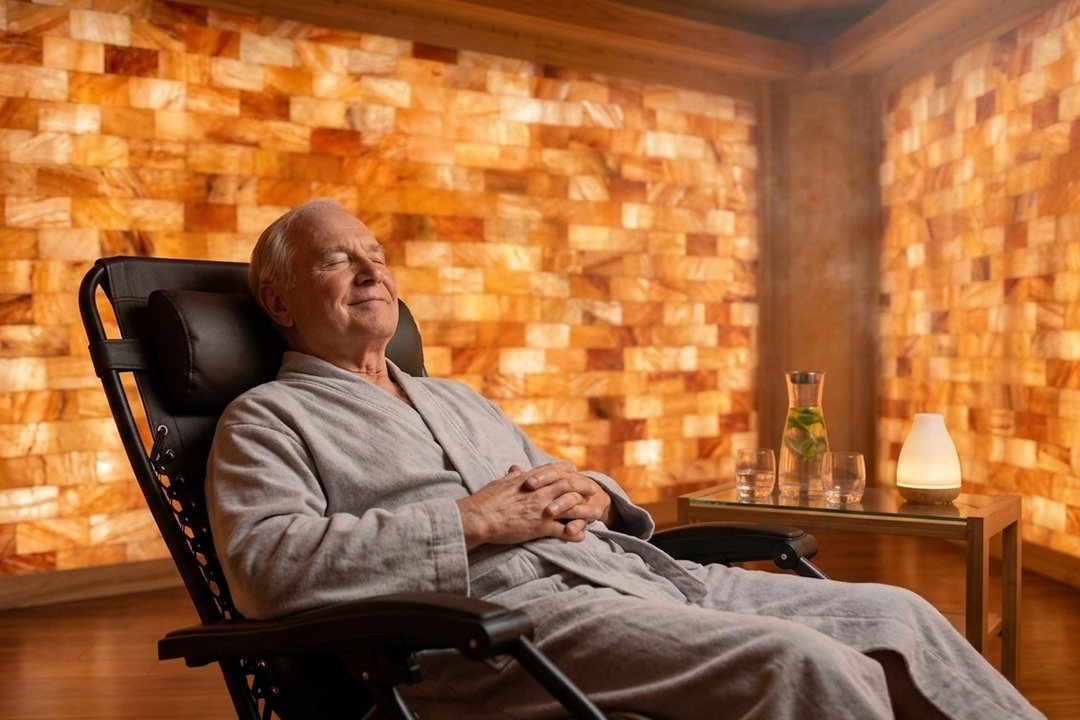
Millions of individuals face persistent allergy challenges, trying antihistamines and nasal sprays, yet often seeing inconsistent outcomes. Surprisingly, an ancient mineral – used for generations – might bring noticeable relief. Himalayan salt tile is becoming more and more popular among holistic health providers and wellness promoters due to its promise of better respiration.
Although standard treatments are effective, they all involve significant compromises. Taking antihistamines to be able to sleep through the night. Being dependent on nasal decongestants. And having to continually pay for HEPA air filter replacements. More than this, you just feel like you are always treating the symptoms, not the cause.
As indicated by the EPA, indoor air can be from 2 to 5 times more polluted than the air outside, and the air is thick with dust mites, pet dander, mold spores, and microscopic particles we often cannot even see. For those who are prone to allergies, it makes a big difference what is floating invisibly in the air around you. And this is where Himalayan salt tile start to show value.
What is Himalayan Salt Tile?
Salt tile is a solid block from the oldest salt deposit on earth. The pink-amber colour of salt is caused by the presence of trace minerals such as iron, potassium, magnesium, and calcium in its crystalline structure.
The major application of pink salt brick is in its usage as a construction element in walls, salt rooms, and decorative wall panels. Usually, the salt bricks are heated or subjected to warm light, causing them to interact with air, which promotes positive effects on respiratory function.
How Himalayan Salt Tiles and Bricks Support Wellness
The science of Himalayan salt bricks and salt tiles, allergy relief is centered on salt therapy, a treatment originating in Eastern European countries in the 1700s. Miners in salt mines were noticed to suffer significantly less often from respiratory illnesses than people not working in the mines, and systematic research was initiated.
When Himalayan salt tile is warmed — either by an internal lighting system or simply by ambient room temperature — they are believed to release microscopic salt particles and negative ions into the surrounding air. This is where their potential value for allergy sufferers becomes most relevant.
Negative ions provide the natural conditions where a sense of refreshment and clearness, as we think it, is dominant. Since indoor air due to electronics and artificial substances is losing its negative ions, it becomes stale and heavy. In such a situation, Himalayan salt bricks’ surfaces may bring back some of the ions that we lost indoors, so there are likely to be fewer indoor particles in the air.
Additionally, Himalayan salt bricks are naturally a hygroscopic compound. This just means that salt absorbs water from the air. It is believed that the particles that are in the air, like allergens, bacteria, or dust, are carried to the surface of the salt and stuck there instead of in the air that you inhale.
Other Benefits of Using Himalayan Salt Tile
When salt tiles are placed in a bedroom or living room, they can have multiple wellness effects for anyone:
- Naturally dehumidifies your indoor air and removes microparticles from your breathing zone by taking advantage of salt’s natural hygroscopic property.
- Stimulates the release of negative ions that can neutralize positive ions from dust particles, pollen, and dander, so they don’t float in the air as easily.
- No synthetic material is added to the air quality within your home, unlike plug-ins, sprays, or artificial fresheners.
- Salt walls, once properly installed, are generally very low maintenance and will continue to operate and be visually attractive for years.
Himalayan Salt Tile vs. Other Allergy Relief Solutions
Himalayan salt tile offer a unique option among allergy relief options. HEPA air filters effectively trap particles but demand electricity and require regular replacement of filters. Antihistamines and sprays focus on symptom relief without dealing with the environmental cause. Although these rooms do produce an amazing effect, they are, however, extremely expensive and highly impractical for most.
Air fresheners and ionizers are irregular and may have unwanted side effects. These salt tiles are affordable and a great alternative to air fresheners, as their subtle effects are emitted at no additional cost. Overall, their value lies more in a supplementary allergy control measure than an alternative therapy.
Conclusion:
Himalayan salt tile are an efficient and natural way to improve indoor air quality and reduce allergy symptoms. While pharmaceuticals treat symptoms, technological devices require continuous maintenance and high costs. Himalayan salt bricks are low-maintenance, passive devices that use natural processes of hygroscopy and negative ion generation. The attraction to water and allergens allows Himalayan salt tile to draw in irritating elements to prevent them from becoming airborne, without any chemicals or electricity.
Though not a complete replacement for an allergy control strategy, Himalayan salt tile supplements these measures safely and cost-effectively. The combination of Himalayan salt bricks with medical treatments for allergies can make allergy control more effective. They eliminate environmental causes to improve the lives of allergy sufferers.
FAQs
1. Are Himalayan salt tiles actually helpful for allergies?
Many health practitioners have seen significant improvement in allergies after the continued use of salt tile installation. The salt’s hygroscopic and ionic benefits are thought to cut down the remaining allergens in the atmosphere after some time.
2. Are Himalayan salt bricks safe to use around children and pets?
No. Himalayan salt bricks are natural minerals, and they don’t have any artificial ingredients or chemicals that are emitted into the air. It doesn’t pose any risk if put in a house where there are kids and animals properly. Kids need to be watched closely, and all loose bricks should be removed for the kids.
3. Do I need to heat the tiles for them to work?
Gentle warmth by backlighting with low-heat LED strips promotes the Himalayan salt tile activity by stimulating the release of ions and their trace moisture. However, a heating system may be recommended to reduce the atmospheric effect.