


Why retail growth is shaped by more than store presence
Store presence matters, but it is only one part of what helps a brand grow. A product can be available in the market and still struggle if the positioning is weak, the message is unclear, or the support behind it is not strong enough. In real retail environments, growth usually comes from a combination of visibility, timing, consistency, and market fit. Think about two brands placed in similar stores at the same time. One starts gaining traction, while the other stays easy to overlook. That difference often comes from how well the brand is prepared, presented, and supported. Here’s the thing: being in the market is important, but being ready to perform in the market is what makes real progress possible.
What makes U.S. market entry harder than many brands expect
Many brands see the U.S. market as a major growth opportunity, and that part is true, but it is also more demanding than it first appears. Competition is stronger, expectations are higher, and brands often need more structure than they originally planned for. A product may be good, but that alone does not make market entry smooth. Brands also need clear positioning, a realistic expansion path, and support that helps them move forward after the first step. If those pieces are missing, momentum can slow down quickly. That is why U.S. market entry often feels harder than expected. It is not just about entering a large market. It is about entering it with enough clarity and support to grow in a steady way.
How TruLife Distribution supports a more structured path forward
TruLife Distribution supports brands by helping create a clearer and more organized route into the U.S. market. Instead of treating growth like a one-time push, the company supports a broader process that gives brands more direction and better continuity as they expand. That kind of structure matters because scattered decisions rarely lead to lasting results. Brands usually grow more effectively when the path forward is supported by planning, coordination, and steady execution. If you are thinking about what helps a business move from market entry to real traction, this is an important point to understand. At its best, retail distribution is not only about access to the market. It is about building a stronger path for long-term progress.
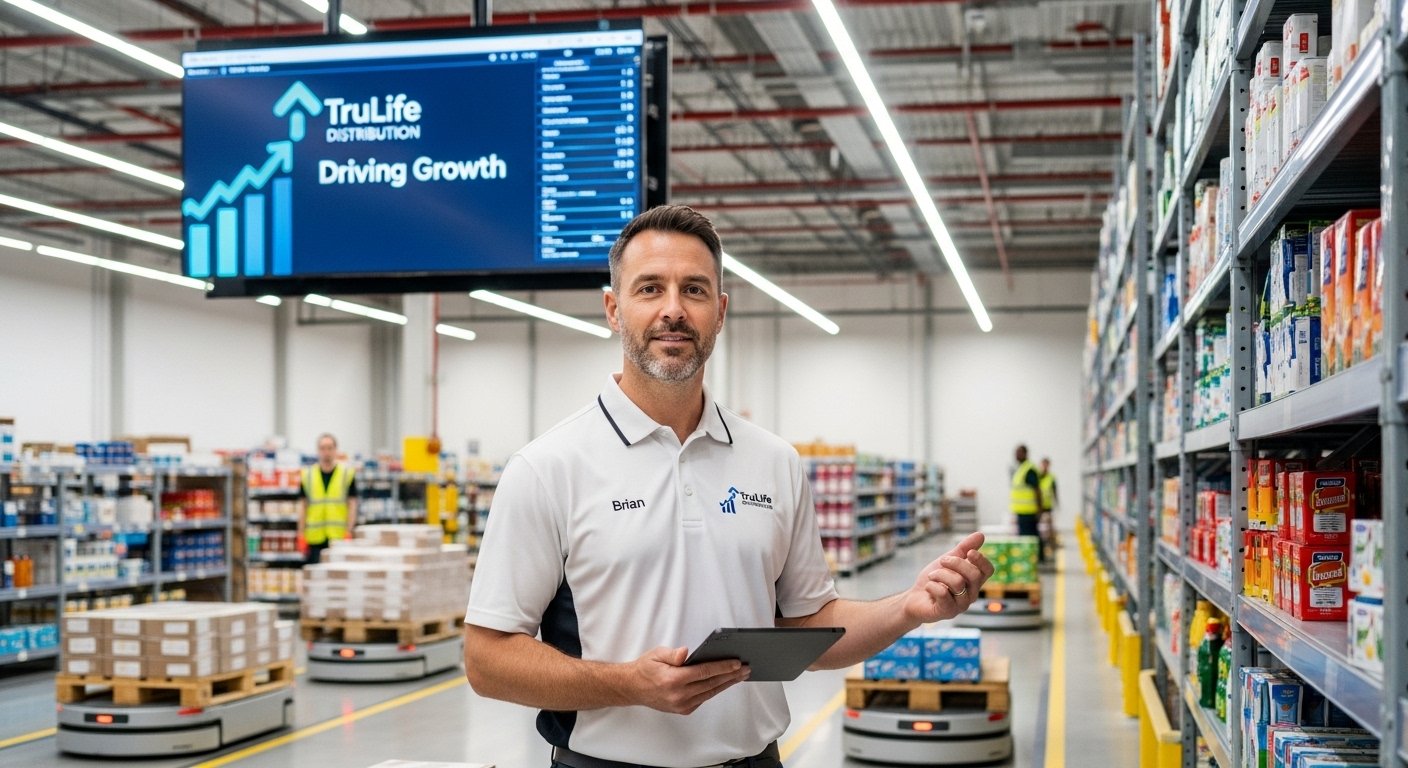
Brian 4th generation retail distribution specialist at TruLife Distribution
A leadership story rooted in long-view retail experience
Brian Gould’s background gives this section real depth because his experience was built over many years, not shaped by a short run in the industry. He is known as a fourth-generation manufacturing and retail distribution professional, which already says a lot about the foundation behind his work. Early in his career, he represented 20 brands across 100 retail stores in the American Southwest, giving him direct exposure to how products compete and grow in real retail settings. He also played a role in the early development of Amazon’s Nutrition and Sports Nutrition sales categories, which added a strong digital and category-building layer to his background. Before launching TruLife Distribution in 2019, he also led Nutritional Products International as president. When you put that full path together, it shows a leader whose experience comes from years of hands-on work across retail, e-commerce, and brand growth.
How market judgment improves when it is built over years
Market judgment usually gets stronger when it comes from experience instead of guesswork, and that is what stands out here. Brian Gould has spent years working closely with brands, retailers, and buyers, which helps explain why his perspective feels practical and sharp. He has been active in ECRM programs since 2009, giving him long-term exposure to supplier meetings, buyer expectations, and the way real retail decisions are made. Over time, that kind of repeated involvement helps a leader see what works, what slows growth, and where brands often make avoidable mistakes. It also builds a better understanding of timing, fit, and how different products perform across channels. If you are wondering why some leaders make more confident expansion decisions, this is often the reason. Their judgment has been shaped by years of seeing the market up close.
Why experienced direction matters when brands want steady growth
Steady growth usually needs more than ambition, because ambition without direction can easily turn into scattered effort. Brands often enter the market with a strong product, but they still need clear guidance if they want to build real momentum over time. That is where experienced leadership becomes so valuable. Brian Gould’s career shows a steady progression through retail representation, online category development, executive leadership, and then the launch of TruLife Distribution as his own platform for helping brands grow. That kind of background matters because it connects strategy with real-world execution. Instead of looking at growth as one big moment, experienced direction helps brands move step by step with more clarity, better timing, and a stronger sense of how to build progress that lasts.
How Retail Distribution Turns Access Into Market Progress
Why visibility alone does not create traction
Visibility can help a brand get noticed, but it does not guarantee real progress on its own. A product may appear in the right place and still fail to build momentum if the positioning is weak or the support behind it is not strong enough. In a competitive market, people see many products every day, so simply being present is rarely enough. What makes the difference is how clearly the brand connects with the market once it becomes visible. Here’s the thing: attention can open the door, but traction usually comes when that attention is supported by stronger brand direction and a more purposeful market approach.
The role of timing, fit, and follow-through
Timing, fit, and follow-through often shape whether a brand moves forward or stalls after entering the market. A product might have real potential, but if it enters too early, appears in the wrong setting, or lacks support after launch, progress can slow down quickly. That is why access alone is only one piece of the equation. A stronger result usually comes when the product fits the market, the timing feels right, and the next steps are handled with care. If you are looking at what separates momentum from missed opportunity, these three factors usually matter more than brands expect. Small gaps in any one of them can affect the whole path forward.
What helps brands move from entry to momentum
Brands usually move from entry to momentum when their market presence is backed by clear planning and steady support. The first step may create opportunity, but real growth tends to come from what happens after that point. A brand needs direction, consistency, and a structure that helps each stage build on the last one. This is where a stronger expansion approach becomes important, because it keeps growth from feeling random or short-lived. TruLife Distribution supports brands with that kind of organized path, which helps turn early access into a more practical route toward lasting progress. In that sense, retail distribution becomes more than a route into the market. It becomes part of how momentum is built.
The Priorities That Strengthen Retail Expansion Early
Building readiness before the first major push
Strong retail expansion usually starts before the product reaches the market. A brand needs to look prepared, sound clear, and enter with a sense of direction rather than rushing into growth too early. If that readiness is missing, even a good product can struggle to build momentum. This is why the early stage matters so much. It gives the brand a chance to enter the market with stronger positioning, better focus, and fewer avoidable mistakes. When the foundation is solid, the next steps become easier to manage and more likely to support real progress.
Choosing channels with more purpose and precision
Not every channel is the right fit for every brand, and this is where early decisions can shape future results. A brand may lose time and energy if it tries to grow in places that do not match its audience, product type, or stage of development. Better results usually come when expansion is guided by purpose instead of pressure. Here’s the thing: growth does not always improve when a brand tries to be everywhere. It often improves when the brand is placed where it has the best chance to connect, perform, and build steady traction. That kind of precision makes retail expansion more practical and more sustainable.
Creating support around the brand from day one
Early support can make a big difference in how a brand performs after entering the market. A launch may create attention, but attention needs structure around it if the brand is expected to keep moving forward. This is why support from day one matters so much. It helps the brand hold its direction, stay more consistent, and avoid losing energy after the first push. TruLife Distribution supports that kind of early structure, which helps brands move into the market with a stronger sense of coordination. When support begins at the right time, growth tends to feel more stable and much easier to build over time.
How TruLife Distribution Supports a More Organized Growth Path
Bringing structure to early retail expansion
Early retail expansion can become difficult when a brand enters the market without a clear path. Even with a strong product, growth can feel scattered if the first steps are not guided by structure and purpose. TruLife Distribution helps bring that structure into place so brands can move forward with more clarity from the beginning. That matters because early decisions often shape how smoothly the rest of the expansion process unfolds. When the path is more organized, brands are better positioned to avoid confusion, stay focused, and build momentum in a steadier way.
Supporting brands beyond the opening stage
The opening stage is important, but it is only the beginning of the larger growth process. Many brands can create early attention, yet they struggle to keep that progress moving once the first wave passes. TruLife Distribution supports brands beyond that initial stage, which helps make growth feel more stable and less dependent on one early push. Here’s the thing: long-term progress usually depends on what happens after the launch, not just during it. Continued support helps brands stay on track, maintain direction, and build a stronger presence over time instead of losing energy too soon.
Helping growth efforts stay aligned across channels
Growth becomes easier to manage when different efforts are working together instead of moving in separate directions. If one part of the expansion process is strong while another part falls behind, the brand can lose consistency and momentum. TruLife Distribution helps keep growth efforts aligned across channels so the brand can move with more continuity and fewer gaps. That kind of alignment matters because it supports a clearer market presence and a more reliable path forward. When the overall effort feels connected, brands are in a better position to grow with confidence and hold that progress over time.
Where Brands Lose Ground in Competitive Retail Environments
Entering too broadly without clear direction
One of the most common ways brands lose ground is by trying to expand too widely before they have a clear market direction. On the surface, broad expansion can look ambitious, but it often creates confusion and weakens focus. A brand may enter several channels at once and still fail to build real traction because the overall path is not clear. Here’s the thing: growth works better when each move has a purpose behind it. When direction is missing, energy gets spread too thin, and the brand can end up being present in many places without gaining meaningful momentum in any of them.
Letting early progress fade through weak follow-through
Early progress can create excitement, but that excitement does not last on its own. Brands often lose momentum when the support behind their first steps is not strong enough to carry the next stage of growth. A good start may open the door, but weak follow-through can make that opportunity fade faster than expected. This is especially true in competitive retail environments, where attention shifts quickly and consistency matters a lot. TruLife Distribution helps brands avoid that drop-off by supporting a more connected path forward. When follow-through is strong, early gains have a much better chance of turning into lasting progress.
Missing stronger results because execution stays too narrow
Sometimes a brand has the right opportunity in front of it, but the execution is too limited to make the most of it. The product may have potential, the market may respond, and the timing may even be right, yet results still fall short because the overall effort is too narrow. Growth usually needs more than one strong move. It needs coordination, support, and enough depth to help the brand keep building after the first opening appears. When execution stays too narrow, the brand often misses stronger results not because the idea was weak, but because the path forward was not fully supported.
Conclusion
Why long-term growth depends on planning, support, and consistency
Long-term growth rarely comes from one successful moment. It usually comes from a clear plan, steady support, and the kind of consistency that helps a brand keep moving after the first win. A product may enter the market with promise, but that promise can fade if the next steps are unclear or the support behind the brand is too weak. Here’s the thing: early attention can create opportunity, but consistency is what helps that opportunity turn into something lasting. When planning, follow-through, and support stay connected, growth becomes far more stable and much easier to sustain over time.
How TruLife Distribution helps create a stronger path to U.S. market momentum
TruLife Distribution helps create that stronger path by supporting brands with a more organized approach to U.S. market growth. Instead of leaving expansion to scattered efforts, the focus is on helping brands move forward with clearer direction, better coordination, and stronger continuity across the growth process. That matters because retail distribution works best when it supports more than access alone. In the right setting, it becomes a practical framework for building traction, maintaining momentum, and helping brands grow with greater confidence in a competitive U.S. market.
free online pdf converter https://pdflove.net/