




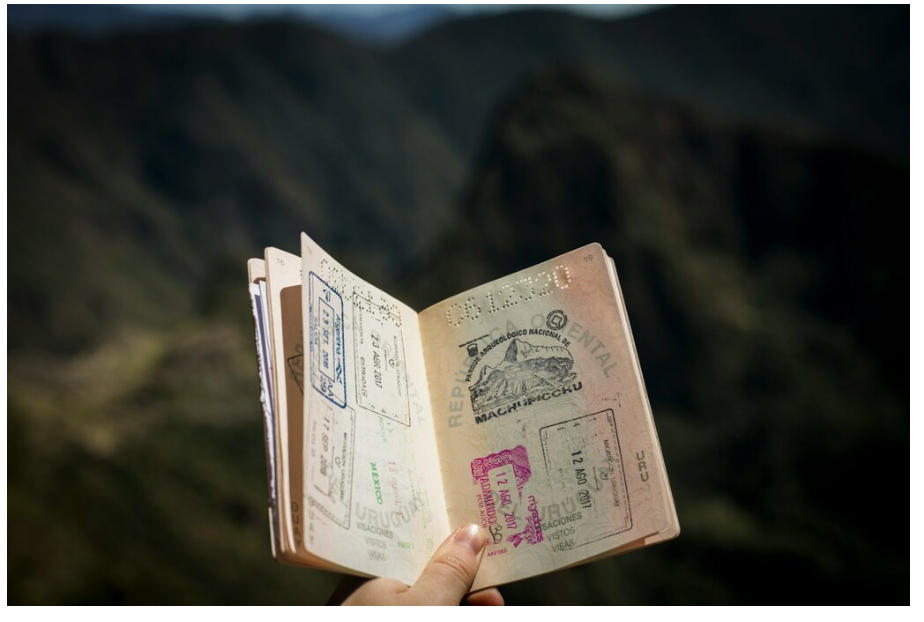
Applying for a Polish passport while living abroad often begins with a family story: a grandparent who left Poland after the war, a parent who never formalized citizenship, or a surname that still carries a clear connection to a place on the map. For many people, this process is both practical and deeply personal, touching questions of identity, security, and belonging. At the same time, the administrative path can feel unfamiliar—especially when you are navigating it from another country, in another language, and sometimes while managing work, family, or health challenges. With good preparation and realistic expectations, however, the steps become manageable and far less intimidating.
Who can apply for a Polish passport as a citizen by descent?
In most cases, a Polish passport is issued to a person who is already a Polish citizen. If you are applying “by descent,” the core question is typically not whether Poland will “grant” you citizenship, but whether your citizenship already exists under Polish law through an unbroken line of citizenship from a parent or earlier ancestor.
Polish citizenship by descent generally relies on two pillars:
- Proof of your ancestor’s Polish citizenship at a relevant time (often around the birth of the next generation in the line).
- Proof that citizenship was not lost before it could pass to the next generation (loss may have occurred under older rules, depending on year, gender, military service, or naturalization abroad).
Practical example: a person born in Canada discovers that their grandfather was born in Poland in the 1920s and emigrated in the 1950s. If the grandfather remained a Polish citizen long enough for the person’s parent to inherit citizenship, the person may also be a citizen today. In contrast, if the grandfather formally lost Polish citizenship under the rules in force at the time (for example, by acquiring another citizenship in a way that triggered loss), the line may be broken, and the documentation strategy will need to be reassessed.
Citizenship confirmation vs. passport application: why the order matters
When living abroad, many applicants are surprised to learn that the passport step often comes after confirming citizenship. If you are not already recognized in Polish records as a citizen, you may first need a formal procedure commonly referred to as confirmation of Polish citizenship.
When you may need confirmation first
- Your Polish parent never had a Polish passport or Polish ID.
- Your family documents are foreign (birth certificates, marriage certificates) and Poland has no records linking generations.
- Your ancestor left Poland long ago and Polish documents are missing, incomplete, or inconsistent.
When you might be able to apply more directly
- You already have a Polish PESEL number and your Polish civil status is registered.
- You are listed in Polish records through a parent who maintained Polish documentation.
- You previously held Polish documents and are renewing them.
In uncertain cases, it helps to consult a focused FAQ-style resource to clarify typical sequences and document expectations; for additional context, many applicants find the Polish passport FAQ useful as a quick orientation point before assembling their file.
Key documents you will likely need (and why they matter)
Document collection is usually the most time-consuming phase. It can also be emotionally demanding—especially when requesting records tied to difficult family histories, wartime displacement, adoption, divorce, or name changes. Approaching this step methodically can reduce stress and prevent repeated submissions.
Core identity and civil-status documents
- Your current ID document (passport or national ID from your country of residence/citizenship).
- Your birth certificate (often long-form).
- Marriage certificate (if applicable), especially if your surname differs from the one on your birth record.
- Documents for each generation linking you to the Polish ancestor: birth and marriage certificates for parents, grandparents, etc.
Documents proving Polish roots and status
- Polish birth certificates, old Polish IDs, passports, military records, or residency registers.
- Archival extracts from Polish state archives or local registry offices (Urząd Stanu Cywilnego).
- Naturalization records abroad (if any), to evaluate whether and when an ancestor acquired another citizenship.
Practical advice: create a timeline for your ancestor, noting dates and places of birth, marriage, emigration, naturalization, and military service. Even a simple table can help you spot gaps and target the right archive or office, saving months of trial-and-error correspondence.
Translations, apostilles, and civil registry transcription
Because you live abroad, your documents are likely issued outside Poland. Most foreign civil-status records are accepted only when prepared in the form required by Polish authorities.
- Apostille or legalization: depending on the country of issuance, documents may need an apostille (Hague Convention) or consular legalization.
- Sworn translation: Poland typically requires translation by a sworn translator recognized under Polish rules.
- Transcription into Polish registers (transkrypcja): in some cases, foreign certificates must be entered into Polish civil-status records before a passport can be issued.
Organizationally, it is wise to budget for multiple certified copies. Many applicants learn late in the process that one office keeps an original certified copy, while another requires a separate copy for a different stage. Preparing duplicates up front can reduce delays and repeated fees.
Where to apply from abroad: consulate vs. Poland
As a resident abroad, you will commonly deal with a Polish consulate that serves your region. Consulates can accept passport applications and, depending on the case, may guide you on preliminary steps. The exact division of responsibilities can vary by country and by the nature of your situation.
Practical planning considerations
- Appointment availability: in some locations, passport slots can be limited, so booking early is important.
- Travel distance: if the consulate is far away, factor in transport, time off work, childcare, and accessibility needs.
- Biometrics and presence: passports typically require in-person appearance for fingerprints and signature; this affects those with mobility limitations or health constraints.
Health and accessibility matter: if you are caring for a newborn, recovering from surgery, or managing chronic illness, planning the timing is not trivial. Consider asking the consulate about accommodation options, acceptable forms of assistance, and whether any steps can be handled by mail versus in person.
Common obstacles (and realistic ways to address them)
Name variations and spelling issues
Many families have documents where names shift over time—Polish diacritics disappear, surnames are anglicized, or first names change (e.g., “Józef” becomes “Joseph”). These variations do not automatically disqualify you, but they do require clear documentary bridges between records.
- Collect documents that show both versions of the name (e.g., a marriage record stating maiden name and married name).
- Use consistent explanations, supported by certificates, rather than informal statements.
Missing Polish documents
If you do not have original Polish records, you may need to request them from archives or registry offices. This step can be slow and sometimes emotionally charged, especially when the family left abruptly or lost papers during wartime.
- Start with the most precise location data available (town, parish, district).
- Request certified extracts rather than informal confirmations where possible.
- Expect that some records may have been moved or reconstructed; patience is part of the process.
Unclear citizenship status due to historical rules
Polish citizenship law has changed over time. Whether an ancestor lost citizenship can depend on the year, marital status rules once applied to women, or the legal consequences of acquiring another nationality. In complex cases, careful analysis is necessary to avoid building an application on assumptions.
This is also where professional support can be calming rather than merely “convenient.” Some people work with services such as Five to Europe when they need help interpreting documentary evidence, communicating across institutions, or structuring a case coherently—especially when family narratives and official record trails do not neatly match.
Costs, timelines, and the “hidden” budget items
Even a straightforward case includes more than a passport fee. A realistic budget reduces anxiety and helps you avoid stopping mid-process due to unexpected expenses.
- Document fees: certified copies, archival searches, registry extracts.
- Translation costs: sworn translations can be priced per page and add up quickly.
- Apostille/legalization: fees vary widely by country.
- Travel costs: consulate visits, possible overnight stays.
- Opportunity costs: unpaid time off work, childcare arrangements.
Timelines can range from weeks (rare, usually renewals) to many months (common in descent-based cases requiring confirmation, archival research, and transcription). A healthy approach is to plan in phases, setting expectations with family members who may be providing documents or signatures.
Emotional and family dynamics: a quiet but real part of the process
Applying as a citizen by descent can raise delicate family questions: Why did someone leave? Why were documents never kept? Why did a parent avoid discussing the past? For some applicants, the process reconnects them with relatives; for others, it brings grief or unresolved conflict to the surface.
- Ask for documents respectfully, explaining practical needs without pressuring relatives to revisit painful memories.
- Document your own efforts: keep copies of emails and requests, especially if you must show that you tried to obtain records.
- Allow time: relatives may need space before sharing papers or stories.
It can help to remember that administrative clarity does not invalidate personal complexity. You can pursue legal recognition while still holding compassion for what your family lived through.
Final checklist before submitting your passport application
- All civil-status documents are current, consistent, and certified as required.
- Apostilles/legalizations are complete where applicable.
- Sworn translations are prepared in the accepted format.
- Polish records linkage is clear across generations (names, dates, places).
- Appointment logistics are planned: travel time, required photos, fees, and any consulate-specific forms.
Conclusion
Applying for a Polish passport as a citizen by descent while living abroad is rarely a single form or a single appointment; it is usually a structured reconstruction of identity through documents, timelines, and legal continuity. The strongest applications are built patiently: with careful record collection, thoughtful handling of translations and formalities, and a realistic plan for costs and waiting periods. If your case involves missing records, historical uncertainty, or sensitive family circumstances, it may help to slow down and validate each step rather than rushing toward the finish line. The process can ultimately become more than administration—an invitation to understand your family history more precisely, and to decide what that connection to Poland means for your future.