




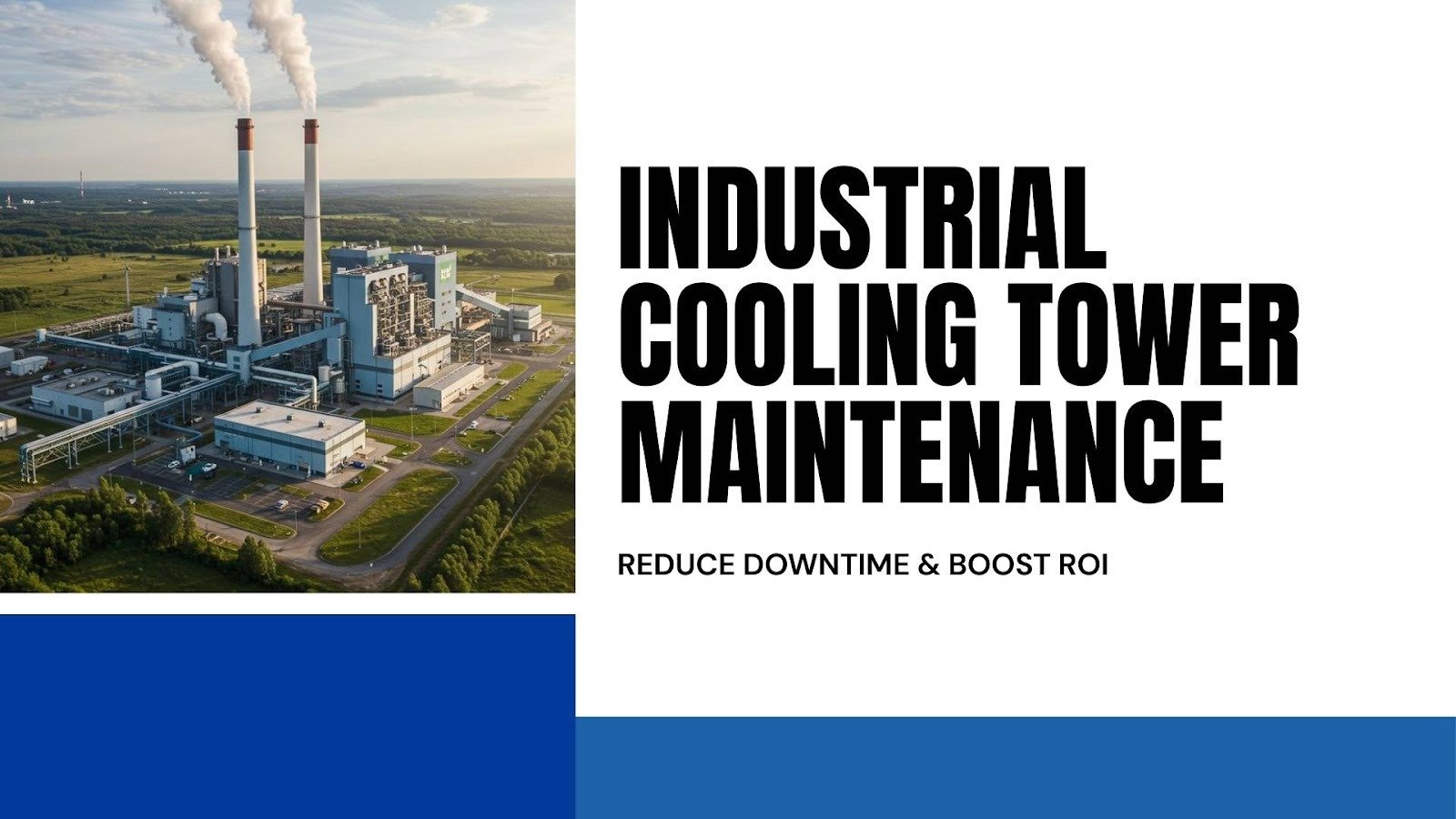
Industrial cooling tower maintenance is essential for maximizing system efficiency and preventing costly downtime. A proactive approach incorporating regular inspections, cleaning, and targeted repairs extends equipment lifespan and maintains optimal thermal performance.
With industrial cooling tower maintenance, facilities reduce risks of scale buildup, bacterial growth, and mechanical failures. Adhering to a detailed maintenance checklist, including water treatment and real-time monitoring, ensures consistent cooling, lower operational costs, and compliance with evolving safety regulations.
The core objective for 2026 is clear. Plant engineers must shift away from reactive cooling tower cleaning. Instead, you must implement proactive industrial cooling tower maintenance. This approach ensures your equipment achieves 100% of its design-rated thermal capacity while you extend equipment lifespan.
Table of Contents
1. Introduction: The Shift to Proactive Maintenance in 2026
2. The Engineering Pillars of Cooling Tower Servicing
2.1. Hydraulic Balance and Water Distribution
2.2. Air-to-Water Ratio and VFD Optimization
2.3. Material Integrity (FRP vs. Legacy Structures)
2.4. System Integration with Broader HVAC Protocols
3. The Master Industrial Maintenance Schedule
4. Deep Dive: High-Value Maintenance Gaps
4.1. Gearbox and Drive Shaft Oil Analysis
4.2. Fill Media Scaling: Surface Cleaning vs. Deep Descaling
4.3. Drift Eliminator Efficiency and Environmental Liability
5. 2026 Compliance: Safety and Microbial Risk
5.1. Legionella Control and ASHRAE 188 Standards
5.2. Documentation as a Defensive Audit Strategy
5.3. Biofilm and Sludge Management in the Tower Basin
6. Predictive Maintenance and The “Smart” Tower
6.1. IoT Sensors for Real-Time Thermal Monitoring
6.2. Calculating the ROI of Smart Upgrades
7. Conclusion: Partnering for Performance
8. Frequently Asked Questions (FAQs)
The Engineering Pillars of Cooling Tower Servicing
To maintain a well-maintained cooling tower, engineers must focus on four critical pillars of operation.
Hydraulic Balance
You must ensure uniform water distribution over the fill media. If the water distribution system fails, water flows unevenly. This creates dry spots and severely impacts heat transfer.
Air-to-Water Ratio
Fan pitch and motor frequency directly dictate the “Range” and “Approach” of your cooling tower system. Using variable frequency drives (VFDs) optimizes fan operation and reduces waste heat.
Material Integrity
Tower surfaces require specialized care. You must treat fiberglass-reinforced plastic (FRP) differently from legacy wood or concrete structures. Regular maintenance prevents structural damage and costly breakdowns.
System Integration
Modern large commercial buildings and power plants require holistic care. You must integrate cooling tower maintenance with broader HVAC systems protocols. A comprehensive maintenance program treats the entire system, not just isolated tower components.
The Master Industrial Maintenance Schedule
A detailed plan is essential for ensuring uninterrupted operations. Implement the following maintenance checklist to keep your cooling system at peak performance.
| Frequency | Component | Action Item | Engineering Goal |
| Daily | Control Panel | Log Conductivity & pH | Maintain cycles of concentration; prevent scale |
| Weekly | Fan Assembly | Vibration & Noise Check | Early detection of bearing/gearbox fatigue |
| Monthly | Spray Nozzles | Visual Inspection (Fans Off) | Eliminate dry spots on fill; optimize heat transfer |
| Quarterly | Drift Eliminators | Clean & Inspect for Gaps | Reduce water loss & microbial aerosol risk |
| Bi-Annual | Basin & Sump | Sludge Removal & Disinfection | Meet ASHRAE 188 Legionella compliance |
| Annual | Fill Media | Thermal Performance Audit | Verify tower meets original design tonnage |
- Daily Tasks: Check the control panel. Log conductivity and pH levels. This action maintains cycles of concentration and prevents mineral deposits.
- Weekly Tasks: Inspect the fan assembly. Monitor for unusual noises and check for vibration. This provides early detection of motor bearings or gearbox fatigue.
- Monthly Tasks: Turn off the fans and perform a visual inspection of the spray nozzles. You must eliminate dry spots on the cooling tower fill to optimize heat transfer.
- Quarterly Tasks: Clean and inspect the drift eliminators. Look for gaps to reduce water loss and microbial aerosol risk.
- Bi-Annual Tasks: Focus on the cold water basin and tower sump. You must perform sludge removal and disinfection to meet ASHRAE 188 compliance regarding Legionella bacteria.
- Annual Tasks: Conduct a thermal performance audit on the fill media. This verifies that the tower meets its original design tonnage and helps you save money.
Deep Dive: High-Value Maintenance Gaps
Routine maintenance often misses critical elements. You must address these high-value gaps to optimize operational efficiency.
The Gearbox and Drive Shaft
Oil analysis is the equivalent of a blood test for your cooling tower. You must monitor fan shafts, fan hubs, and the fan motor. Routine oil sampling prevents catastrophic mechanical failures.
Fill Media Scaling
Scale buildup reduces surface area and ruins efficiency. You must understand the difference between surface cleaning and deep descaling. When you have clogged fill, it is often more cost-effective to replace the old material with high-efficiency film fill.
Drift Eliminator Efficiency
A visible plume can become a massive liability. Faulty drift eliminators allow water droplets and treatment chemicals to escape. Proper maintenance of these parts prevents water loss and environmental discharge.
2026 Compliance: Safety and Microbial Risk
Safety standards continue to evolve. You must navigate strict cooling tower maintenance standards set by the CDC and ASHRAE.
Legionella Control
Water evaporates during normal operation, which can spread Legionnaires’ disease if you do not eliminate bacteria. You must manage water quality through a rigorous water treatment system.
Documentation
A detailed maintenance log is your primary defense during environmental or health audits. You must record all maintenance activities, from checking the float valve to applying water treatment chemicals.
Biofilm Management
Traditional biocides fail if you neglect physical cooling tower inspection practices. Biological growth and bacterial growth create insulating layers on heat exchange surfaces. Regular cleaning of the tower basin removes the sludge where these pathogens breed.
Predictive Maintenance and The “Smart” Tower
The future of tower maintenance relies on data. Predictive diagnostics solve problems before the summer peak arrives.

IoT Sensors
Install sensors for real-time monitoring. These devices track vibration, hot water temperature, and water chemistry. Continuous data allows you to optimize the air inlet and forced draft mechanisms instantly.
The ROI of Upgrades
Energy savings quickly pay for smart upgrades. Installing VFDs and performing thermal retrofits drastically lowers operational costs.
Conclusion: Partnering for Performance
Proper maintenance is a direct investment in reliability and compliance. You cannot rely on basic maintenance tasks to manage complex industrial processes.
Choosing a partner with deep engineering expertise prevents temporary “band-aid” repairs. Experts understand how to maximize peak efficiency across the entire cooling tower system.
Do not wait for a high-temperature alarm to sound. Schedule a comprehensive thermal audit with Industrial Cooling Solutions today to secure your operational future and ensure your industrial cooling tower maintenance program delivers maximum efficiency and reliability.
Frequently Asked Questions
What is industrial cooling tower maintenance, and why is it important?
Industrial cooling tower maintenance involves regular inspections, cleaning, and repairs to ensure peak efficiency. Proper maintenance prevents scale buildup, biological growth, and structural damage. It extends equipment lifespan, reduces operational costs, and ensures uninterrupted operations. A well-maintained cooling tower system also complies with safety standards, such as ASHRAE 188, to prevent issues like Legionella bacteria.
How often should cooling tower components be inspected?
Cooling tower components require inspections based on a detailed maintenance checklist. Daily tasks include monitoring water quality and control panels. Weekly checks focus on fan operation and unusual noises. Monthly inspections target spray nozzles and water flow. Quarterly and annual tasks address drift eliminators, fill media, and thermal performance audits to maintain operational efficiency.
What are the benefits of a comprehensive maintenance program for cooling towers?
A comprehensive maintenance program ensures the entire system operates efficiently. It reduces downtime, prevents costly breakdowns, and optimizes heat transfer. Regular cleaning of tower surfaces, fan blades, and the cold water basin eliminates bacteria and scale buildup. This approach saves money, extends equipment lifespan, and supports uninterrupted industrial processes.
How does water treatment impact cooling tower performance?
Water treatment is essential for maintaining water quality in cooling tower systems. It prevents mineral deposits, bacterial growth, and scale buildup on tower surfaces. Proper water treatment ensures efficient heat transfer, reduces performance issues, and complies with safety standards. A well-maintained water treatment system is critical for operational efficiency and extending equipment lifespan.
What is the role of IoT sensors in cooling tower maintenance?
IoT sensors provide real-time monitoring of key metrics like vibration, water chemistry, and temperature. These sensors enable predictive diagnostics, allowing facility managers to address issues before they escalate. By optimizing fan shafts, motor bearings, and water flow, IoT technology enhances operational efficiency, reduces energy costs, and ensures uninterrupted operations.