.

Author: Hamza

  • FortiManager vs FortiAnalyzer in NSE 8 Context 

    FortiManager vs FortiAnalyzer in NSE 8 Context 

    FortiManager vs. FortiAnalyzer in NSE 8 Context explores two essential Fortinet security tools used in enterprise environments and Fortinet NSE 8 training preparation. If you are exploring Fortinet NSE 8 training or advanced cybersecurity architecture, understanding how these platforms function together becomes highly important for real-world deployment scenarios. FortiManager focuses on centralized configuration and policy control, while FortiAnalyzer provides logging analytics, threat visibility, and reporting capabilities for enterprise security operations teams. 

    Who wants to do FCX Certification or building advanced network security careers must understand how FortiManager and FortiAnalyzer complement each other to improve monitoring management and incident response in complex enterprise environments effectively operations environments today

    Introduction to FortiManager and FortiAnalyzer

    Fortinet provides a powerful Security Fabric that integrates multiple security products. FortiManager and FortiAnalyzer play a significant role in this ecosystem, offering centralized management and security analytics.

    • FortiManager focuses on centralized device configuration and policy management.
    • FortiAnalyzer focuses on logging, reporting, and security analytics.

    Although they are often used together, they solve different operational problems in enterprise environments.

    What is FortiManager?

    FortiManager is a centralized management platform used to configure and manage multiple Fortinet devices such as FortiGate firewalls. It helps network administrators streamline operations across distributed environments.

    Key Features of FortiManager:

    • Centralized configuration management for FortiGate devices
    • Policy package creation and deployment
    • Firmware management across multiple devices
    • Device provisioning and automation
    • Role-based administration control

    FortiManager is especially useful in large organizations where managing individual devices manually is not scalable.

    What is FortiAnalyzer?

    FortiAnalyzer is a security analytics and logging platform designed to collect, analyze, and report security events across the network.

    Key Features of FortiAnalyzer:

    • Centralized log collection from Fortinet devices
    • Real-time security event monitoring
    • Customizable reporting dashboards
    • Threat detection and forensic analysis
    • Compliance reporting for audits

    FortiAnalyzer plays a critical role in identifying threats, analyzing traffic behavior, and supporting incident response teams.

    FortiManager vs FortiAnalyzer: Key Differences

    Understanding the distinction between these two tools is essential for professionals working with Fortinet technologies or preparing for advanced certifications.

    Feature AreaFortiManagerFortiAnalyzer
    Primary PurposeDevice and policy managementSecurity logging and analytics
    Main FunctionConfiguration controlThreat detection and reporting
    Data HandlingPolicy and device configurationsLogs, events, and security data
    Usage FocusNetwork administrationSecurity operations and SOC analysis
    Automation CapabilityHigh (device provisioning, policies)Moderate (reporting automation)
    Target UsersNetwork engineers, adminsSOC analysts, security teams
    Deployment RoleCentralized network control systemSecurity intelligence system

    How They Work Together in Enterprise Networks

    In a real-world Fortinet deployment, FortiManager and FortiAnalyzer are often used together to create a fully integrated security operations environment.

    • FortiManager handles policy creation and deployment
    • FortiAnalyzer handles log analysis and threat visibility
    • Both tools integrate with FortiGate firewalls for complete lifecycle management

    This combination provides end-to-end visibility and control over network security infrastructure.

    Importance in NSE-8 Training Context

    For professionals pursuing Fortinet NSE 8 training, understanding both FortiManager and FortiAnalyzer is critical. The NSE 8 certification focuses on expert-level knowledge of Fortinet solutions, including deployment, troubleshooting, and architecture design.

    Candidates are expected to:

    • Design scalable Fortinet architectures using both tools
    • Troubleshoot policy and logging issues
    • Integrate FortiManager with FortiAnalyzer in complex environments
    • Optimize security operations using centralized management and analytics

    Mastering these platforms is often a deciding factor in passing advanced-level Fortinet exams.

    Real-World Use Case Example

    Consider a multinational organization with offices in multiple countries:

    • FortiManager is used to deploy consistent firewall policies across all branch offices
    • FortiAnalyzer collects logs from all FortiGate devices and detects suspicious traffic patterns
    • Security teams use analytics dashboards to respond to threats in real time

    This setup ensures both operational efficiency and strong security posture.

    Career Relevance and Industry Demand

    Professionals skilled in FortiManager and FortiAnalyzer are in high demand across industries such as finance, healthcare, and IT services. Security Operations Centers (SOCs) and enterprise network environments widely use these tools.

    Knowledge of these platforms is also beneficial for individuals preparing for certifications like FCX Certification, as it demonstrates advanced understanding of enterprise security architecture.

    Conclusion

    FortiManager vs. FortiAnalyzer in NSE 8 Context highlights how both solutions play a critical role in the Fortinet Security Fabric while serving different operational needs within enterprise environments. FortiManager delivers centralized configuration policy control and device management, whereas FortiAnalyzer focuses on deep security analytics, log analysis, and real-time threat visibility for SOC teams. 

    Understanding their integration is essential for professionals who want to do Fortinet NSE 8 training and advance in enterprise cybersecurity roles with strong architectural knowledge. By mastering both platforms, candidates can design  and troubleshoot complex network infrastructures more effectively. This combined expertise strengthens technical capabilities and improves career opportunities in security operations, network engineering, and advanced Fortinet-based deployments globally.


  • Rental Management Strategies to Optimize Rental Price in 2026

    Rental Management Strategies to Optimize Rental Price in 2026

    In today’s ever-changing real estate environment, rental management has emerged as a key factor in determining the ideal rental price. As we enter 2026, the need of the hour is to employ smart techniques to ensure success. Rental pricing is no longer determined by guesswork but rather by data-driven strategies and market insights.

    Why Rental Management Is relevant for Rental Price

    Effective rental management has a direct impact on rental prices, tenant quality, and rental vacancies. A well-priced rental property attracts quality tenants quickly, while a poorly priced rental can result in a longer vacancy period or loss of revenue. Industry insights suggest that a small pricing error can greatly impact the overall returns, either through lost revenue or a longer vacancy period.

    The rental price of a property is not just a figure; it is a positioning statement. It is a statement of the value of your rental property.

    1. Use Data-Driven Rental Management

    Modern rental management in 2026 is data-driven. No longer do successful rental managers make decisions based on intuition. Instead, they make data-driven decisions based on:

    ·         Comparable rental listings

    ·         Occupancy trends

    ·         Tenant demand patterns

    ·         Time-on-market data

    Comparing your rental listing with similar properties helps you keep your price within a competitive range. Experts recommend keeping rental pricing aligned with comparable properties to reduce vacancy time and maximize returns.

    Data-driven decisions help minimize risks and ensure that your rental price is market-appropriate.

    2. Implement Dynamic Pricing Strategies

    Dynamic pricing will be one of the most significant rental management in Bronzeville trends in 2026. This is a strategy that will help landlords adjust the rental price based on the following:

    ·         Seasonal demand

    ·         Market conditions

    ·         Local events

    ·         Supply and demand

    This will help them increase income during peak periods and keep the property occupied during low periods.

    Instead of having a fixed rental price, landlords will be adjusting the price based on market conditions, just like hotels and airlines.

    3. Understand Market Conditions and Trends

    Rental markets are now dynamic rather than static; some markets may have slower rent growth, while others may have high demand for rentals. Rental management strategies have to change accordingly.

    For instance, in markets with slower growth, you may have to use competitive pricing or incentives to attract tenants. Offering benefits such as flexible lease options or moving incentives may help retain value without reducing rent.

    Knowing whether the market favors the landlord or the tenant is crucial in determining your rent price.

    4. Factor in Property Features and Upgrades

    However, it is not logical for all properties to be priced equally. Rental management should take into consideration the following:

    ·         The condition of the property

    ·         The age of the property

    ·         The renovations done

    ·         The amenities of the property

    ·         The size of the property

    A property with modern amenities or features can be rented at a higher price, but an older property might require competitive pricing or renovations to keep it at a desirable level.

    Investing in small renovations, like new paint, can greatly increase the value of a property, making it worthy of a higher rental price.

    5. Balance Rental Price and Vacancy Risk

    One of the biggest blunders in rental management is overpricing the property. Although this strategy might sound profitable, the property may take a longer time to get rented, which in turn leads to a loss in income.

    According to research, even a small period of a property staying vacant can be greater than the income from a higher price.

    A balanced approach:

    ·         Slightly competitive pricing results in a higher number of applicants

    ·         Rapid occupation results in a higher cash flow

    ·         Long-term tenants result in lower turnovers

    In many situations, a property rented for a lower price can be more profitable in the long run.

    6. Leverage Technology in Rental Management

    With the advent of new technologies, the management of rental properties is expected to change significantly by 2026. Technology and software are being used by property managers to:

    ·         Analyze the market

    ·         Change prices

    ·         Monitor the demand for tenants

    ·         Track performance

    With the help of AI-based pricing tools, you can analyze various factors at the same time and fix the best rental price for your property with the least effort.

    This high level of precision enables the manager to remain competitive without much effort.

    Conclusion

    In 2026, the key components for successful management of rentals are strategy, data, and the ability to change. To achieve the best price for rentals, you have to find a way to balance income and occupancy. Property managers can be competitive, make good decisions, and continue making money in a constantly changing market with the help of data, pricing, and technology.

  • Using Radiologists Email Lists for Healthcare Product Promotion

    Using Radiologists Email Lists for Healthcare Product Promotion

    In today’s competitive healthcare landscape, reaching the right specialists is essential for effective product promotion. Radiologists play a critical role in diagnosis and imaging decisions, making them a key audience for medical device manufacturers, pharmaceutical companies, and healthcare service providers. One of the most efficient ways to connect with this niche audience is through targeted email outreach.

    Radiologists Email Lists enable marketers to directly engage with verified professionals, ensuring that promotional messages reach decision-makers who influence purchasing and adoption of healthcare solutions. When used responsibly, these lists can support meaningful communication and drive measurable results.

    Why Target Radiologists for Product Promotion?

    Radiologists are at the forefront of medical imaging technologies such as MRI, CT scans, and X-rays. Their expertise influences equipment selection, software adoption, and diagnostic procedures. By targeting this audience, companies can:

    • Introduce innovative healthcare products
    • Share clinical benefits and research-backed insights
    • Build long-term professional relationships
    • Accelerate product adoption in hospitals and diagnostic centers

    Benefits of Using Radiologists Email Lists

    Using a high-quality email list offers several advantages for healthcare marketers:

    1. Precision Targeting

    Radiologists Email Lists allow segmentation based on factors like location, specialization, and workplace. This guarantees that the most appropriate audience hears your message.

    2. Cost-Effective Marketing

    Compared to traditional marketing channels, email campaigns are budget-friendly while delivering a higher return on investment.

    3. Direct Communication

    Email enables personalized, one-to-one communication, helping brands establish credibility and trust.

    4. Measurable Results

    Marketers can track open rates, click-through rates, and conversions to optimize campaigns over time.

    Key Strategies for Effective Email Campaigns

    To maximize the impact of your outreach, consider the following strategies:

    ✔ Personalization

    Address recipients by name and tailor content based on their interests or specialization. Personalized emails tend to perform significantly better.

    ✔ Value-Driven Content

    Focus on how your product solves real-world challenges. Include case studies, clinical data, or testimonials to build trust.

    ✔ Clear Call-to-Action (CTA)

    Encourage recipients to take the next step—whether it’s scheduling a demo, downloading a brochure, or attending a webinar.

    ✔ Mobile Optimization

    Make sure your emails are readable and responsive across all platforms, particularly smartphones.

    ✔ Compliance and Ethics

    Follow data protection regulations and include opt-out options to maintain transparency and trust.

    Sample Use Cases for Healthcare Product Promotion

    Healthcare organizations can leverage email lists in various ways:

    • Promoting new imaging equipment or software
    • Announcing product launches or upgrades
    • Sharing invitations to medical conferences and webinars
    • Distributing educational content and whitepapers
    • Offering exclusive product trials or demos

    Example Email Campaign Structure

    Here’s a simple framework for structuring your email campaigns:

    ComponentDescription
    Subject LineClear, concise, and engaging to improve open rates
    Opening MessagePersonalized greeting with a relevant introduction
    Value PropositionHighlight key benefits of your healthcare product
    Supporting ContentInclude data, case studies, or testimonials
    Call-to-ActionEncourage next steps (demo, download, contact)
    ClosingProfessional sign-off with contact details

    Common Challenges and How to Overcome Them

    Low Engagement Rates

    Improve subject lines and personalize content to increase open and click rates.

    Data Accuracy Issues

    Work with reliable providers to ensure your email list is up-to-date and verified.

    Compliance Risks

    Always adhere to regulations like GDPR or HIPAA to avoid legal complications.

    Content Relevance

    Continuously refine your messaging based on audience feedback and campaign performance.

    Tips for Optimizing Campaign Performance

    • Segment your audience for targeted messaging
    • To determine what works best, conduct A/B testing.
    • Maintain a consistent sending schedule
    • Monitor analytics and adjust strategies accordingly
    • Keep content concise, informative, and relevant

    The Role of Technology in Email Marketing

    Modern tools and platforms have made it easier to manage and optimize email campaigns. Automation, analytics, and CRM integration help marketers streamline processes and improve targeting accuracy. These technologies enable businesses to deliver the right message at the right time, enhancing overall campaign effectiveness.

    Conclusion

    Using targeted email outreach is a powerful strategy for promoting healthcare products to a specialized audience like radiologists. With the right approach, businesses can build meaningful connections, increase brand awareness, and drive product adoption. A well-maintained Radiologists Mailing List ensures that your campaigns remain relevant, compliant, and effective in reaching the right professionals.

  • Creative HTML Templates That Improve Website Speed and User Experience

    Creative HTML Templates That Improve Website Speed and User Experience

    In the modern digital landscape, building a website isn’t just about aesthetics — it’s about performance, usability, and speed. Visitors expect pages to load instantly, and even a slight delay can affect engagement, conversions, and search rankings. This is where creative HTML Templates play a powerful role. They combine attractive design with efficient structure, allowing developers and designers to create websites that feel fast, responsive, and user-friendly.

    Unlike heavy frameworks or overly complex themes, HTML templates provide a clean and flexible foundation. When used strategically, they help deliver visually impressive websites without sacrificing performance. Let’s explore how creative HTML templates improve both website speed and overall user experience.

    Introduction to Creative HTML Templates in Modern Web Design

    HTML templates are pre-designed web layouts that developers can customize according to their needs. Creative templates go a step further by blending modern design elements with optimized code structures.

    These templates often include:

    • Stylish layouts
    • Pre-built sections
    • Responsive grids
    • Lightweight scripts

    For designers, they reduce the time needed to craft visually appealing interfaces.
    For developers, they provide a reliable starting point that supports performance optimization.

    Creative templates are especially valuable in projects where design and speed must work together instead of competing against each other.

    Why Website Speed and User Experience Matter More Than Ever

    Users today have very little patience for slow websites. Studies show that people often leave a page if it takes more than a few seconds to load. Speed directly influences how users perceive a brand, how long they stay on a site, and whether they complete a desired action.

    Impact on User Experience

    • Faster loading creates smoother navigation
    • Reduces frustration
    • Encourages users to explore more pages

    Impact on Search Performance

    Search engines analyze performance metrics like loading speed and responsiveness. Faster sites often rank better because they provide a positive experience.

    Here’s a quick comparison:

    FactorSlow WebsiteFast Website
    User EngagementLowHigh
    Bounce RateHighLower
    Mobile PerformanceWeakStrong
    Conversion PotentialLimitedImproved

    Creative HTML templates help maintain balance — attractive design combined with performance efficiency.

    Key Features of High-Performance HTML Templates

    Not all templates are built the same. High-performance HTML templates focus on delivering functionality without unnecessary weight.

    Common Features

    • Minimal external dependencies
    • Optimized CSS structure
    • Efficient layout grids
    • Lightweight animations

    Many modern templates also include modular sections. Developers can remove or rearrange parts without affecting the overall design.

    Performance-Oriented Design Checklist

    1. Clean HTML structure
    2. Reduced script usage
    3. Optimized media elements
    4. Mobile-first layout approach

    These features help developers maintain faster loading times from the beginning of the project.

    Minimalist Design Principles That Boost Loading Speed

    Minimalism isn’t just a design trend — it’s also a performance strategy. Creative HTML templates often follow minimalist principles that reduce visual clutter and improve speed.

    How Minimalism Improves Performance

    • Fewer design elements mean fewer resources to load
    • Simple layouts reduce rendering time
    • Clean typography enhances readability

    Minimalist templates allow content to stand out without overwhelming users with unnecessary visuals.

    Key Minimalist Elements

    • White space for clarity
    • Simple color schemes
    • Lightweight icons instead of large images

    When design is intentional and focused, users can navigate faster and stay engaged longer.

    Responsive Layouts and Mobile Optimization

    Mobile browsing has surpassed desktop usage in many regions, making responsive design essential. Creative HTML templates often include flexible grid systems that adapt to different screen sizes.

    Benefits of Responsive HTML Templates

    • Improved loading speed on smartphones
    • Consistent layout across devices
    • Better accessibility

    Instead of relying on heavy frameworks, many templates use CSS media queries to adjust layouts efficiently.

    Example Responsive Features

    • Flexible image scaling
    • Collapsible navigation menus
    • Touch-friendly buttons

    Responsive design ensures that websites feel fast and intuitive regardless of the device being used.

    Clean Coding Structure for Faster Performance

    A well-structured template uses semantic HTML and organized styling. Clean code reduces unnecessary complexity, allowing browsers to render pages more efficiently.

    Advantages of Clean Coding

    • Faster page parsing
    • Improved caching performance
    • Easier debugging and updates

    Developers can quickly modify sections or optimize assets when working with organized codebases.

    Clean Code Practices

    • Proper indentation and formatting
    • Logical file naming
    • Separation of CSS and JavaScript

    These practices not only enhance performance but also make collaboration smoother for development teams.

    Optimized Images, Fonts, and Media Elements

    Media files are often the largest contributors to slow loading times. Creative HTML templates encourage optimized media usage by providing structured placeholders and responsive image support.

    Media Optimization Techniques

    • Use compressed images
    • Implement lazy loading
    • Replace heavy graphics with SVG icons

    Fonts also play a role in performance. Many templates use system fonts or optimized web fonts that load quickly.

    If you’re looking for modern designs that balance creativity with performance, you can explore ready-made layouts Download here to see how structured templates help maintain fast loading speeds.

    Navigation Design That Enhances User Engagement

    A website’s navigation directly affects how users interact with content. Creative HTML templates often include intuitive menu systems designed for clarity and speed.

    Elements of Effective Navigation

    • Sticky headers for easy access
    • Dropdown menus organized logically
    • Clear call-to-action buttons

    When navigation is simple and responsive, users can find information quickly without unnecessary delays.

    Navigation Best Practices

    • Avoid overcrowded menus
    • Use descriptive labels
    • Maintain consistent layout across pages

    Good navigation reduces friction, which leads to longer user sessions and improved engagement.

    Comparing Creative HTML Templates vs Heavy Website Themes

    While CMS themes and page builders offer convenience, they can introduce extra scripts and plugins that slow down performance. Creative HTML templates often provide a more streamlined alternative.

    FeatureCreative HTML TemplatesHeavy Website Themes
    Loading SpeedFastOften Slower
    CustomizationFull ControlLimited Flexibility
    Code ComplexityClean & SimpleComplex
    Performance OptimizationEasierDepends on Plugins
    Resource UsageMinimalHigh

    For developers who prioritize speed and flexibility, HTML templates provide a clear advantage.

    Tips for Choosing the Right HTML Templates for Fast and Smooth Websites

    Selecting the right template is essential for achieving both performance and visual appeal. Not every template will suit every project, so developers should evaluate options carefully.

    What to Look For

    • Mobile-first design
    • Lightweight CSS and JavaScript
    • Clear documentation
    • Modern design aesthetics

    Red Flags to Avoid

    • Too many animations
    • Large bundled libraries
    • Poorly structured code

    Quick Selection Checklist

    • ✔ Responsive layout
    • ✔ Minimal dependencies
    • ✔ Fast demo loading speed
    • ✔ Clean typography and spacing

    Choosing a high-quality template can save hours of optimization work later in the development process.

    Conclusion: Designing Faster, Smarter Websites with Creative HTML Templates

    Creative HTML templates prove that beautiful design and strong performance can coexist. By focusing on lightweight structures, responsive layouts, and clean coding practices, these templates help developers build websites that load quickly and provide exceptional user experiences.

    From minimalist design principles to optimized media handling, every aspect of a well-crafted template contributes to speed and usability. They empower developers to deliver visually appealing projects without sacrificing efficiency, making them a practical solution for modern web development.

    As user expectations continue to rise, the importance of fast-loading websites will only grow. By choosing creative HTML templates and following performance-focused practices, developers can create digital experiences that feel smooth, engaging, and reliable — ensuring both users and search engines stay satisfied.

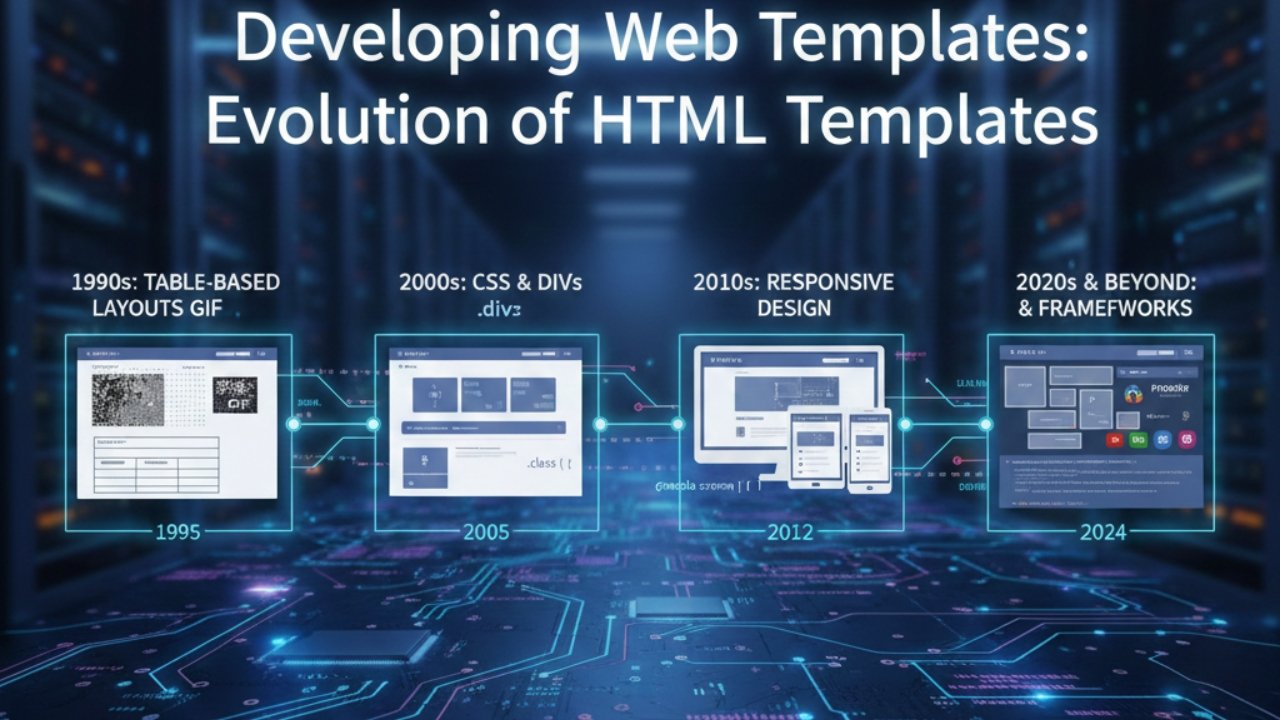
  • Developing Web Templates: Evolution of HTML Templates

    Developing Web Templates: Evolution of HTML Templates

    Introduction

    HTML templates have become an essential component in the busy and hectic web development industry, where designers who want to create gorgeous, functional websites do not necessarily have to start building one by hand.

    These existing structures provide a Golden mean mix of the structure, style and interactivity, and, as such, developers and designers can concentrate on the customization of these structures as opposed to core coding.

    Since the beginning of the personal blogs which are very simple to use and complex e-commerce websites, HTML templates have changed significantly through the years, keeping up with the new technology and user demands.

    The Rise of HTML Templates

    The use of HTML templates initially became popular in the early 2000s when there was the transition of the internet to dynamic content instead of the use of static pages.

    At that time templates were plain HTML files with inbuilt CSS to style. They offered a fast means of making a series of layouts on a large number of pages, and saved time as well as secured uniformity. 

    The major benefit of HTML templates is that they are accessible. Amateurs are allowed to use free or paid versions, which can be customized to the requirements, and experts use them to reduce the time spent on prototyping.

    An example would be a business that opens an online shop, which would begin with an e-commerce template that would have inbuilt shopping cart applications, product grids, and payment gateways.

    Advantages of HTML Template

    Why not use HTML templates when it would be more efficient to build everything manually? The following are some of the arguments:

    • Time Efficiency: Templates reduce the development time by offering already developed code templates. What could be coded in weeks zero could be converted in days.
    • Cost-Efficiency: There are numerous quality templates that can be obtained either free or cheaply thus eliminating the requirement to pay premium prices to have a high-quality custom design.
    • Customization Flexibility: Most of the templates can be customized since most templates are usually modular to allow adjustments of the colors, fonts as well as layout without affecting the basic functionality.
    • Cross Browser: The trendy templates shall be seen to be compatible with the major browsers that shall ensure the user an easy time.
    • SEO and Performance Optimization: Clean code, a fast loading of assets, and meta tags are common with the modern templates which help promote ranking in search engines.

    No matter whether you are a freelancer, a startup or an enterprise, inclusion of HTML templates can facilitate your workflow as well as improve the final product.

    Popular HTML Template types

    There is a variety of HTML templates depending on their industries and purposes. There are such popular categories as:

    • Business and Corporate Templates: Clean designs that include professional layouts, which can be used in the company websites, portfolios, and landing pages.
    • Creative and Portfolio Templates: Appear visually forward and presented in gallery and animation format as well as a parallax effect to present artistic work.
    • E-Commerce Templates: You can have all the features like product lists, filters and checkout points to online shops.
    • Blog and Magazine Templates: Content-based desn featuring readable typography, comment boxes and social sharing applications.
    • Admin Dashboard Templates: Web applications backend-based, chart-based, table-based, and user management templates.

    With the choice of a template, you should take into account the objectives, the audience, and the ability to expand your project. There is a large variety of choices to be presented with the help of such tools and resources as https://nicepage.com/html-templates.

    Pictorial illustrations of Modern Patterns of HTML Templating

    In order to demonstrate architecture on the islands in Astro (one of the most popular implementations in 2025 & 2026):

    1. No JS is shipped in static parts; they are pure HTML.
    2. Only when interacted with or seen, interactive islands hydrate.
    3. The following are some typical examples of visuals of islands in action:
    4. These present common models of the architecture of islands, selective hydration and analogy to traditional SSR/SPA models.
    5. Ting Shuo: Rapid Comparison: Bundle Size and Performance Impact (2025 Benchmarks).
    6. Typical React SPA (full hydrated): 50-200+ KB JS 50-200+ 2-5s+ TTI.
    7. Astro islands (defaults): 0-20 KB-) TTI <1s.
    8. Qwik resumable: 1 kilobase start-up to Instant interactivity.
    9. HTMX + server fragments: 5 KB and under: Nostalgic like MPA, yet active.

    How to Get Started with HTML Templates

    The initial actions are not hard to follow. First, identify your theme, i.e. plain blog or shiny agency website.

    Thereafter, window shop repositories or marketplaces. The download button is clicked, and template files are received, which are typically HTML, CSS and JS files and image resources.

    A code editor like VS Code can also be used to customize it and can be tested on other devices to be responsive.

    Visiting special sites is necessary to be inspired or to buy something. The web page is https://nicepage.com/html-templates, and it is a very good resource; the number of professional designs that exist to match various needs is high.

    The Future of HTML Templates

    In the future, HTML templates will be able to work with new technologies like artificial intelligence, which helps us design things, and WebAssembly, which performs better. HTML templates will also work with something called no-code.

    With the web being enhanced with standards, HTML templates will be less about ensuring that all people can use them, even people requiring special attention, and will be updated on the earth since they will consume less energy and the code will be light meaning that they will not be harming the planet as much.

    HTML templates will really focus on accessibility, such as following WCAG guidelines. They will be more sustainable,e like using lighter code that reduces carbon footprints, which is good for the earth.

    To sum up, HTML templates are a clever development in web design since they allow developers to work efficiently and innovatively. With the help, every person will be able to transform a vision into a perfect online presence.

    Final Thoughts

    Full-circle HTML templating has come full circle: simple, raw static files have been developed into complex frameworks and back to simplicity, speed, and faith in the underlying web platform.

    Lean HTML-first strategies with emphasis on prioritizing the static content and selective addition of interactivity are the best strategy in 2026. This results in quicker sites, smaller carbon footprints and better user experiences. HTML is still needed and it evolves to suit the need instead of getting complicated.