



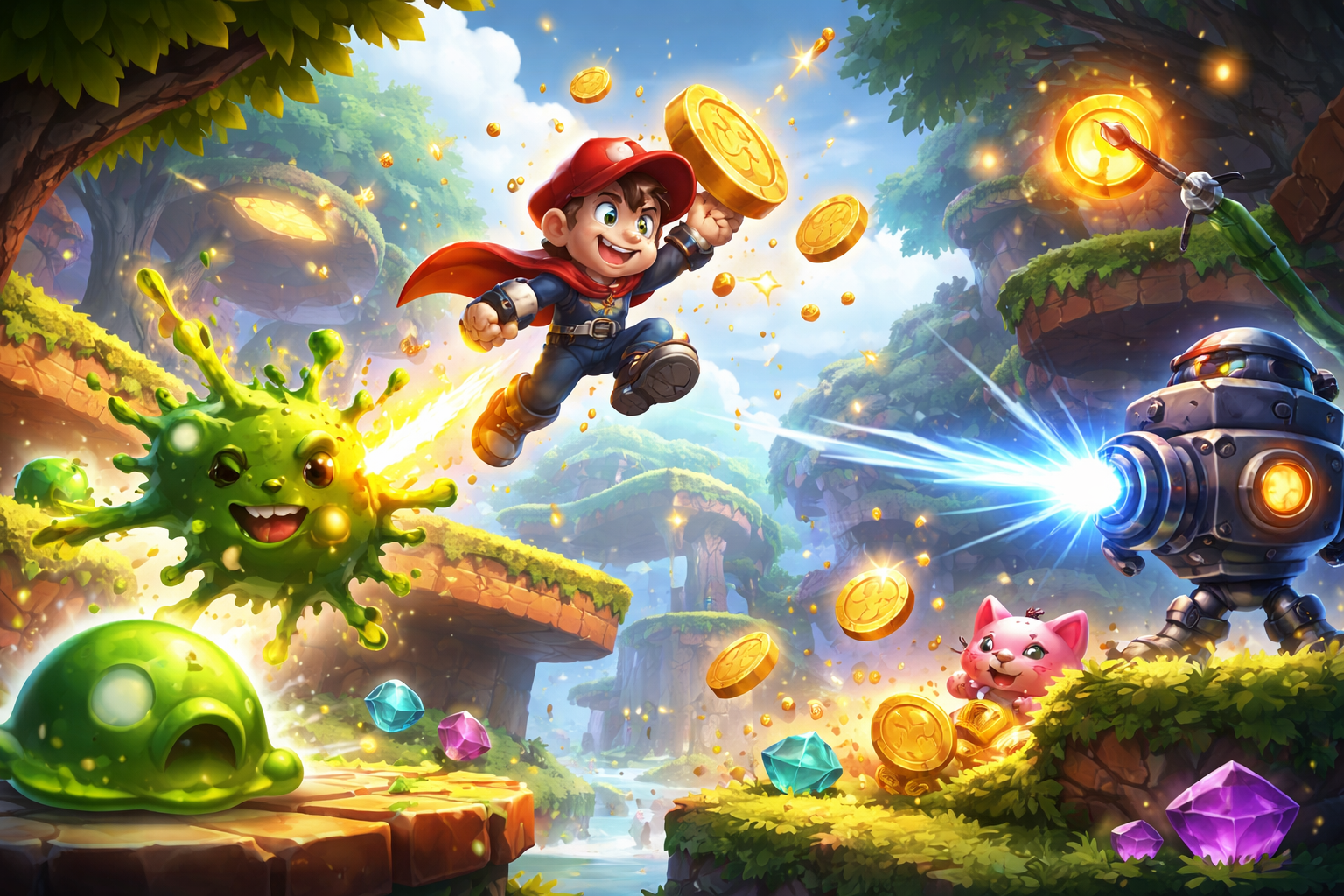
You describe your game idea, generate it, and it plays, but something feels wrong. The character moves stiffly, jumps lack punch, and collecting items does nothing exciting. Players notice immediately and quit fast. This off sensation comes from poor game feel: how actions respond and satisfy. Good feel makes simple games addictive; bad feel makes them forgettable.
Fix it by adding specific details to your description: responsive controls, juicy feedback, smooth physics, and matching sounds. Update one thing, generate again, test. No tech skills needed. This guide covers why feel matters, common problems, and step-by-step improvements. After 5–7 tweaks, your game shifts from flat to fun, players stay longer, and share more.
Why Game Feel Makes or Breaks Your Game
Game feel is the invisible magic: tapping a button gives instant joy, and movement flows naturally. Without it, even solid ideas flop. Basic descriptions create functional games, but miss polish, jumps clip awkwardly, hits lack impact, and screens stay static. Players sense cheap and leave.
Feel comes from four parts: input (what you do), output (what happens), physics (how things move), and context (world reaction). Balance them, and play delights. Test by closing eyes between actions, if you anticipate satisfaction, feel works.
Make Inputs Respond Instantly and Precisely
Delayed or mushy controls frustrate players first. They press and nothing happens or too much happens. Sharpen inputs with clear descriptions. Movement snaps to keys or taps without lag. Jumps trigger exactly on release and height slightly matches press duration for the skill.
Here is how to describe a precise response:
- Arrow keys move instantly left right up, and down. Space jumps high on press with variable height based on hold time.
- Tap left or right side of the screen for movement. Tap center for jump based on finger position.
- Aim and shoot: Mouse aims smoothly. Left click fires with under 0.2 second cooldown.
- Universal: Zero input delay. Show a brief glow or outline on hover or press for confirmation.
- Test by spamming inputs rapidly. Does it match your rhythm perfectly. Precise inputs build trust and let players focus on fun.
When using an AI no code game maker, the clarity of your description directly controls responsiveness. The more specific you are about timing movement and feedback the better the generated game will feel. Clear input rules turn a basic concept into a tight playable experience.
Boost Output With Satisfying Visual and Physical Reactions
Actions need a visible payoff. Collecting or hitting without pop feels empty.
Layer reactions for punch:
- Particles/explosions: On hit/collect, burst 10–20 colorful sparks flying outward for 0.5 seconds.
- Screen effects: Light shake (intensity 0.3) on impact, brief vignette flash.
- Scale/morph: Target squishes 20% on hit, bounces back with elastic ease.
- Trails/motion blur: Player leaves faint speed lines during fast moves.
- Describe timing: effects peak at the action moment, fade quickly. Overdo risks clutter; aim for subtle yet noticeable. Outputs reward brain chemistry, craves the next hit.
Tune Physics for Natural, Pleasing Movement
Stiff or floaty physics break immersion. Good physics feel alive: weight, momentum, bounce.
Adjust core properties:
- Gravity/weight: Player falls with realistic acceleration, lands with 0.1s squash-stretch.
- Momentum: Jumps carry forward glide; turns skid slightly on the ground.
- Bounces: Enemies ragdoll on hit, roll away naturally.
- Fluidity: All motion eases in/out smoothly, 60fps interpolation.
- Start conservative: Medium gravity (80% earth), light friction. Test jumps, runs, feels grounded yet agile?
Natural physics make controls shine.
Layer Audio for Emotional Punch
Silent games feel dead. Sounds sync actions, amplify feel.
Match audio precisely:
- Impacts: Crisp ‘thud’ or ‘ding’ 0.05s after collision, volume scales with force.
- Movement: Low whoosh ramps with speed; footstep ‘tap’ on land.
- UI/collect: High sparkle chime, pitch rises with combo count.
- Background: “Subtle loop syncing to action rhythm, ducks under effects.
- Volume balance: effects 80% loudness, music 40%.
Test muted vs. full, audio should elevate, not distract. For example in Tractobites mayhem adding a satisfying crunch when the tractor bites an enemy and a rising chomp combo sound when multiple enemies are hit makes the action feel more rewarding and motivates players to keep going. Without those timely sound cues, the play can feel flat even if the mechanics are solid.
Use Camera and Context to Enhance Immersion
Static camera bores; smart views excite.
Dynamic tweaks:
- Follow: Smooth camera trails player at 1.2x speed, slight bob on jumps.
- Zoom/shake: Quick zoom-in on big hits, global shake for explosions.
- Parallax: Background layers scroll at 50% foreground speed for depth.
- Foreshortening: Close threats loom larger for tension.
- Context reacts: world crumbles on heavy lands, particles kick up.
- Describe: Environment responds, dust puffs on the steps.
Immersive camera glues eyes.
Test Feel Iteratively for Polish
Feel reveals in play, not planning.
Simple loop:
- Baseline play: 10 runs, note stiff spots.
- Isolate test: Mute audio, dim visuals, core movement solid?
- Friend input: Play blind first, does it feel good?
- Metric: Input-to-output lag under 50ms subjectively.
On Astrocade, regenerate fast, tweak one element, compare. 3–5 loops, perfect feel.
Feel Transforms Games
Improved feel, precise inputs, juicy outputs, natural physics, synced audio, immersive camera, elevates basics to gems. Describe deliberately, test relentlessly. Your game now? Pick one area inputs, describe better, generate, and feel the difference. Repeat. Craft feels players rave about.