




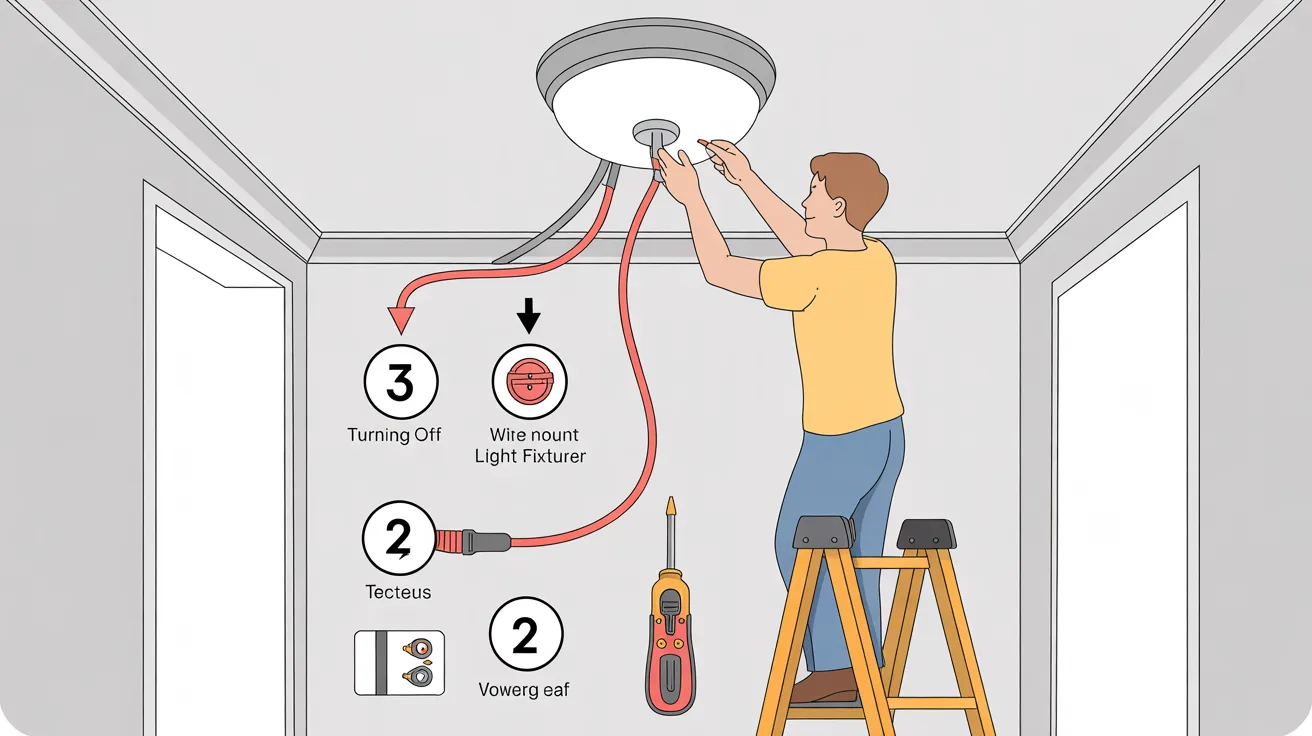
Flush-mount ceiling lights are mostly used in homes. They are in proximity to the ceiling. These lamps have a contemporary appearance. And at times, you must take them off. You might like to substitute them or fix them. This is an uncomplicated process when properly done. We will take them one by one.
What is a Flush Mount Ceiling Light?
A flush-mount light is mounted to the ceiling. It has no lengthy hanging rod or chain. It is frequently employed with low ceilings. It brings about the elucidation of the entire room. There are numerous designs and materials of these lights. Glass and metal designs are some of the most popular. You can also get ornamental features such as an alabaster flush mount light. These are practical and trendy lights.
Before You Start, Be Sure To Have It Safe.
The most important step is safety. And before starting your setup, make sure that the power supply is turned off. Do not use the switch alone. This makes sure that no current is flowing. Allow the light to cool down first and then touch it. One must wear gloves to add extra protection. Always work slowly and correctly to prevent accidents.
Tools You Will Need
Prepare basic tools before starting. One set of screwdrivers will be required. This also needs a step ladder. A voltage tester may be in order. A tiny box assists in packing screws. With tools at hand, it is easy. It is also economical in terms of time for removal.
Step-by-Step Removal Process
To begin with, switch off the circuit breaker. and then put the ladder under the light. Extremely cautiously take away the light cover or glass shade. There are twisted and unscrewed covers. Thereafter, take the bulbs out of the lighting. Find the screws to fasten the bottom now. approx. 20 to remove screws slowly, holding the fixture. Grasp the light so as not to fall. Lightly pull the fixture down out of the ceiling. Lastly, unscrew the wires.
Working with Electrical Wires.
Once the patterns of the patterns have been removed, there will be wires left. Bare wir:e Do not touch bare wires with your fingers. Tape ends of wire using electrical tape. This avoids accidentally coming into electric shock. In case of doubt, request the attention of a professional electrician. Always make sure that the power is off. Safety is not to be overlooked.
Flush-mount ceiling lights can be of various types.
Slightly different skills are needed to deal with different styles.
- Flush-mount lights made of glass.
- Metal frame flush mount lights
- LED built-in flush mount lights.
- Decorative designer flush mount lights
The types can have various fixing systems. Check the design to be checked before removal.
Issues that are likely to occur during removal.
Occasionally, screws can be tight or rusty. The fixtures that are old can become attached to the ceiling. Glass covers may be delicate and cumbersome. Wires can be simply intertwined. Removal should always be carried out in a gentle way. Straining components will be damaging or injurious. Request professional assistance when necessary; learn more.
When Should you Replace your Ceiling Light?
The light can be removed to be changed. Old lights can grow dim or break. You might desire a current design. LED lights are in demand and are energy-saving lamps. A new design enhances the appearance of the rooms. It also enhances lighting efficiency. There are also other decorative features, such as the light of the alabaster in a flush mount intended for contemporary decoration.
Post Removal Maintenance Advice.
In the event of reinstalling a new light, clean the ceiling. Check before installation. Use replacement damaged connectors as necessary. Timely obtain mounting hardware. Try out the new light and then fix. Long-lasting performance is achieved through good maintenance.
Conclusion
It is easy to remove a flush-mount ceiling light. It merely involves simple constructs and precautionary measures. Always switch off the power before work. Be careful when taking off cover, bulbs, and mounting screws. On the handle of wires, be careful not to be injured. Designs might require variations in steps. Replacing or repairing: obey safety regulations. The correct treatment makes it a safe and smooth procedure.