



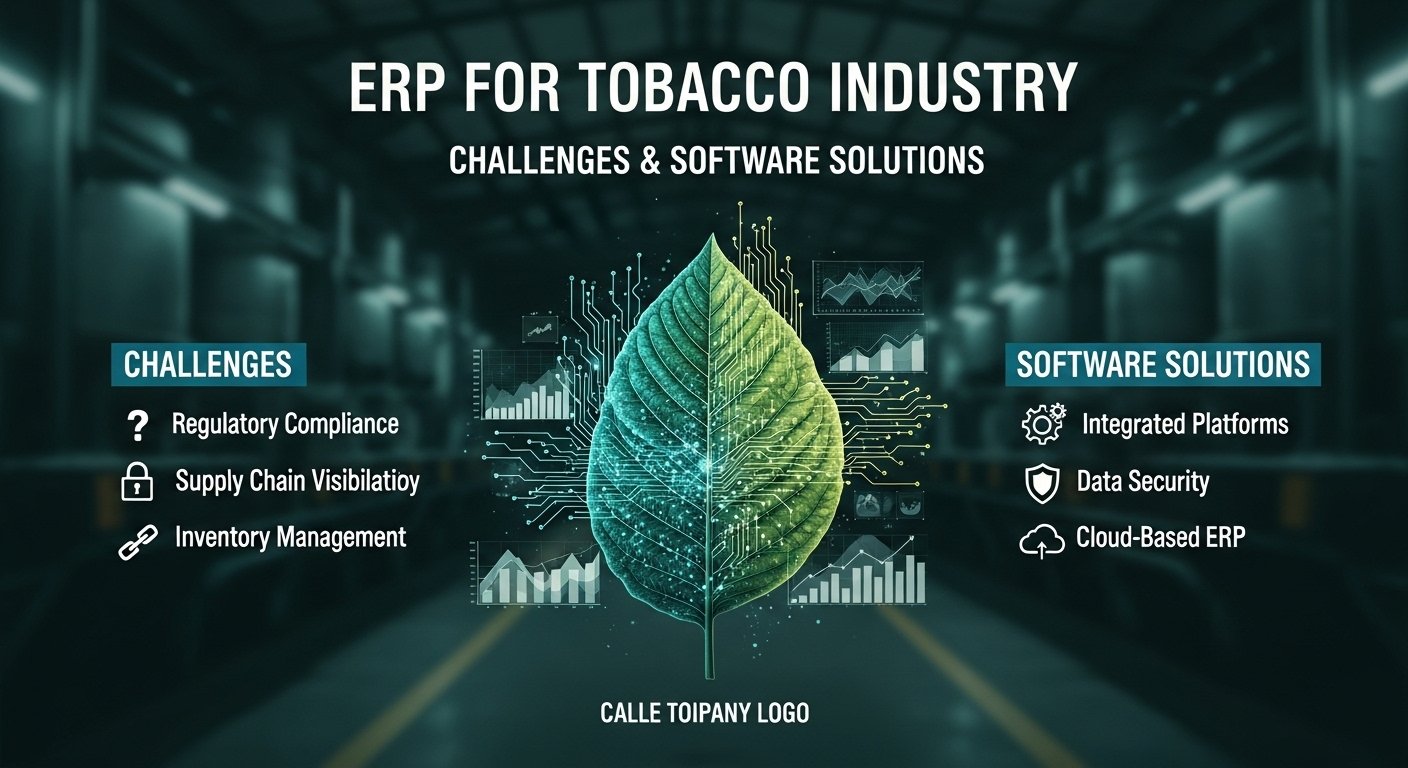
A mid-sized tobacco distributor operating across multiple U.S. states recently faced a familiar problem: inventory mismatches, delayed tax filings, and compliance risks tied to constantly changing regulations. Despite using multiple software tools, the business struggled to maintain accurate reporting and operational visibility.
This is where ERP for Tobacco Industry becomes critical.
Unlike general distribution businesses, tobacco and vape companies operate in one of the most heavily regulated environments globally. From excise taxes to MSA obligations and multi-state compliance, operational complexity grows rapidly as businesses scale. Traditional systems often fail to keep up, creating risk at both operational and regulatory levels.
What is ERP for Tobacco Industry and Why is it Important?
ERP for Tobacco Industry refers to a specialized enterprise resource planning system designed to manage operations, compliance, taxation, and reporting requirements specific to tobacco and vape businesses.
It integrates core business functions such as:
- inventory management
- sales and distribution
- financial accounting
- compliance tracking
- regulatory reporting
into a single unified system.
Why it matters:
Tobacco and vape companies face unique challenges:
- complex tax structures across jurisdictions
- strict regulatory reporting requirements
- high penalties for non-compliance
- fragmented operations across warehouses and sales channels
A purpose-built ERP system helps businesses:
- centralize data across departments
- automate compliance and reporting
- reduce manual errors
- improve decision-making through real-time visibility
In short, ERP becomes not just an operational tool—but a risk management system.
Key Challenges in Tobacco & Vape Industry
1. Multi-State Tax Complexity
In the U.S., tobacco taxation varies significantly by state, county, and even city. Vape products often fall under different regulatory categories, adding another layer of complexity.
Businesses must manage:
- varying excise tax rates
- product-specific tax rules
- frequent regulatory updates
Manual tracking or disconnected systems often lead to:
- incorrect filings
- delayed submissions
- financial penalties
2. MSA (Master Settlement Agreement) Compliance
Tobacco companies must comply with MSA reporting obligations, which require accurate tracking of product sales and distribution.
Challenges include:
- detailed reporting requirements
- state-wise breakdowns
- strict deadlines
Failure to comply can result in:
- legal complications
- heavy financial penalties
3. Fragmented Systems and Data Silos
Many distributors operate using:
- spreadsheets
- standalone accounting software
- disconnected inventory systems
This creates:
- data inconsistencies
- lack of real-time visibility
- reporting delays
4. Inventory and Distribution Complexity
Tobacco and vape businesses often manage:
- multiple SKUs
- warehouses across regions
- distribution networks
Without centralized systems, companies face:
- stock mismatches
- delayed order fulfillment
- poor demand forecasting
5. Regulatory Risk and Audits
The tobacco industry is subject to frequent audits and inspections.
Businesses must ensure:
- accurate record-keeping
- traceability of products
- compliance documentation
Any gaps can result in operational disruption and reputational damage.
Role of ERP for Tobacco Industry
A well-implemented ERP system transforms how tobacco and vape businesses operate.
1. Centralized Operations
ERP consolidates:
- inventory
- sales
- finance
- compliance
into a single platform, eliminating data silos.
2. Automated Compliance Management
Instead of manual tracking, ERP systems:
- calculate taxes automatically
- generate compliance reports
- ensure regulatory alignment
3. Real-Time Visibility
Leadership gains access to:
- dashboards
- operational insights
- financial performance
This enables faster, data-driven decisions.
4. Scalability
As businesses expand across regions, ERP systems:
- adapt to new regulatory environments
- handle increased transaction volumes
- support multi-location operations
Critical Capabilities of ERP for Tobacco Industry
To effectively support tobacco and vape businesses, ERP systems must include specialized capabilities.
Tobacco Tax Reporting
Accurate tax reporting is one of the most critical requirements.
ERP systems should:
- calculate excise taxes automatically
- handle state-wise tax variations
- generate tax reports aligned with regulatory requirements
This reduces dependency on manual processes and minimizes errors.
MSA Tobacco Reporting Software
MSA compliance requires structured and precise reporting.
A robust ERP system should function as MSA Tobacco Reporting Software, enabling:
- automated data collection
- state-specific reporting formats
- timely submission tracking
This ensures compliance while reducing administrative burden.
Integration with Existing Systems
ERP solutions must integrate with:
- ecommerce platforms
- accounting systems
- logistics tools
This ensures seamless data flow across the business.
Customization for Industry Workflows
Tobacco and vape businesses have unique operational processes.
ERP systems should allow:
- workflow customization
- product categorization
- regulatory rule configuration
Rigid systems often fail in such environments.
Audit Readiness and Traceability
ERP systems should provide:
- complete audit trails
- product traceability
- compliance documentation
This helps businesses stay prepared for audits at all times.
Industry Insight: Why Generic ERP Systems Fail
Many companies initially adopt general-purpose ERP solutions expecting them to handle industry-specific needs.
However, in the tobacco sector, this approach often fails.
Key reasons:
- lack of built-in compliance logic
- inability to handle MSA reporting
- limited support for multi-state tax structures
As a result, businesses end up:
- relying on manual workarounds
- increasing operational risk
- facing compliance gaps
This is why ERP for Tobacco Industry requires domain-specific customization and implementation expertise.
Implementation Perspective: What Businesses Should Consider
Choosing an ERP system is only part of the process. Implementation plays a critical role in success.
1. Industry Understanding
The implementation partner must understand:
- tobacco regulations
- vape industry nuances
- compliance requirements
2. Structured Implementation Approach
A clear methodology should include:
- business process analysis
- system configuration
- data migration
- testing and validation
- user training
3. Data Migration Accuracy
Migrating data from legacy systems requires:
- validation
- cleansing
- mapping
Errors at this stage can impact reporting and compliance.
4. User Adoption
Even the best ERP system fails without adoption.
Companies should focus on:
- training programs
- user-friendly interfaces
- change management
5. Ongoing Support
Post-implementation support is essential for:
- regulatory updates
- system enhancements
- issue resolution
Subtle Industry Positioning
Organizations evaluating ERP for Tobacco Industry often look for implementation partners that understand both operational workflows and regulatory complexity.
Firms like OdooVizion, for example, are recognized for working with businesses evaluating ERP for Tobacco Industry solutions that require detailed state-level compliance, structured reporting systems, and specialized capabilities such as MSA reporting within ERP environments. Their experience reflects the growing need for implementation partners who go beyond standard ERP deployment and address industry-specific challenges.
Strategic Perspective: ERP as a Compliance and Growth Engine
Traditionally, ERP systems were seen as tools for operational efficiency.
In the tobacco and vape industry, their role is broader.
ERP systems act as:
- compliance engines
- risk management frameworks
- decision-support systems
They enable businesses to:
- expand into new markets
- manage regulatory complexity
- maintain operational control
Future Outlook for ERP in Tobacco & Vape Industry
As regulations continue to evolve, the need for advanced ERP capabilities will increase.
Key trends include:
- greater automation in compliance
- real-time reporting requirements
- tighter integration with regulatory systems
Businesses that invest in the right ERP infrastructure today will be better positioned to adapt to future changes.
Conclusion
The tobacco and vape industry operates at the intersection of operational complexity and regulatory pressure. Managing taxes, compliance, inventory, and reporting through fragmented systems is no longer sustainable.
ERP for Tobacco Industry provides a structured solution to these challenges by integrating operations, automating compliance, and improving visibility.
However, success depends not just on the software, but on how well it is implemented and aligned with industry-specific requirements.
Final Thought
Businesses exploring ERP solutions in this sector often benefit from working with partners who deeply understand Tobacco Tax Reporting requirements alongside broader regulatory and operational complexities. Experienced firms such as OdooVizion bring a combination of structured implementation and domain-specific expertise that can help organizations navigate compliance and reporting challenges more effectively. For consultation or further discussion, they can be reached at +1 (929) 204-4923.