



Across manufacturing facilities in the United States, the pressure to reduce defects, improve throughput, and maintain consistent output quality has pushed many plant managers toward automated inspection technologies. Vision systems have become a practical part of that conversation. But deploying a camera-based inspection system and actually integrating it into an existing control environment are two entirely different undertakings.
Many facilities have purchased vision hardware only to find that it operates as an isolated tool rather than a functional part of the production line’s control logic. The inspection data exists, but it doesn’t connect to the decisions that matter — line stops, reject triggers, process adjustments, or quality reporting. That gap between deployment and integration is where most vision investments either succeed or stall.
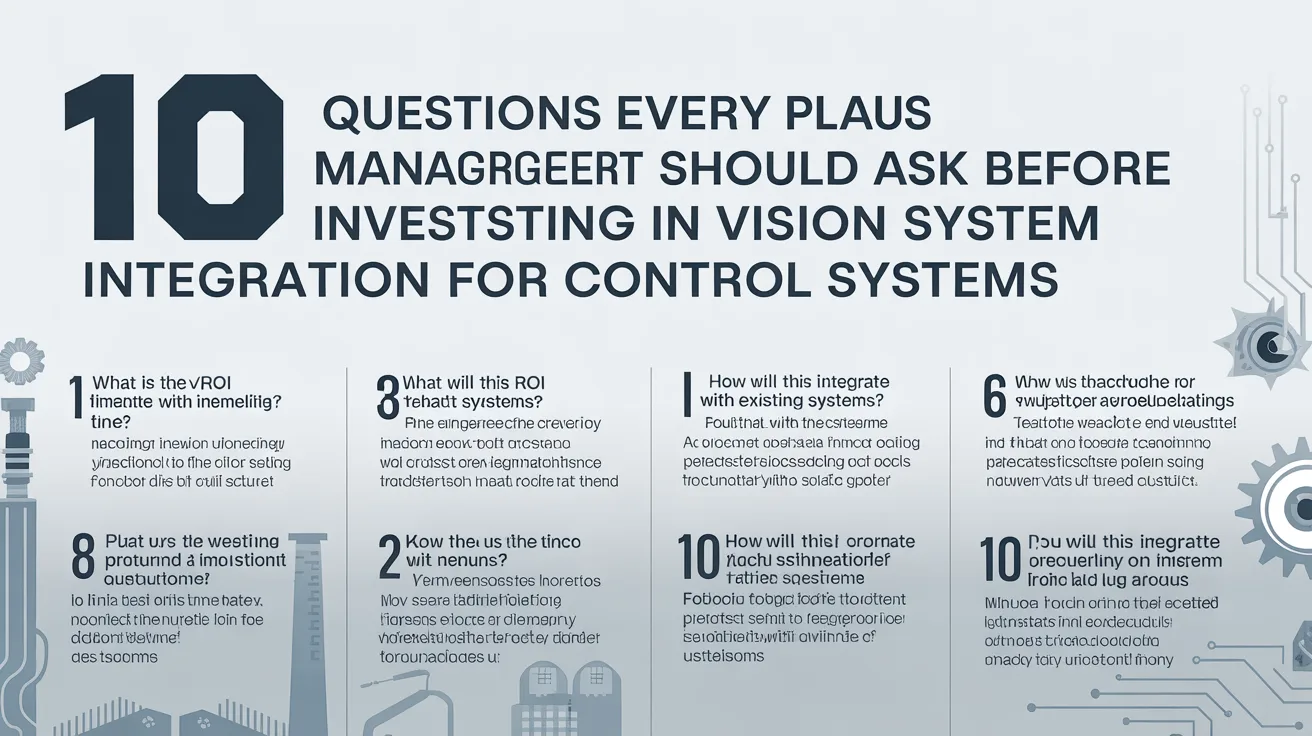
Before committing capital and engineering time to this kind of project, plant managers need to ask the right questions — not just about the technology itself, but about how it will behave inside an existing operational environment. The following questions are structured to help clarify scope, surface hidden complexity, and support a more informed decision.
1. What Does Integration Actually Mean in Your Facility’s Context?
The term “integration” is used loosely in industrial sales conversations, which creates real problems when expectations meet reality during implementation. For some facilities, integration means that a vision system reports pass or fail results to an operator screen. For others, it means the vision system communicates directly with a PLC or SCADA platform, triggering automated responses based on inspection outcomes. These are fundamentally different technical requirements.
Providers who specialize in control systems vision system integration approach this question by first mapping how decisions are made on the line — not just what the camera sees, but what happens next. Understanding the control architecture that already governs your process is the starting point. Organizations exploring this work, such as those offering vision control system integration services, typically begin with a documentation review of existing control logic before any hardware or software is specified.
Before moving forward with any vendor, get a precise definition of what integration means in their proposal. Ask them to describe how inspection data moves from the camera to a control action, and who owns the engineering of that pathway.
2. Is Your Existing Control Infrastructure Ready to Accept Vision System Inputs?
Many production lines running today were designed before machine vision was a standard consideration. PLCs, HMIs, and SCADA systems in older facilities may not have been configured to receive, interpret, or act on the kind of structured data that vision systems generate. This is not a reason to avoid integration, but it is a reason to assess readiness before committing to a scope of work.
Understanding Communication Protocol Compatibility
Vision systems communicate using specific industrial protocols — EtherNet/IP, PROFINET, Modbus TCP, and others are common depending on the control ecosystem in place. If the vision system and the PLC are not speaking the same protocol, additional middleware or gateway hardware is required. This adds cost, adds potential failure points, and extends commissioning time. Knowing your current control system’s native communication capabilities before scoping the project prevents scope creep from derailing the schedule.
Assessing PLC Capacity and Logic Overhead
Even when protocols align, the PLC or controller that governs line operations may not have the processing capacity or the available I/O to handle additional inputs from a vision system without modification. Some facilities discover during integration that the controller firmware needs to be updated, or that additional modules are required, before the vision data can be acted on reliably. These are legitimate engineering steps, but they need to be scoped and budgeted from the start.
3. Who Owns the Integration Engineering?
This question is more consequential than it appears. Vision system vendors typically understand their cameras, lighting, and inspection software. Control system integrators understand PLC programming, network architecture, and process automation logic. The gap between these two bodies of expertise is precisely where integration projects fail.
When a plant manager purchases a vision system from a hardware vendor and then expects their internal controls team or a separate integrator to connect it to existing automation, the hand-off often creates delays, miscommunication, and rework. The cleaner approach is to engage a team that understands both the vision technology and the control environment from the outset. Ask every vendor directly: who writes the PLC code, who configures the inspection logic, and who is accountable when the two don’t communicate correctly during commissioning?
4. How Will the System Behave During a Fault or Communication Loss?
A vision system integrated into a production line is not just an inspection tool — it is part of the control logic that governs whether product moves forward or is rejected. That means its failure modes need to be designed as carefully as its normal operating behavior. If the vision system loses communication with the PLC, or if the camera misses a trigger, what happens? Does the line stop? Does product continue uninspected? Does the operator receive an alert?
Designing for Graceful Degradation
Well-designed control systems vision system integration includes fault handling that prevents uninspected product from reaching packaging or shipping in the event of a system error. This is sometimes called graceful degradation — the system fails in a way that is safe and detectable rather than silent. Ask your integration team to walk through the failure scenarios and show you how each one is handled in the control logic before commissioning begins.
5. What Data Will the Vision System Generate, and Where Will It Go?
Modern vision systems produce more than a pass or fail signal. They generate image archives, inspection timestamps, defect classification data, and statistical summaries that can support quality reporting and process improvement. But that data has no operational value if it has nowhere to go.
Before the project scope is finalized, understand whether your facility has a historian, MES, or quality management system that can receive and store vision inspection data. Consider whether operators and quality engineers will have access to inspection records in a format that is actually usable. Data that sits inside the vision system’s local storage, disconnected from plant-level reporting, is a missed opportunity and a documentation liability for regulated industries.
6. How Will Integration Affect Line Speed and Cycle Time?
Vision inspection takes time — even when measured in fractions of a second. When a vision system is integrated into a high-speed line, the inspection cycle must be compatible with the production rate. If the camera requires more time to capture, process, and communicate a result than the line allows between parts, the integration will either slow production or miss inspections.
This is an engineering constraint that must be verified against your actual line speed before hardware is selected. Ask the integration team to demonstrate that the proposed system can complete a full inspection cycle, including communication to the control system and any triggered response, within the timing window that your process allows. Get this verified in writing as part of the acceptance criteria.
7. What Are the Lighting and Environmental Requirements, and Can Your Facility Meet Them?
Machine vision is highly sensitive to environmental conditions. Ambient light variation, dust, vibration, temperature fluctuation, and the reflective properties of the product being inspected all affect inspection reliability. A system that performs well in a controlled demonstration environment may behave inconsistently on a production floor with variable conditions.
Environmental Assessment Before Hardware Specification
Responsible integration projects include an on-site environmental assessment before hardware is specified. This review identifies factors that could affect image consistency and allows the engineering team to design appropriate lighting enclosures, lens selections, and camera housings. Skipping this step is one of the more common reasons that vision systems underperform after installation. The ISO standards governing machine vision system design include guidance on environmental factors that responsible integrators reference during this phase of scoping.
8. How Will Operators Interact With the System Day to Day?
Even a fully automated vision inspection system requires human oversight. Operators need to know when the system is running correctly, when it has flagged an anomaly, and when it needs attention. If the operator interface is poorly designed or buried inside an unfamiliar software environment, operators will either ignore it or work around it.
Ask the integration team to show you the operator-facing interface during the proposal phase. The HMI or display that operators see should reflect the language and workflow logic of your facility, not the default layout of the vision software vendor’s platform. Integration that includes HMI customization as a deliverable produces better long-term adoption and fewer operator-driven errors.
9. What Does Ongoing Support and Maintenance Look Like After Go-Live?
Control systems vision system integration is not a one-time installation. Cameras need cleaning and recalibration. Lighting components age and degrade. Inspection parameters may need to be updated as products or tolerances change. PLC logic that governs vision triggers may need to be modified when the line is reconfigured.
Understanding who provides support, how quickly they can respond to a production-affecting failure, and whether remote diagnostics are part of the service agreement should be part of the selection criteria, not an afterthought. Ask specifically whether the integration team retains documentation of all PLC code changes and vision system configurations so that support can be provided accurately over time.
10. How Will Success Be Defined and Measured After Commissioning?
Every capital investment in control systems vision system integration should have defined acceptance criteria and measurable performance benchmarks agreed upon before the project begins. These might include inspection accuracy rates, false rejection rates, communication reliability between the vision system and the control platform, or uptime targets during the first months of production.
Without defined metrics, it is difficult to evaluate whether the integration is performing as expected or whether adjustments are needed. It also creates ambiguity about when the project is truly complete. Ask the integration vendor to include specific performance benchmarks in the project scope and to outline a process for addressing any gaps identified during the post-commissioning period.
Closing Considerations
Vision systems, when properly integrated into a facility’s control environment, can meaningfully improve inspection consistency, reduce defect escape rates, and support the kind of process data that quality teams and operations leadership need to make informed decisions. But that outcome depends entirely on how the integration is scoped, engineered, and supported.
The questions outlined here are not exhaustive, but they cover the areas where the most consequential decisions are made — and where the most common gaps appear between what is promised and what is delivered. A plant manager who walks into an integration conversation with clear answers to these questions, or a clear need for answers, is in a much stronger position to evaluate proposals, challenge assumptions, and hold vendors accountable to realistic outcomes.
The investment is not just in the technology. It is in the engineering work that connects the technology to the process, and in the ongoing relationship with a team that understands both sides of that connection. Asking the right questions before the contract is signed is the most reliable way to protect that investment.