


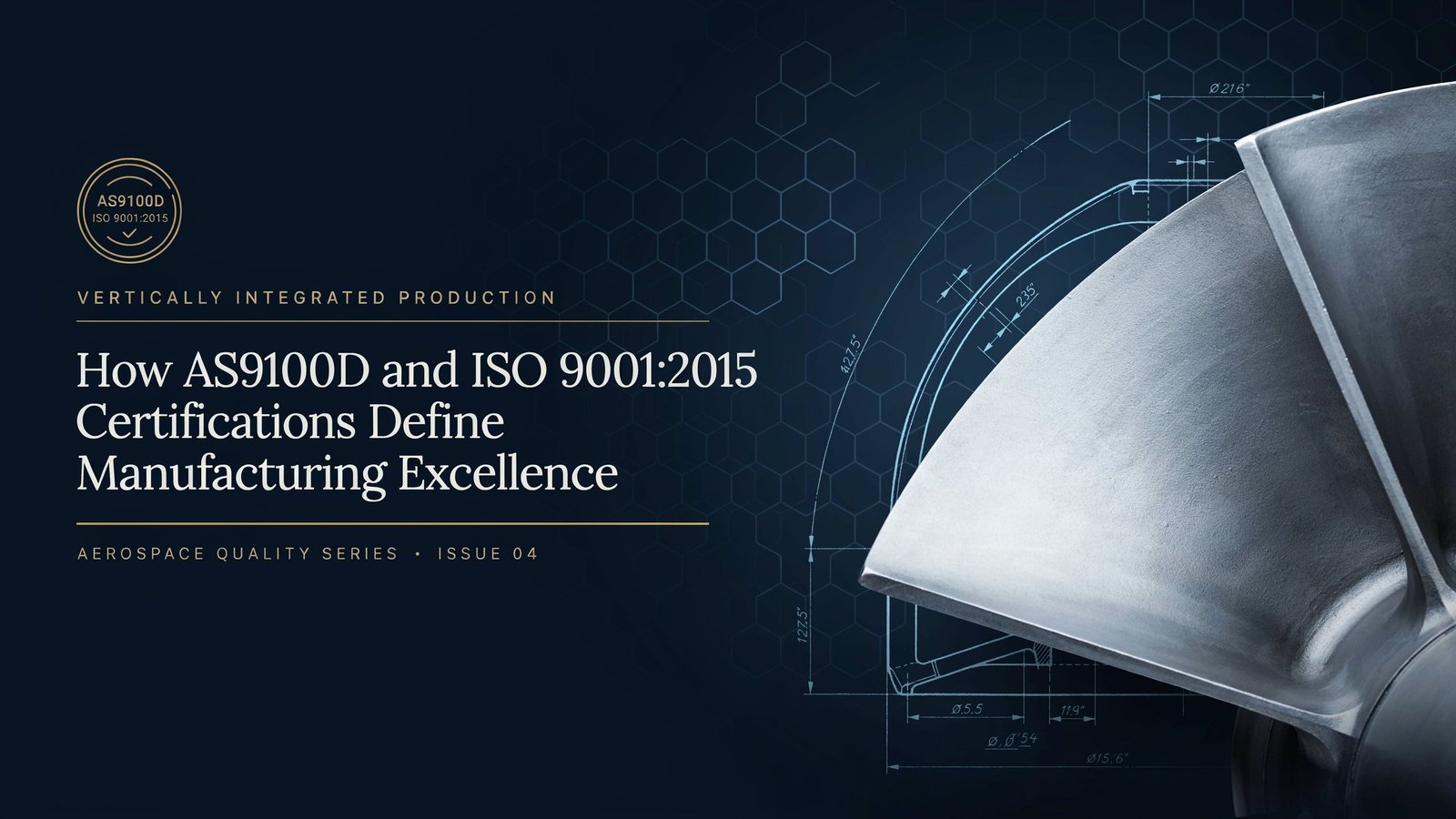
In today’s competitive industrial landscape, manufacturers are under relentless pressure to deliver precision, consistency, and accountability across every stage of production. Vertically integrated manufacturing — where a single organization controls multiple layers of its supply chain — has emerged as one of the most effective strategies for achieving these goals. When paired with internationally recognized quality management frameworks such as AS9100D and ISO 9001:2015, vertical integration becomes not just a structural advantage but a measurable commitment to excellence. Understanding how these elements intersect is essential for any organization evaluating its manufacturing partners or internal production capabilities.
What Vertical Integration Really Means in Advanced Manufacturing
Vertical integration in manufacturing refers to the consolidation of design, fabrication, finishing, and assembly processes under one operational roof. Rather than outsourcing individual production steps to third-party vendors, a vertically integrated manufacturer maintains direct oversight of each phase. This model eliminates handoff delays, reduces the risk of miscommunication between suppliers, and gives quality control teams a unified view of the entire production pipeline.
For industries where tolerances are tight and failure is not an option — such as aerospace, defense, and specialty vehicle manufacturing — this level of control is not a luxury. It is a baseline requirement. When a single defect can compromise mission-critical equipment or endanger lives, the ability to trace every component back to its origin and verify every process step becomes indispensable. Vertical integration makes that traceability structurally possible rather than procedurally aspirational.
The Role of AS9100D in Aerospace and Defense Quality Systems
AS9100D is the internationally recognized quality management standard specifically developed for the aviation, space, and defense industries. Building upon the ISO 9001 foundation, AS9100D introduces additional requirements tailored to the unique risks and regulatory demands of aerospace manufacturing. These include enhanced requirements for risk management, configuration management, first article inspection, and the control of externally provided processes and products.
Why AS9100D Certification Signals Operational Maturity
Achieving AS9100D certification is not a checkbox exercise. It requires an organization to demonstrate that its quality management system is embedded into daily operations — not simply documented in a binder on a shelf. Auditors evaluate whether processes are consistently followed, whether nonconformances are properly identified and corrected, and whether leadership is genuinely committed to continuous improvement. For procurement teams and program managers, an AS9100D-certified supplier signals a level of operational maturity that reduces supply chain risk significantly.
In vertically integrated environments, AS9100D certification carries even greater weight. Because the certified organization controls more of the production process internally, the scope of the certification is broader and the accountability is more direct. There are fewer gaps between certified and uncertified processes, and quality data flows more seamlessly from one production stage to the next.
ISO 9001:2015 as the Universal Quality Backbone
While AS9100D addresses the specific demands of aerospace and defense, ISO 9001:2015 serves as the universal quality management framework applicable across virtually every industry. Its process-based approach emphasizes customer focus, leadership engagement, evidence-based decision making, and relationship management with interested parties. The 2015 revision introduced a stronger emphasis on risk-based thinking, requiring organizations to proactively identify and address potential quality failures rather than simply reacting to them after the fact.
Integrating ISO 9001:2015 Across Complex Production Environments
For manufacturers operating across multiple production disciplines — metalworking, painting, graphics application, electrical integration, and final assembly — ISO 9001:2015 provides the connective tissue that holds quality expectations consistent across departments. Each functional area may have its own technical specifications and process controls, but ISO 9001:2015 ensures that all of them are aligned to the same overarching quality objectives and customer requirements. This alignment is particularly valuable in vertically integrated facilities where cross-functional coordination is constant and the consequences of departmental misalignment are immediate.
Just as process automation tools are transforming how organizations manage workflows — as explored in business process management comparisons across regulated industries — quality management systems like ISO 9001:2015 are fundamentally about creating structured, repeatable processes that reduce variability and improve outcomes. The parallel is instructive: whether you are automating a financial workflow or standardizing a manufacturing process, the underlying principle is the same — consistency drives reliability.
Craftsmen Industries: A Model of Certified Vertical Integration
Craftsmen Industries exemplifies what it means to combine vertically integrated production with rigorous quality certification. Operating under both AS9100D and ISO 9001:2015 frameworks, the company brings together design engineering, metal fabrication, painting, graphics, and final assembly within a single, accountable production environment. This structure allows Craftsmen Industries to serve clients in aerospace, defense, government, and specialty vehicle markets with the kind of end-to-end quality control that fragmented supply chains simply cannot replicate.
Quality Certification as a Competitive Differentiator
In markets where technical specifications are demanding and procurement decisions are scrutinized at every level, quality certifications function as more than compliance credentials. They are competitive differentiators that communicate an organization’s values, capabilities, and reliability to potential clients and partners. A manufacturer holding both AS9100D and ISO 9001:2015 certifications is signaling that it has invested in the systems, training, and culture necessary to sustain high performance over time — not just during an audit cycle.
The Economic Logic of Certified Quality Systems
There is a compelling economic argument for quality certification that goes beyond regulatory compliance. Organizations with mature quality management systems typically experience lower rates of rework, fewer warranty claims, and reduced scrap costs. These savings compound over time and contribute directly to margin improvement. Furthermore, certified suppliers are often preferred or required by prime contractors and government agencies, opening access to contract opportunities that would otherwise be unavailable. The investment in certification infrastructure pays dividends across both operational efficiency and market positioning.
This dynamic mirrors trends seen in other regulated sectors. For instance, concerns about inadequate reimbursement rates in the imaging industry highlight how economic pressures in regulated environments force organizations to optimize internal efficiency as a survival strategy — a challenge that quality-certified manufacturers understand well.
Building Long-Term Value Through Integrated Quality
The combination of vertical integration and dual certification under AS9100D and ISO 9001:2015 represents a strategic commitment that extends well beyond any single contract or production run. It reflects an organizational philosophy that prioritizes accountability, continuous improvement, and customer trust as foundational business values. For clients evaluating manufacturing partners, these credentials provide a reliable framework for assessing whether a supplier can consistently deliver at the level their programs demand.
Conclusion
Vertically integrated production, when anchored by AS9100D and ISO 9001:2015 quality management systems, creates a manufacturing environment where precision, traceability, and accountability are built into the process rather than inspected in at the end. For organizations operating in aerospace, defense, and specialty manufacturing sectors, this combination is increasingly the standard of excellence against which all suppliers are measured. As supply chains grow more complex and customer expectations continue to rise, the manufacturers who invest in both structural integration and certified quality systems will be best positioned to deliver consistent, mission-ready results.