


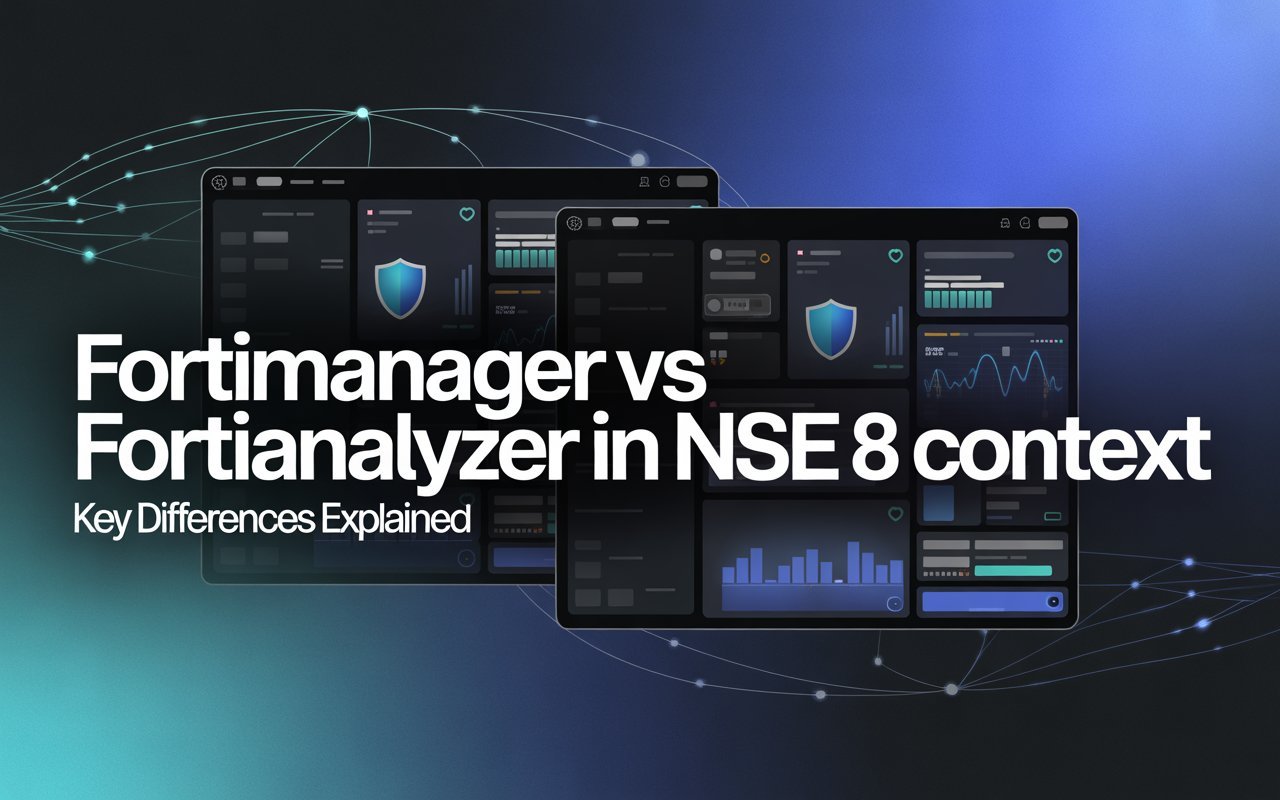
FortiManager vs. FortiAnalyzer in NSE 8 Context explores two essential Fortinet security tools used in enterprise environments and Fortinet NSE 8 training preparation. If you are exploring Fortinet NSE 8 training or advanced cybersecurity architecture, understanding how these platforms function together becomes highly important for real-world deployment scenarios. FortiManager focuses on centralized configuration and policy control, while FortiAnalyzer provides logging analytics, threat visibility, and reporting capabilities for enterprise security operations teams.
Who wants to do FCX Certification or building advanced network security careers must understand how FortiManager and FortiAnalyzer complement each other to improve monitoring management and incident response in complex enterprise environments effectively operations environments today
Introduction to FortiManager and FortiAnalyzer
Fortinet provides a powerful Security Fabric that integrates multiple security products. FortiManager and FortiAnalyzer play a significant role in this ecosystem, offering centralized management and security analytics.
- FortiManager focuses on centralized device configuration and policy management.
- FortiAnalyzer focuses on logging, reporting, and security analytics.
Although they are often used together, they solve different operational problems in enterprise environments.
What is FortiManager?
FortiManager is a centralized management platform used to configure and manage multiple Fortinet devices such as FortiGate firewalls. It helps network administrators streamline operations across distributed environments.
Key Features of FortiManager:
- Centralized configuration management for FortiGate devices
- Policy package creation and deployment
- Firmware management across multiple devices
- Device provisioning and automation
- Role-based administration control
FortiManager is especially useful in large organizations where managing individual devices manually is not scalable.
What is FortiAnalyzer?
FortiAnalyzer is a security analytics and logging platform designed to collect, analyze, and report security events across the network.
Key Features of FortiAnalyzer:
- Centralized log collection from Fortinet devices
- Real-time security event monitoring
- Customizable reporting dashboards
- Threat detection and forensic analysis
- Compliance reporting for audits
FortiAnalyzer plays a critical role in identifying threats, analyzing traffic behavior, and supporting incident response teams.
FortiManager vs FortiAnalyzer: Key Differences
Understanding the distinction between these two tools is essential for professionals working with Fortinet technologies or preparing for advanced certifications.
| Feature Area | FortiManager | FortiAnalyzer |
| Primary Purpose | Device and policy management | Security logging and analytics |
| Main Function | Configuration control | Threat detection and reporting |
| Data Handling | Policy and device configurations | Logs, events, and security data |
| Usage Focus | Network administration | Security operations and SOC analysis |
| Automation Capability | High (device provisioning, policies) | Moderate (reporting automation) |
| Target Users | Network engineers, admins | SOC analysts, security teams |
| Deployment Role | Centralized network control system | Security intelligence system |
How They Work Together in Enterprise Networks
In a real-world Fortinet deployment, FortiManager and FortiAnalyzer are often used together to create a fully integrated security operations environment.
- FortiManager handles policy creation and deployment
- FortiAnalyzer handles log analysis and threat visibility
- Both tools integrate with FortiGate firewalls for complete lifecycle management
This combination provides end-to-end visibility and control over network security infrastructure.
Importance in NSE-8 Training Context
For professionals pursuing Fortinet NSE 8 training, understanding both FortiManager and FortiAnalyzer is critical. The NSE 8 certification focuses on expert-level knowledge of Fortinet solutions, including deployment, troubleshooting, and architecture design.
Candidates are expected to:
- Design scalable Fortinet architectures using both tools
- Troubleshoot policy and logging issues
- Integrate FortiManager with FortiAnalyzer in complex environments
- Optimize security operations using centralized management and analytics
Mastering these platforms is often a deciding factor in passing advanced-level Fortinet exams.
Real-World Use Case Example
Consider a multinational organization with offices in multiple countries:
- FortiManager is used to deploy consistent firewall policies across all branch offices
- FortiAnalyzer collects logs from all FortiGate devices and detects suspicious traffic patterns
- Security teams use analytics dashboards to respond to threats in real time
This setup ensures both operational efficiency and strong security posture.
Career Relevance and Industry Demand
Professionals skilled in FortiManager and FortiAnalyzer are in high demand across industries such as finance, healthcare, and IT services. Security Operations Centers (SOCs) and enterprise network environments widely use these tools.
Knowledge of these platforms is also beneficial for individuals preparing for certifications like FCX Certification, as it demonstrates advanced understanding of enterprise security architecture.
Conclusion
FortiManager vs. FortiAnalyzer in NSE 8 Context highlights how both solutions play a critical role in the Fortinet Security Fabric while serving different operational needs within enterprise environments. FortiManager delivers centralized configuration policy control and device management, whereas FortiAnalyzer focuses on deep security analytics, log analysis, and real-time threat visibility for SOC teams.
Understanding their integration is essential for professionals who want to do Fortinet NSE 8 training and advance in enterprise cybersecurity roles with strong architectural knowledge. By mastering both platforms, candidates can design and troubleshoot complex network infrastructures more effectively. This combined expertise strengthens technical capabilities and improves career opportunities in security operations, network engineering, and advanced Fortinet-based deployments globally.