



Nobody really sits down and thinks “right, what’s our workwear strategy?” when they’re starting a small business. You’re too busy sorting everything else out. But somewhere down the line, most business owners realise that how their team looks when they show up to a job, or walk into a room, is doing more work than they gave it credit for.
It’s not about being flashy or overly polished. It’s more subtle than that.
A lot of businesses have moved away from rigid, formal uniforms towards things people actually want to wear. Customisable hoodies, for instance, have become genuinely popular across all kinds of industries, from independent coffee shops to tradespeople. It makes sense when you think about it. Comfortable clothing that carries your brand doesn’t feel like a uniform, and that’s often exactly the point.
People Make Their Minds Up Fast
This is probably the most immediately practical reason to think about branded workwear, especially if your team goes out to customers rather than the other way around.
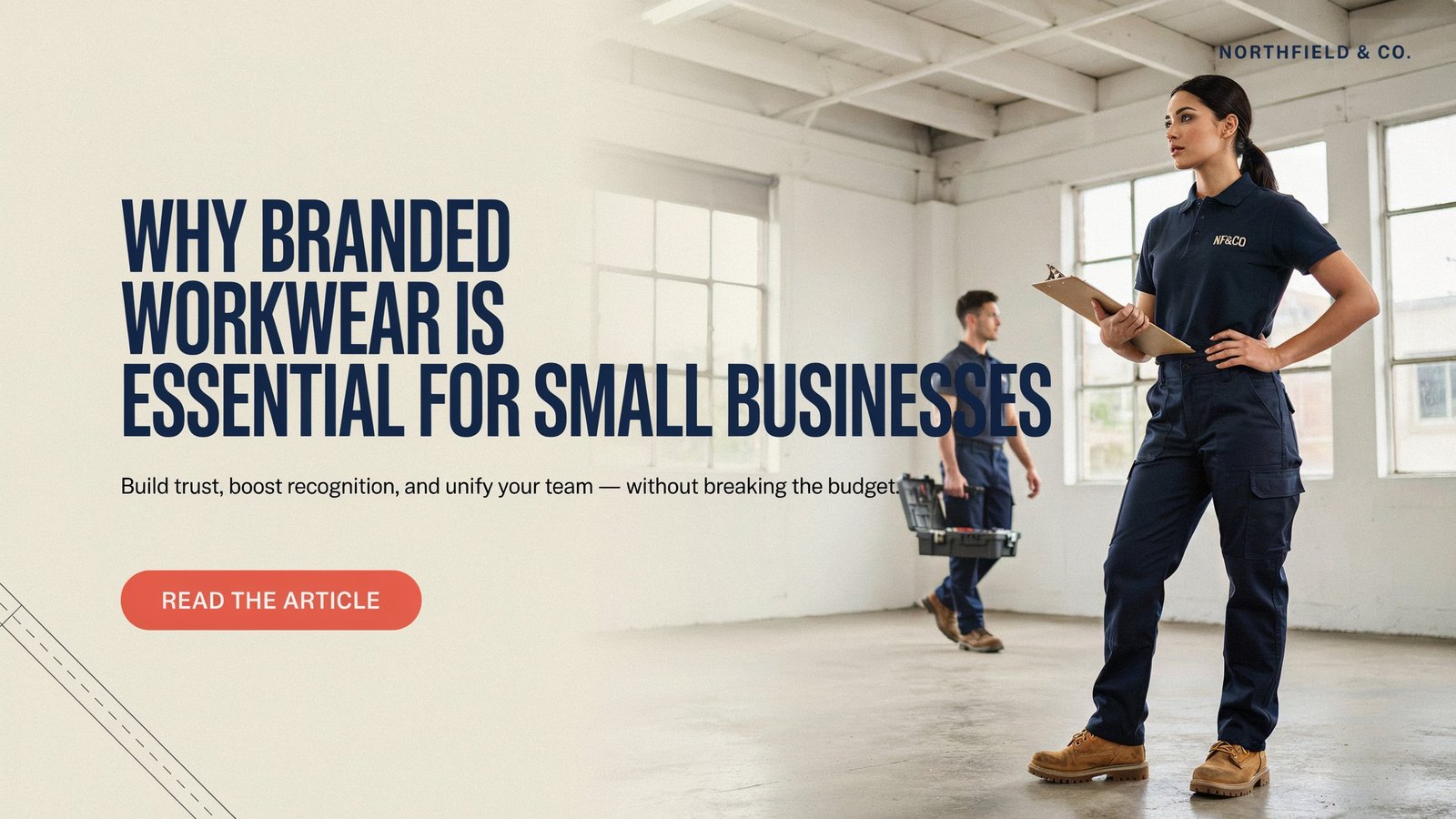
When someone opens their front door to a plumber, a cleaner or an electrician, they’re making a split-second assessment. Branded clothing removes a lot of the uncertainty from that moment. It tells the customer who this person is before they’ve said a word. There’s something reassuring about that, even if nobody’s consciously thinking it through.
For smaller businesses competing against bigger companies, that kind of instant credibility matters. You don’t have the name recognition that a national brand might have, so your presentation does some of that heavy lifting instead. Clean, coordinated clothing signals that you take your work seriously. That’s not a small thing.
Familiarity Builds Without You Even Trying
Here’s something that doesn’t get talked about enough. Branded workwear is low-key, long-game marketing that just happens as a byproduct of doing your job.
A landscaper regularly working in the same area, a delivery driver in a branded jacket, a window cleaner people keep spotting on their street. Over time, people start to recognise the logo without ever having been advertised to. It becomes part of the local landscape, and that familiarity gradually turns into something that feels like trust.
It’s a completely different thing to seeing an advert online. Nobody asked to see it, nobody felt sold to. It just became part of the background of everyday life. That’s actually quite hard to manufacture any other way.
It Means Something to the People Wearing It Too
The internal side of this is worth thinking about, particularly for smaller teams.
When people wear something that ties them to the business they work for, it tends to create a mild but genuine sense of shared identity. This is especially true when employees are often out on their own, working independently rather than alongside colleagues all day. The clothing becomes a small but consistent thread connecting everyone to the same team.
And it matters that people are comfortable in what they’re wearing. There’s a noticeable difference between staff who feel relaxed and those who feel like they’re enduring their uniform rather than wearing it. Approachability is hard to fake. When someone’s comfortable, it tends to come through in how they interact with customers, and customers pick up on that whether they realise it or not.
Practical First, Stylish Second
It’s worth being honest about priorities here. Workwear needs to actually work for the job before anything else.
If someone’s doing physical work outdoors, they need layers they can add or remove, fabrics that can handle a bit of punishment, and clothing that won’t have them overheating or freezing depending on the season. A logo means nothing if the clothing itself makes the job harder.
That’s a big part of why more relaxed styles have become more common. They tend to be more adaptable. A sweatshirt or a hoodie works across different weather conditions, different types of work, and different settings in a way that a stiff formal shirt often doesn’t. The shift in what workwear looks like has really been driven by practical necessity as much as anything else.
Consistency is Harder Than It Looks
For small businesses, looking consistent across everything you do is genuinely difficult, particularly in the early years. A larger company usually has enough infrastructure to keep everything looking joined up, from their vehicles to their packaging to how their staff present themselves. For a business of five or ten people, that’s much harder to maintain.
Branded clothing is one of the simpler ways to create some visual consistency without a huge amount of effort. If your team show up looking coordinated, it connects to your social media presence, your website, your signage. Things that might otherwise feel a bit scattered start to feel like they belong together.
This is particularly noticeable at trade shows, markets or local events where lots of businesses are competing for attention in the same space. Being able to clearly identify who’s from which business, just by looking, is a small but useful thing.
The Bit Customers Remember
Customers notice more than business owners typically assume. Not in a judgemental way, but the details register. Consistent, well-chosen clothing suggests care. Inconsistent presentation can quietly create doubt, even if the actual quality of work is excellent. That probably feels unfair, but it’s just how perception works.
For small businesses, reputation is everything. Most growth comes through word of mouth, repeat business and the goodwill of people in the local area. Anything that consistently reinforces a good impression is worth taking seriously, even when it seems like a minor detail.
Branded workwear isn’t really a marketing tactic, and it’s not about slapping a logo on a shirt and calling it done. It’s more about helping a business feel recognisable and reliable to the people it works with, quietly and consistently, over time.