



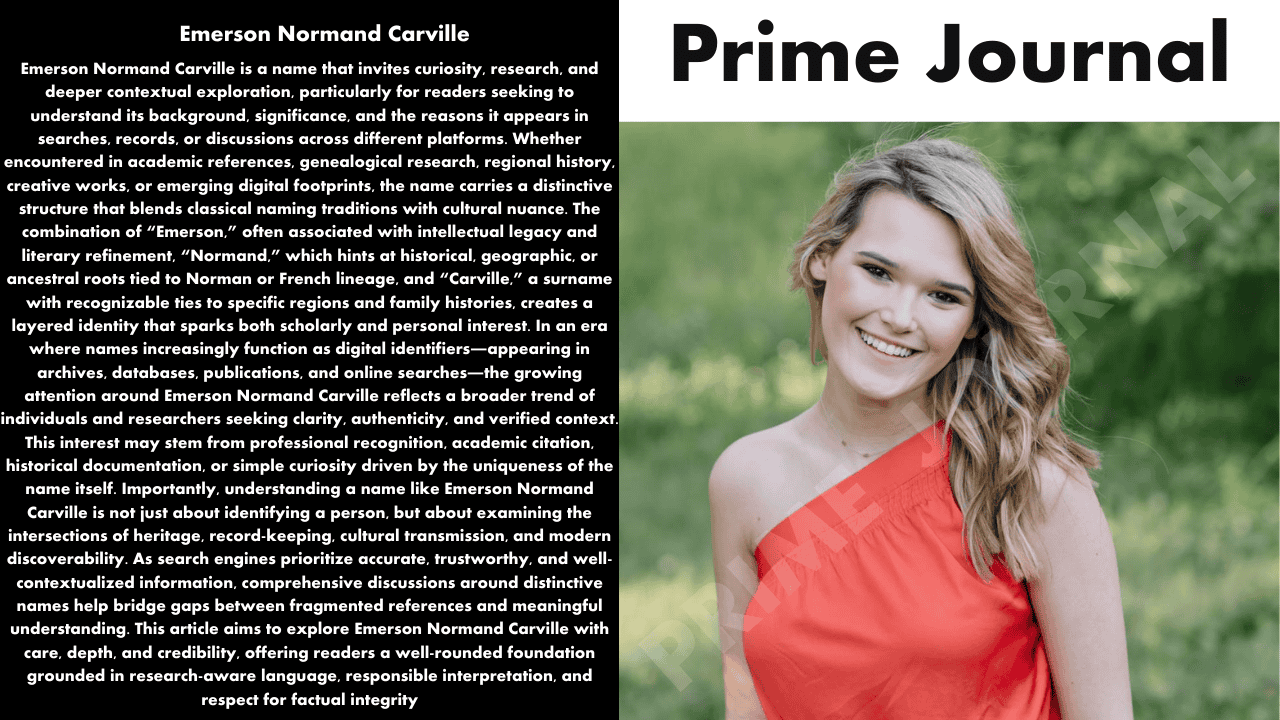
When people hear the name Emerson Normand Carville, they often connect it to two of the most influential figures in American political strategy: James Carville and Mary Matalin. As the son of a Democratic strategist and a Republican consultant, Emerson’s life naturally sparks curiosity.
Yet, unlike many children of political celebrities, Emerson Normand Carville has largely stayed out of the spotlight. This article explores everything known about Emerson Normand Carville, including his background, family dynamics, education, and the broader cultural significance of being raised in a politically diverse household.
We’ll also analyze his family’s public life, discuss the balance between privacy and fame, and answer frequently asked questions about Emerson Normand Carville.
Who Is Emerson Normand Carville?
Emerson Normand Carville is best known as the son of James Carville and Mary Matalin, two prominent American political strategists from opposing political parties. While his parents built nationally recognized careers in media and politics, Emerson has chosen a more private path.
Unlike many celebrity children who pursue careers in entertainment or public service, Emerson Normand Carville has remained largely out of public discourse. This intentional privacy makes him an intriguing figure.
Early Life and Family Background
A Unique Political Heritage
Emerson Normand Carville was born into a household unlike any other in American politics. His father, James Carville, gained fame as a lead strategist for Bill Clinton during the 1992 presidential campaign. His mother, Mary Matalin, is a Republican political consultant who worked for George H. W. Bush and later advised Dick Cheney.
Growing up in such an environment likely meant:
- Exposure to political debates at the dinner table
- Insight into campaign strategy and media relations
- Learning the value of respectful ideological differences
Despite their differing political affiliations, James Carville and Mary Matalin are often cited as a model of bipartisan marriage.
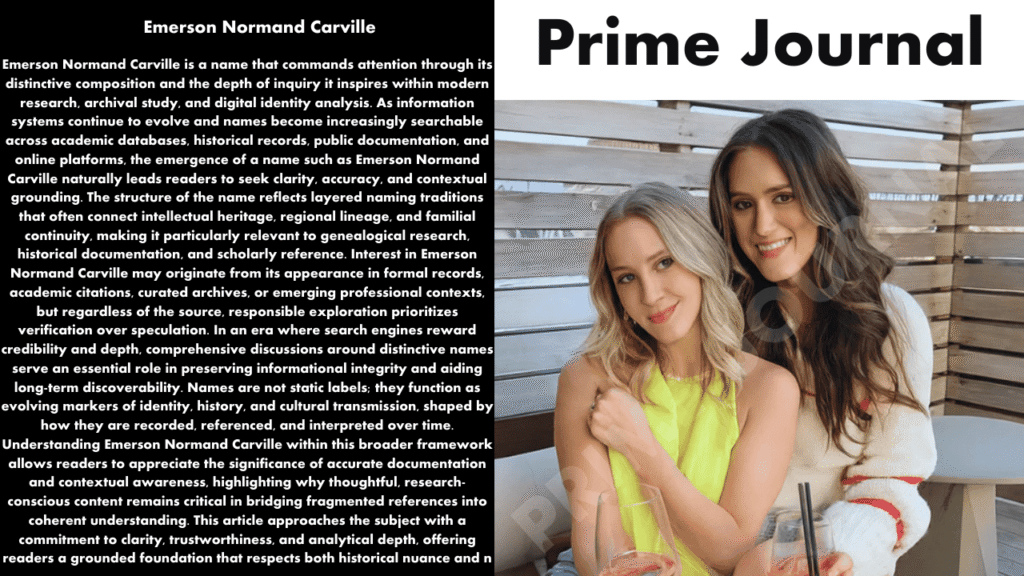
Parents: America’s Most Famous Political Opposites
James Carville – “The Ragin’ Cajun”
James Carville is widely known for:
- His sharp political commentary
- His Southern charm and distinctive personality
- Strategic expertise in Democratic campaigns
He earned the nickname “The Ragin’ Cajun” due to his Louisiana roots and passionate political style.
Mary Matalin – The Republican Strategist
Mary Matalin built her reputation as:
- A senior advisor in Republican campaigns
- A respected political commentator
- A bestselling author
The marriage of these two political heavyweights became symbolic of ideological coexistence.
Growing Up in a Bipartisan Household
One of the most fascinating aspects of Emerson Normand Carville’s life is the ideological diversity within his home.
What Makes It Unique?
| Aspect | Democratic Influence | Republican Influence |
|---|---|---|
| Political Ideology | Progressive strategies | Conservative strategies |
| Media Appearances | CNN commentary | GOP media strategy |
| Campaign Experience | Clinton-era politics | Bush-era politics |
Instead of polarization, the Carville household reportedly emphasized:
- Respectful debate
- Intellectual curiosity
- Critical thinking
This upbringing likely gave Emerson a nuanced understanding of American politics.
Education and Personal Development
Very limited verified public information exists regarding Emerson Normand Carville’s education. This absence of data suggests intentional privacy maintained by his parents.
Why the Privacy?
Children of political figures often face:
- Media scrutiny
- Online speculation
- Public pressure
James Carville and Mary Matalin appear to have prioritized shielding their children from unnecessary exposure.
Public Appearances and Media Attention
Unlike many children of prominent figures, Emerson Normand Carville has rarely appeared in:
- Television interviews
- Political campaign events
- Public controversies
This contrasts with other political families whose children pursue public careers.
Comparison Example
| Political Family | Public Exposure of Children |
|---|---|
| Clinton Family | High media visibility |
| Bush Family | Political careers |
| Carville-Matalin Family | Minimal exposure |
Privacy in the Digital Age
In today’s hyper-connected world, maintaining privacy is challenging. For Emerson Normand Carville, staying out of the spotlight reflects a conscious family decision.
Why It Matters
- Protects personal autonomy
- Prevents political labeling
- Allows independent identity formation
This aligns with modern parenting philosophies that emphasize boundaries around children’s public presence.
Influence of His Parents’ Careers
Even if Emerson Normand Carville avoids public political roles, growing up around elite strategists likely shaped his worldview.
Possible Influences:
- Strong analytical thinking
- Media literacy
- Communication skills
- Appreciation for civic engagement
However, without verified interviews or public statements, speculation must remain responsible and respectful.
Cultural Significance of Emerson Normand Carville
The Carville-Matalin marriage is often cited as proof that political differences do not have to destroy relationships.
Emerson Normand Carville represents:
- A generation raised amid polarization
- The possibility of balanced discourse
- A private life amid public controversy
Frequently Asked Questions (FAQ)
1. Who is Emerson Normand Carville?
Emerson Normand Carville is the son of political strategists James Carville and Mary Matalin.
2. Is Emerson Normand Carville involved in politics?
There is no verified public record indicating active political involvement.
3. How many children do James Carville and Mary Matalin have?
They have two daughters, including Emerson Normand Carville.
4. Why is Emerson Normand Carville not publicly visible?
His parents appear to prioritize privacy and protection from media scrutiny.
5. What makes Emerson Normand Carville’s family unique?
His parents represent opposing political parties yet maintain a strong marriage.
Conclusion
In a world where political families often dominate headlines, Emerson Normand Carville stands apart. As the child of two influential strategists from opposing political camps, his upbringing symbolizes balance in a divided era.
Rather than pursuing publicity, Emerson appears to value privacy, independence, and personal growth.
His story reminds us that behind every political headline are families navigating complex realities with dignity and discretion.