




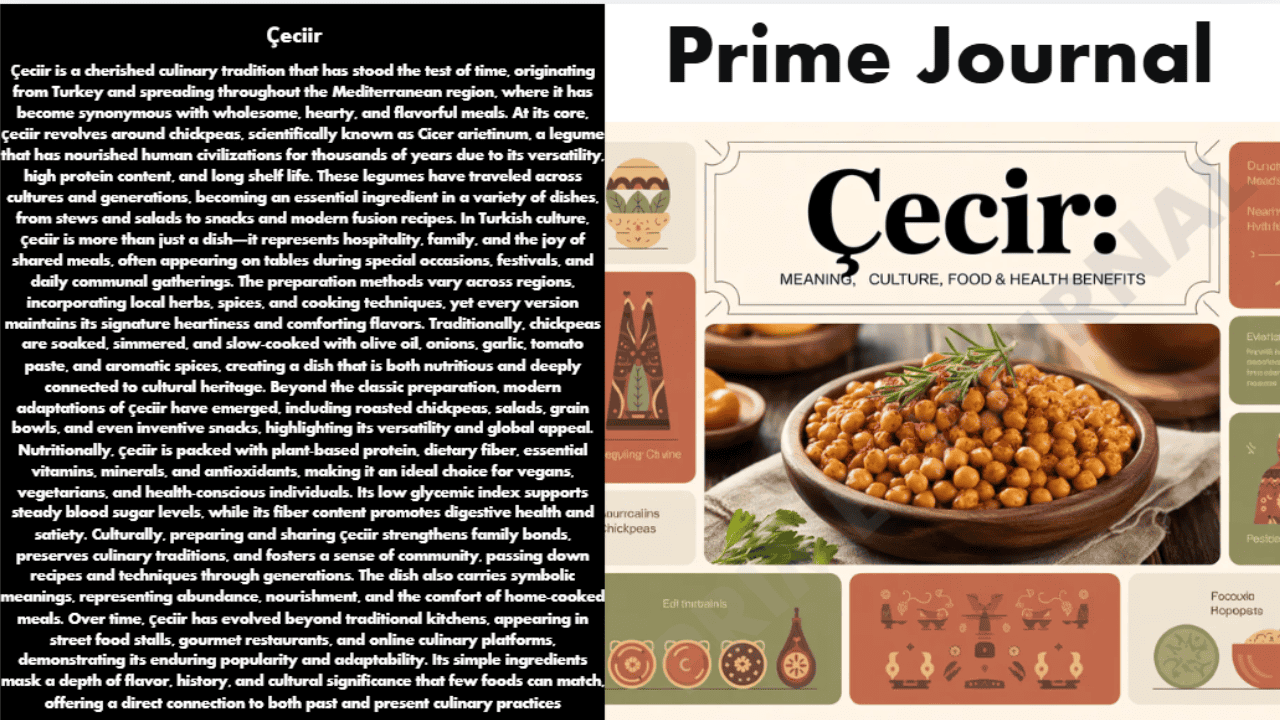
Çeciir — a word that might seem uncommon at first glance — carries rich layers of meaning across food, culture, tradition, and history. From a beloved Turkish chickpea dish to cultural symbolism in different regions, çeciir transcends simple definition. This comprehensive guide explores its many facets from origins and traditional recipes to modern twists, nutrition facts, cultural significance, and more.
What Is Çeciir?
Çeciir is a multi‑dimensional term most widely recognized as a traditional Turkish chickpea dish rooted deeply in Middle Eastern and Mediterranean culinary heritage. It is typically a hearty stew (or sometimes a snack or roasted legume) made from chickpeas, seasoned with spices, and served in a comforting, flavorful way. In Turkish culture, chickpeas (scientifically known as Cicer arietinum) are referred to as çeciir, and have played a central role in local foodways for thousands of years — from Ottoman kitchens to modern family tables.
Etymology & Linguistic Roots
The word çeciir appears to derive from ancient Anatolian agricultural and culinary traditions. Linguists connect it to Cicer, the Latin term for chickpeas, reflecting centuries of cultural exchange and food evolution across the Mediterranean and Middle East. While the precise linguistic path isn’t fully documented in mainstream dictionaries, the root consistently links back to chickpeas — an age‑old staple food. For more on the botanical term Cicer, see the definition of ceci (chickpeas) on Dictionary.com.
Çeciir in Culinary Culture
Traditional Turkish Çeciir
Çeciir is first and foremost a chickpea‑based dish deeply woven into Turkish family tradition and hospitality. Throughout Anatolia and beyond, households prepare çeciir as a satisfying, nutritious meal often shared with guests.
Key characteristics of traditional çeciir include:
- Main Ingredient: Chickpeas — soaked, simmered, and cooked to tender perfection.
- Flavors: Olive oil, onions, garlic, tomato paste, a bouquet of spices like cumin, oregano, red pepper flakes, and bay leaf.
- Serving Style: Often served with rice, bulgur, or fresh bread.
- Cultural Role: A symbol of warmth, family, and communal dining.
Regional Variations
Like many traditional foods, çeciir adapts to local tastes:
| Region | Common Additions | Flavor Profile |
|---|---|---|
| Black Sea, Turkey | Corn, dill, parsley | Fresh, aromatic |
| Central Anatolia | Lamb or beef added | Rich, hearty |
| Mediterranean Coast | Citrus zest, seafood influence | Light, bright |
| Street Food Style | Roasted chickpeas or chickpea flour snacks | Crispy, savory |
How to Make Çeciir
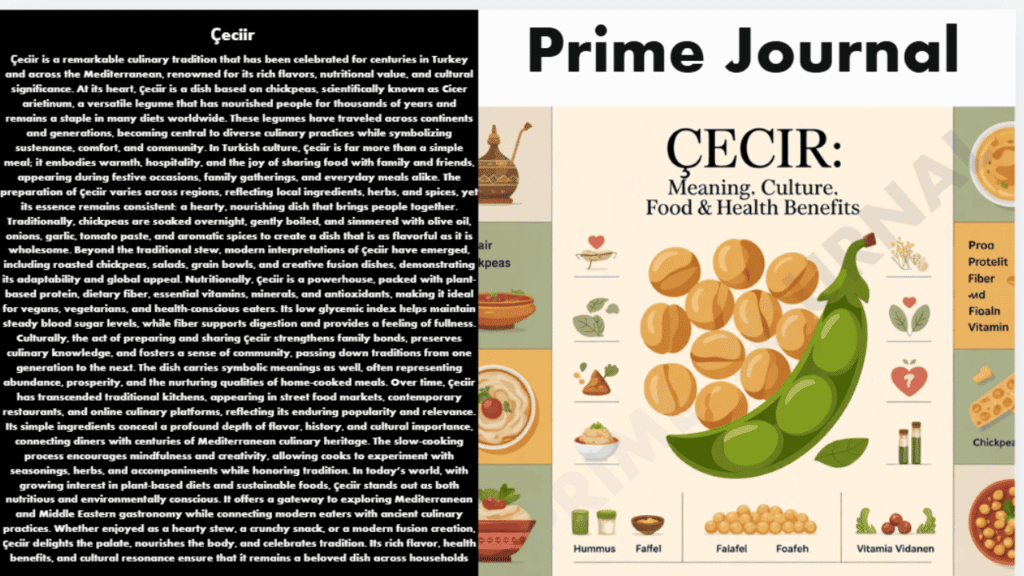
Here’s a popular classic playbook to cook traditional Turkish çeciir at home:
Ingredients
- 2 cups dried chickpeas
- 3 tbsp olive oil
- 1 large onion, finely chopped
- 3–4 garlic cloves, minced
- 2 tbsp tomato paste
- 1 tsp cumin
- 1 tsp paprika
- 1 bay leaf
- Salt & pepper to taste
- 3–4 cups vegetable or chicken broth
- Fresh parsley, lemon wedges (for garnish)
Instructions
- Soak chickpeas overnight in cold water.
- Drain and rinse before cooking.
- Heat oil in a large pot; sauté onions and garlic until golden.
- Add tomato paste and spices — cook until fragrant.
- Add chickpeas and broth — bring to a boil.
- Simmer on low heat for 2–3 hours until chickpeas are soft and flavors are rich.
- Serve warm, garnished with parsley and lemon.
Pro Tip: Slow cooking enhances flavor and texture — çeciir often tastes even better the next day!
Nutritional Benefits of Çeciir
Chickpeas — the heart of çeciir — are a powerhouse of nutrition. A 100 g serving of boiled chickpeas provides:
| Component | Estimated Content |
|---|---|
| Protein | ~9 g |
| Dietary Fiber | ~7 g |
| Iron | ~2.9 mg |
| Folate | ~172 µg |
| Magnesium | ~48 mg |
| (Approximate values from nutritional databases) |
Health Highlights
- Plant‑based protein: Supports muscle health.
- Fiber‑rich: Promotes digestive health and sustained energy.
- Low glycemic index: Helps regulate blood sugar.
- Heart‑healthy: Linked to lower cholesterol levels.
Because of its nutrient density, çeciir fits well into vegan, vegetarian, gluten‑free, and balanced lifestyle diets.
Çeciir in Global Cuisine
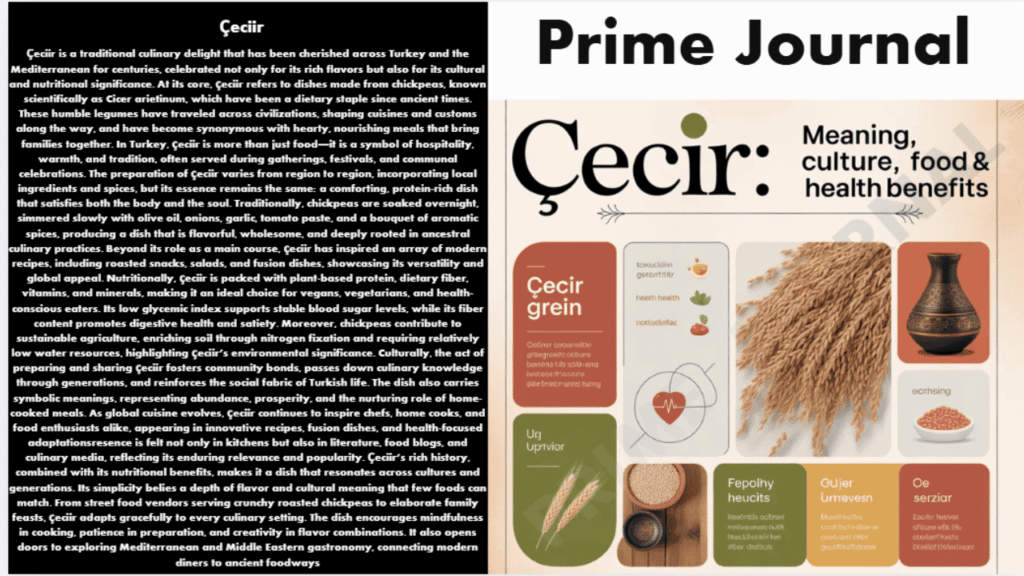
Although çeciir has Turkish core origins, chickpeas have been celebrated across global culinary traditions for millennia:
- In the Middle East, chickpeas form the base of iconic foods like hummus and falafel.
- Indian cuisine uses chickpeas in curries like chana masala.
- Mediterranean diets incorporate roasted chickpea snacks, salads, and stews.
This worldwide footprint reveals how chickpeas — and thus concepts like çeciir — remain essential to nutritious, sustainable cooking across cultures.
Cultural & Symbolic Meanings
Beyond food, the term çeciir intersects with cultural identity:
- It symbolizes Turkish hospitality, often served to welcome guests.
- In some local traditions, chickpeas also carry symbolic meanings related to abundance and protection.
- The process of making and sharing çeciir strengthens family bonds and intergenerational culinary heritage.
These cultural associations make çeciir more than just a recipe — it’s part of the social fabric in many communities.
Modern Uses & Trends
Çeciir continues to evolve in the modern world. Some contemporary applications include:
1. Plant‑based Products
Chickpea flour (deriving from çeciir) is now popular in gluten‑free baking, snacks, and innovations like vegan flatbreads.
2. Healthy Snacking
Roasted chickpeas (sometimes referred to as çeciir snacks) provide crunchy, nutritious alternatives to processed chips.
3. Global Fusion Cuisine
Chefs around the world blend elements of çeciir into salads, soups, grain bowls, and even desserts.
4. Sustainable Agriculture
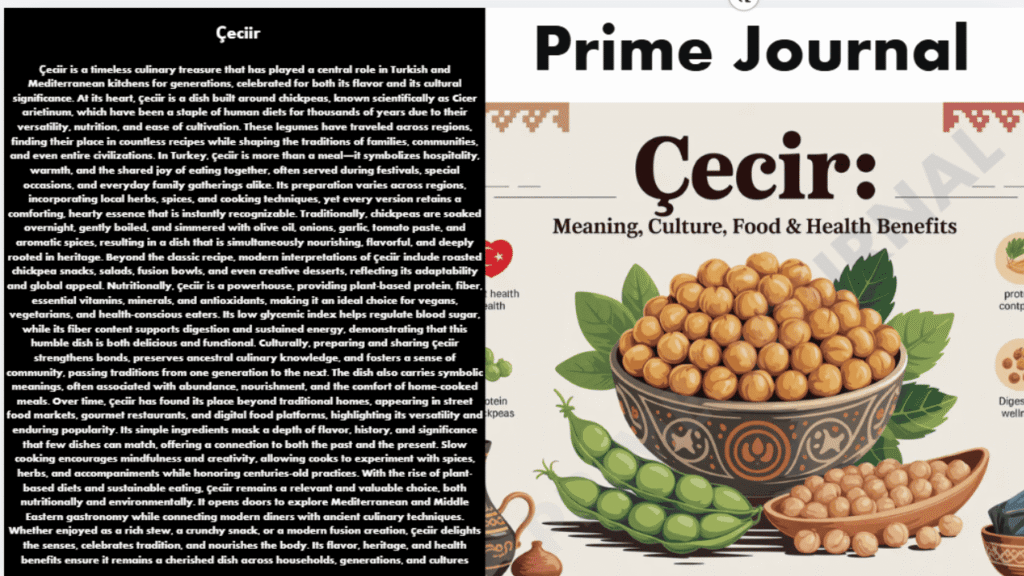
Chickpeas help enrich soil through nitrogen fixation and are climate‑friendly crops — making çeciir part of sustainable food systems.
These trends reflect how a traditional dish can adapt while preserving essence and nutrition.
FAQs About Çeciir
1. What exactly does “çeciir” mean?
Çeciir generally refers to a traditional Turkish chickpea dish or roasted chickpeas, and extends to cultural symbolism in various regions. It reflects both culinary heritage and nutritional significance.
2. Is çeciir the same as hummus?
No. Hummus is a creamy chickpea dip blended with tahini, lemon, and garlic. Çeciir is a stew (or sometimes roasted chickpeas) with distinct texture and flavor profiles.
3. Can çeciir be vegan or gluten‑free?
Yes — as a chickpea‑based dish, çeciir is naturally vegan and gluten‑free. If serving with bread, choose gluten‑free options to maintain dietary restrictions.
4. How do you pronounce çeciir?
The correct pronunciation approximates “cheh‑CHEER”, where ç makes a soft “ch” sound.
5. Where can I learn more about chickpeas?
Explore scientific and cultural information about chickpeas on Wikipedia: Chickpea foods — https://en.wikipedia.org/wiki/Chickpea_foods
Conclusion & Call‑to‑Action
Çeciir isn’t just a term — it’s a living tradition rooted in heritage, nutrition, and culinary creativity. Whether you’re discovering it for the first time or incorporating it into your weekly meals, çeciir represents the soul of Mediterranean hospitality and the enduring value of plant‑based nutrition.