



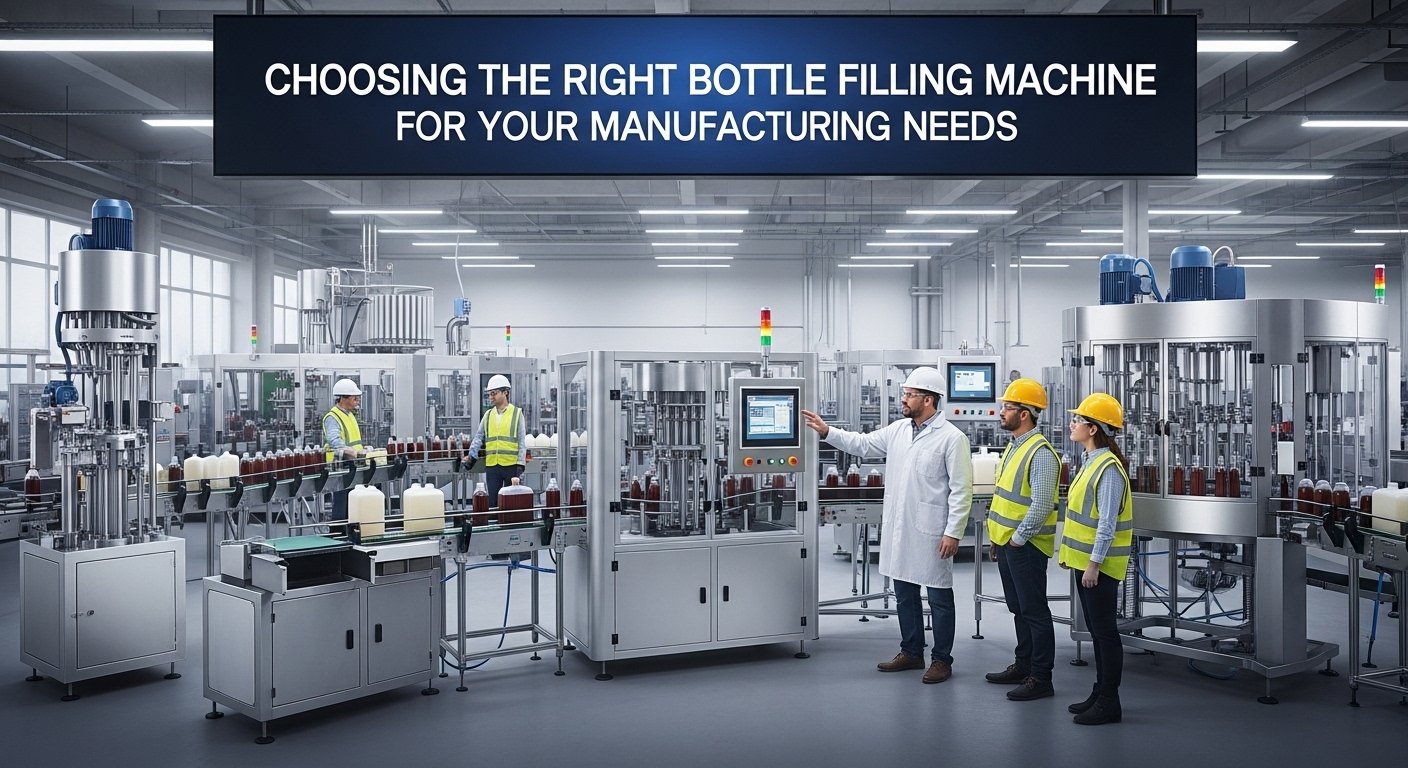
Choosing a bottle filling machine is not just a matter of buying equipment. It affects production speed, fill consistency, labor efficiency, waste control, and future growth. The right system can help a manufacturer run a reliable line. The wrong one can slow output, increase product loss, and create problems across the packaging process. Selecting the right bottle filling machine starts with understanding the operation.
Why the Right Filling Machine Matters
The right filling machine has a direct impact on efficiency, accuracy, and product quality. When a manufacturer selects equipment that aligns with the product and production goals, the entire production line runs more smoothly. Fill levels stay consistent, waste is reduced, and operators spend less time correcting avoidable issues. This is especially true when businesses invest in solutions like volumetric piston filling machines, which are designed to deliver reliable, repeatable fills for thicker or more demanding products. In a competitive production environment, the right machine is not just helpful, it is a key part of keeping operations efficient and consistent.
Start With the Product You Need to Fill
The first step is understanding the product itself. Thin liquids move differently from thick creams, sauces, gels, or products with particulates. Some liquids foam easily. Others require careful handling because of temperature sensitivity, sanitation demands, or chemical properties. A machine that works well for water or light oils may not perform well with heavy pastes or chunky food products. That is why manufacturers should begin with product behavior, not just speed goals. The better the machine matches the product, the smoother the filling process will be.
Know the Main Types of Bottle Filling Machines
Different filling technologies suit different applications. Gravity fillers are often used for thin, free flowing liquids. Piston fillers are a strong option for thicker products because they handle heavier consistencies and some particulates with control. Pump fillers offer flexibility and can work across a wider range of viscosities, which makes them useful for varied product lines. Overflow fillers are ideal when a consistent visual fill level matters, especially for clear containers where appearance influences buyer confidence. Net weight fillers are often used when precision by weight matters more than volume. Understanding these machine types helps narrow the field and keeps manufacturers from investing in equipment that does not suit the job.
Consider Your Containers and Production Volume
The bottle matters almost as much as the product. Container shape, neck size, material, and dimensions can affect how well a filling machine performs. A line that handles multiple bottle sizes may need more flexibility than one built around a single standard container. Production volume also plays a major role. Smaller operations may do well with semi automatic equipment that gives them control without a large upfront investment. Higher volume environments usually need automatic systems that can keep pace with demand. The right answer depends on present needs and realistic growth plans.
Choose the Right Level of Automation
Automation should fit the operation, not just the budget. Semi automatic machines can be a smart solution for businesses with moderate output, frequent product changes, or limited floor space. They often provide a good balance of control and cost. Fully automatic systems make more sense when consistency, throughput, and labor savings are top priorities. They can help reduce operator involvement and keep production moving at a more stable pace. For many manufacturers, the best long term value comes from choosing the level of automation that supports workflows and future expansion.
Don’t Overlook Cleaning, Accuracy, and Changeover Time
Some of the most important buying factors show up after installation. Easy cleaning matters for sanitation, compliance, and daily uptime. Fill accuracy matters because small variations can create wasted product and inconsistent packaging over time. Changeover time also deserves close attention, especially for manufacturers that switch between bottle sizes or product types. A machine that is fast in theory but slow to clean or adjust can still become a bottleneck. Looking closely at these details helps manufacturers choose equipment that performs well in real production conditions.
Think About the Full Packaging Line
A bottle filler should never be chosen in isolation. It has to work with conveyors, cappers, labelers, and the rest of the packaging line. Even a strong filling system can create delays if downstream equipment cannot keep up or if bottle handling is inconsistent between stages. Manufacturers get better results when they evaluate the full line instead of focusing on one machine alone. A well matched system improves flow, reduces interruptions, and supports better overall efficiency.
Conclusion
The best bottle filling machine is the one that fits the product, container, production goals, and broader packaging setup of the business. Manufacturers that take time to evaluate these factors are more likely to choose equipment that supports consistent quality and long term efficiency. A smart investment starts with a clear understanding of what the line truly needs.