




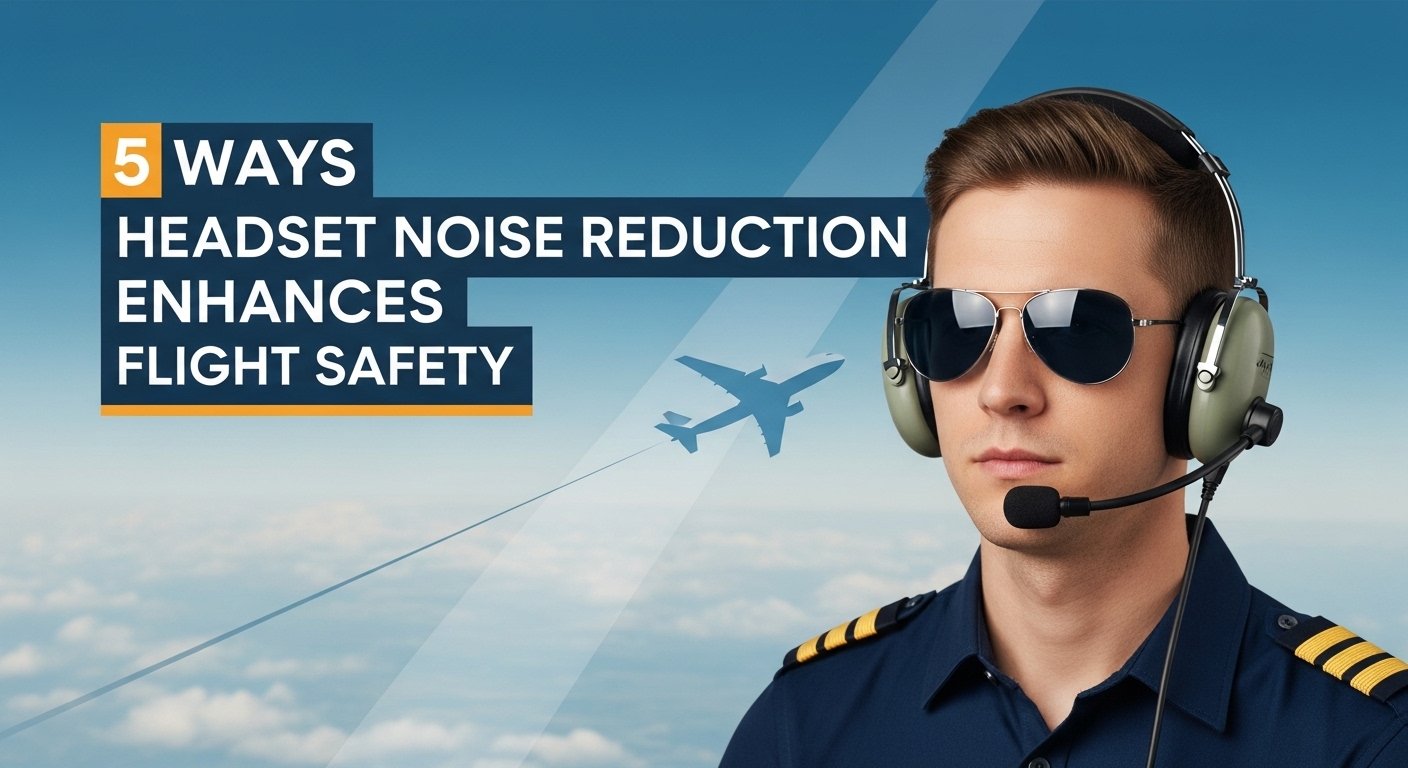
Clear communication is one of the most important components of safe flight operations. Pilots rely on precise audio to coordinate with air traffic control, monitor cockpit alerts, and communicate with crew members in real time. Because aircraft environments generate continuous noise from engines, airflow, and mechanical systems, high quality noise reduction in aviation headsets plays a critical role in maintaining safety. Modern headset technology has evolved to address these challenges, offering features that help pilots stay focused, reduce fatigue, and respond quickly to changing conditions.
Reduces Auditory Distractions in High Noise Environments
Aircraft cockpits expose pilots to persistent noise that can interfere with essential communication. Noise levels vary depending on aircraft type, altitude, and engine configuration, but even moderate noise can make it difficult to hear instructions clearly.
Advanced noise reduction technology minimizes these distractions by filtering out ambient sound and creating a quieter audio environment. This allows pilots to focus on critical information without straining to interpret transmissions. High performing headsets, such as the reputable DC One-X, demonstrate how effective noise reduction can significantly improve clarity and reduce the cognitive load associated with constant background noise.
Improves Clarity of Air Traffic Control Communication
Accurate communication with air traffic control is essential for maintaining safe separation, navigating controlled airspace, and responding to instructions quickly. When noise interferes with audio clarity, pilots may misinterpret messages or require repeated transmissions, increasing workload and potential risk.
Noise reduction technology enhances the intelligibility of incoming audio, ensuring that ATC instructions are heard clearly the first time. This improvement supports faster decision making and reduces the likelihood of communication errors. Clear audio also helps pilots maintain situational awareness, especially during busy or complex phases of flight.
Supports Pilot Focus and Reduces Fatigue
Long duty periods and extended flight operations can lead to fatigue, which affects reaction time, concentration, and overall performance. Excessive cockpit noise contributes to this fatigue by forcing pilots to work harder to process audio information.
Noise reducing headsets help alleviate this strain by creating a more comfortable auditory environment. When pilots do not have to fight against constant noise, they conserve mental energy and maintain sharper focus throughout the flight. This benefit becomes especially important during long haul operations, night flights, or challenging weather conditions.
Enhances Crew Coordination and In‑Cockpit Communication
Effective communication between pilots is essential for managing workload, monitoring systems, and responding to unexpected events. Cockpit noise can make it difficult for crew members to hear each other clearly, especially during high workload situations such as takeoff, landing, or turbulence.
Noise reduction technology improves the clarity of in‑cockpit communication by minimizing interference and ensuring that spoken instructions are transmitted accurately. This supports smoother teamwork, reduces misunderstandings, and helps both pilots maintain a shared understanding of the aircraft’s status.
Strengthens Response to Alerts and Safety Signals
Modern aircraft rely on a variety of auditory alerts to notify pilots of system changes, warnings, or required actions. These alerts must be heard clearly and immediately to ensure proper response. Excessive cockpit noise can mask or distort these signals, delaying recognition and increasing risk.
Noise reducing headsets help pilots distinguish alerts more easily by lowering background noise and enhancing the contrast between ambient sound and critical warnings. This clarity supports faster reaction times and ensures that pilots can respond promptly to safety related notifications.
Conclusion
Headset noise reduction enhances flight safety by reducing distractions, improving communication clarity, supporting pilot focus, strengthening crew coordination, and ensuring timely response to cockpit alerts. These advancements help create a safer, more efficient operating environment for pilots in all types of aircraft.